

Start here
How EV Range Actually Works
Next
Understanding Your Charging Options
Then
What Ownership Costs Really Look Like
Important to know
Common Surprises for First-Time EV Drivers
Final step
How to Assess Whether an EV Fits Your Life
How EV Range Actually Works
The number printed on a vehicle's window sticker — its EPA-estimated range — is a standardized laboratory figure, not a real-world guarantee. Actual range depends on a web of variables: highway speed (energy consumption rises sharply above 70 mph), outside temperature, use of heating or air conditioning, cargo weight, and driving style.
Battery capacity is measured in kilowatt-hours (kWh). A larger battery pack generally means more range, but efficiency — how many miles the vehicle extracts from each kWh — matters just as much. For a plain-English breakdown of battery and range terminology, see our EV glossary.
A practical rule of thumb: plan around 80–85% of the rated range on typical days, and budget conservatively for highway drives or cold weather. Most EV drivers find their daily commutes fall well within even reduced real-world estimates.
kWh (kilowatt-hour)
The unit used to measure battery capacity in an EV, similar to how gallons measure a gas tank. More kWh generally means more range.
EPA-estimated range
The official US range figure calculated through standardized government testing. It provides a consistent comparison point, but real-world results typically vary.
Level 2 charging
A 240-volt home or public charging setup that delivers significantly faster charging than a standard outlet — the most common choice for daily home charging.
DC fast charging
High-powered public charging that can replenish a significant portion of battery capacity in under an hour. Primarily used for long-distance travel stops.
Regenerative braking
A system that captures energy normally lost during braking and converts it back into electricity stored in the battery, improving efficiency and reducing brake wear.
Federal EV tax credit
A US government incentive that may reduce the tax liability of qualifying EV buyers. Eligibility depends on vehicle price, buyer income, and other criteria set by law.
Understanding Your Charging Options
Charging is the operational habit that most distinguishes EV ownership from filling a gas tank, and understanding the three levels makes the transition far less daunting.
- Level 1 (120V): Any standard household outlet. Adds roughly 3–5 miles of range per hour — workable for drivers covering under 40 miles daily.
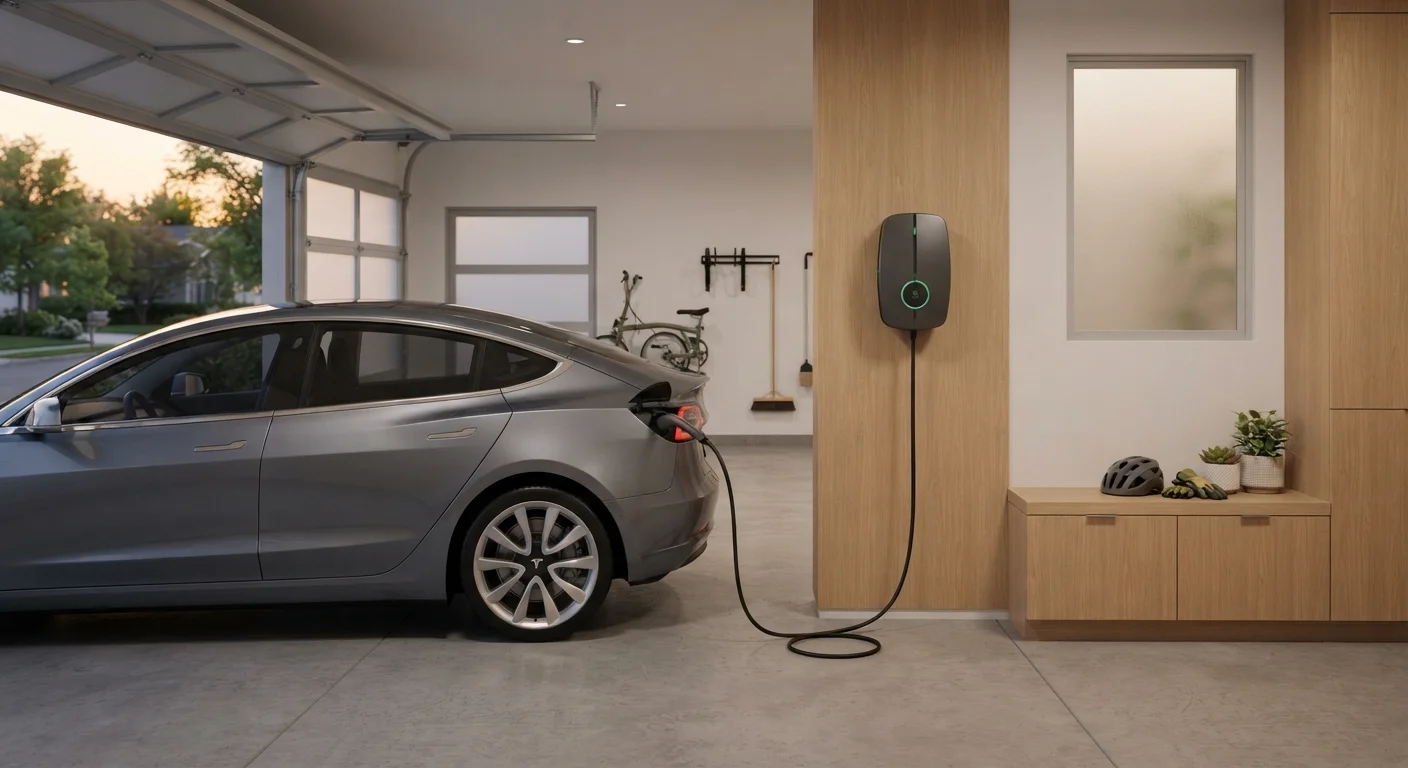
- Level 2 (240V): Requires a dedicated circuit, typically installed by a licensed electrician. Adds 20–30 miles per hour; most EV owners consider this the practical home-charging standard.
- DC Fast Charging: Found at public charging stations along highways and in commercial areas. Can charge many EVs to 80% in 20–45 minutes, though repeated heavy use can affect long-term battery health.
The majority of EV owners report doing most of their charging at home overnight — a fundamentally different rhythm than stopping at a gas station. For a detailed look at the home installation process, see what home charger setup actually involves. A side-by-side comparison of home and public charging experiences is also covered in home vs. public charging.
What Ownership Costs Really Look Like
The sticker price of an EV is typically higher than a comparable gasoline vehicle, but purchase price is only one layer of the financial picture. Electricity costs less per mile than gasoline in most US regions, and EVs require less routine maintenance — no oil changes, fewer brake jobs due to regenerative braking, and no transmission service.
Federal tax credits and state-level incentives can reduce upfront costs for eligible buyers, though income limits, vehicle price caps, and assembly requirements apply. These rules have shifted in recent years; verifying current eligibility through official sources or a tax professional is advisable before factoring credits into a budget.
Battery warranty coverage — typically 8 years or 100,000 miles under federal minimum standards — provides some protection against the largest potential long-term expense. For a fuller accounting of how all these factors interact over years of ownership, the true cost of EV ownership over time explores the complete picture.
Track Your Daily Miles Before Shopping
Before evaluating any EV, spend two weeks noting your actual daily mileage. Most US drivers average under 40 miles per day — well within the range of nearly every current EV model. Knowing your real driving pattern removes guesswork from the range equation and helps you right-size battery capacity to your actual needs.
Common Surprises for First-Time EV Drivers
Several aspects of EV ownership catch newcomers off guard, not because they are dealbreakers, but because they differ from decades of gasoline-car habits.
Range anxiety — the fear of running out of charge — is widely reported among first-time owners but tends to diminish within weeks as drivers learn their vehicle's real-world behavior and identify nearby charging options. Cold-weather range loss is among the most consistently underestimated factors; temperatures below freezing can reduce usable range by 20–40% in documented testing.
Public charging reliability varies by network and location. While the national charging infrastructure has expanded significantly, coverage remains uneven in rural areas. Checking charger availability and status before a long trip is a standard habit among experienced EV drivers.
A deeper look at the missteps that commonly trip up new owners is covered in pitfalls that catch new EV drivers off guard.
Don't Rely Solely on Rated Range in Winter
Cold weather can reduce an EV's usable range substantially — independent testing has documented reductions of 20–40% in freezing conditions. If you live in a cold climate, factor a meaningful range buffer into your planning, and learn whether your vehicle supports battery pre-conditioning, which can reduce cold-weather losses when initiated while still plugged in.
How to Assess Whether an EV Fits Your Life
The most useful question to ask before switching is straightforward: where will you charge, and does your daily driving fit within typical EV range? Drivers who can install a Level 2 charger at home and whose regular drives fall under 150 miles per day are generally well-suited to EV ownership in its current form.
Apartment dwellers or those without dedicated parking face more friction, though public and workplace charging is expanding to address this gap. Long-distance drivers who regularly travel rural highways should map charging infrastructure along their typical routes before committing.
A structured way to work through these factors is available in a practical EV decision checklist, which covers charging access, driving patterns, budget, and local infrastructure. For those interested in where battery technology is headed — including solid-state advances that could reshape range and charging speed — solid-state batteries and the race to reinvent EV power provides useful context on what's coming next.
Frequently Asked Questions
Most new EVs on the US market offer a manufacturer-rated range of roughly 200 to 350 miles per charge, though real-world range depends on driving speed, temperature, climate control use, and terrain. Treating the rated figure as a ceiling rather than a guarantee helps set realistic expectations.
A Level 1 charger (standard 120V outlet) adds roughly 3–5 miles of range per hour, making it suitable only for low-mileage drivers. A Level 2 charger (240V, professionally installed) typically adds 20–30 miles per hour, meaning most EVs reach a full charge overnight.
EVs generally have lower routine maintenance costs than gasoline vehicles because they have fewer moving parts — no oil changes, no transmission service, and regenerative braking reduces brake wear. Battery warranty coverage and replacement cost are the main long-term considerations.
Yes, significantly. Cold temperatures slow battery chemistry and increase energy demand for cabin heating. Range reductions of 20–40% in freezing conditions have been documented in independent testing. Pre-conditioning the battery while still plugged in can help mitigate this.
Federal tax credits for qualifying new and used EVs exist under US law, but eligibility depends on factors including vehicle price, the buyer's income, and where the vehicle was assembled. Rules have changed in recent years, so consulting the IRS or a tax professional for current details is advisable.
You can use a standard 120V household outlet for slow Level 1 charging, but most EV owners install a dedicated 240V Level 2 charger for practical overnight charging. Installation involves an electrical assessment, permit in most jurisdictions, and a licensed electrician.
The content on this site is for informational purposes only and is not a substitute for professional advice. Always consult a qualified professional for guidance specific to your situation.