

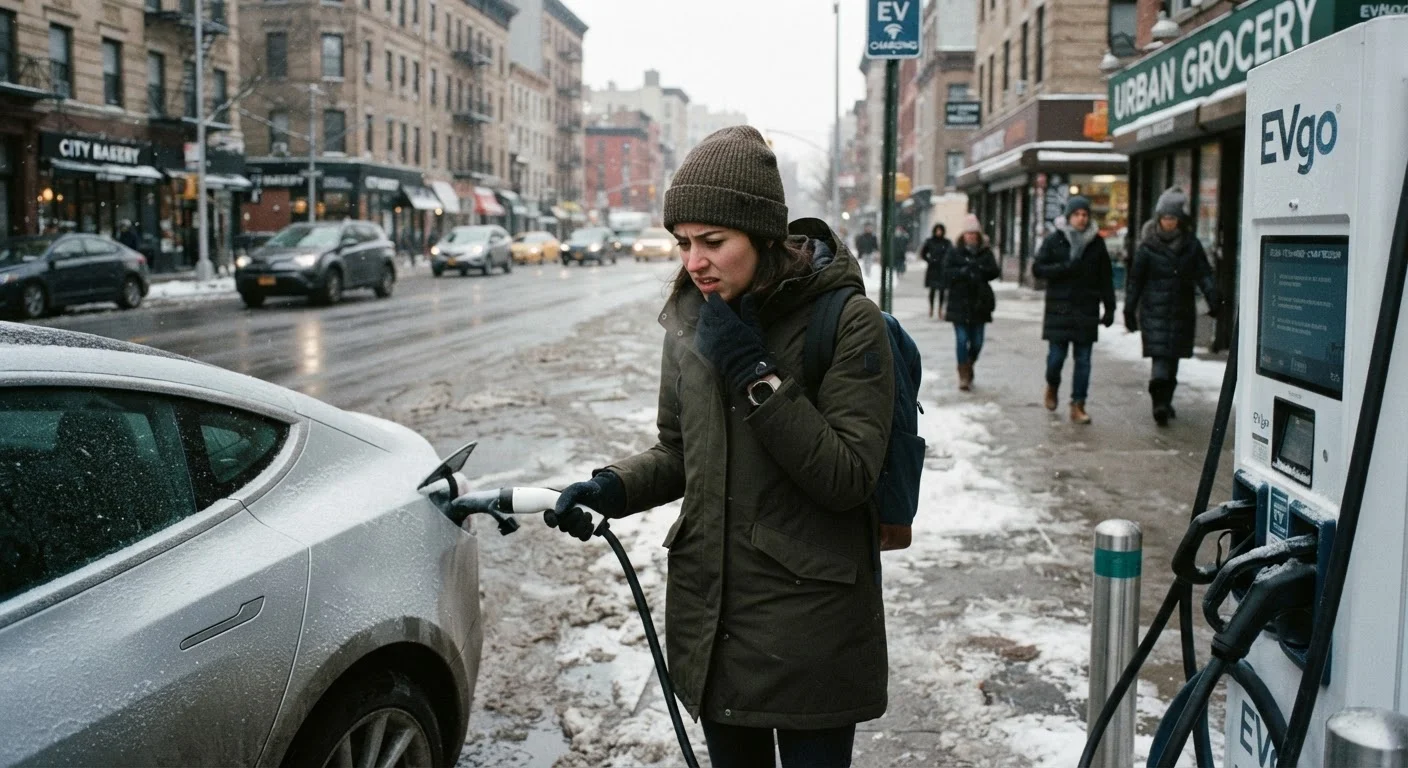
Why the First Few Months Can Feel Frustrating
Switching to an electric vehicle reshapes nearly every habit tied to fueling and trip planning. Most new EV drivers arrive with reasonable expectations — lower fuel costs, quieter rides, simpler maintenance — but the day-to-day learning curve catches a surprising number of them off guard. The mistakes aren't the result of poor judgment; they stem from reasonable assumptions carried over from gasoline-car ownership that simply don't transfer.
Understanding where those assumptions break down is the fastest route to a smoother experience. Whether you're already behind the wheel of your first EV or still working through the decision, the pitfalls below are worth knowing in advance.
Ignoring cold-weather range loss until it becomes an emergency.
Why it happens: Manufacturer range estimates are typically measured under moderate temperature conditions. New owners assume rated range is what they'll get year-round.
Relying on DC fast charging as the primary charging method.
Why it happens: Fast chargers feel intuitive to gas-station users — a quick top-up and go. The convenience obscures the fact that frequent high-speed charging generates heat that gradually stresses battery cells.
Not installing a Level 2 home charger before taking delivery.
Why it happens: Standard 120V outlet charging (Level 1) seems sufficient at first, especially for shorter daily drives. Owners underestimate how inconvenient it becomes during busier weeks.
Charging to 100% every night as a matter of habit.
Why it happens: Owners apply the gas-tank logic of always topping off. A full battery feels reassuring, but most EV battery management guidance suggests this strains lithium chemistry over time.
Parking at a public charger and leaving without moving the vehicle after charging completes.
Why it happens: New EV drivers sometimes don't realize that occupying a charging stall after reaching full charge is considered poor etiquette — and at many stations carries an idle fee.
Failing to account for charging availability on long road trips.
Why it happens: Drivers assume charging infrastructure mirrors the density of gas stations, particularly in rural or less-traveled corridors across the U.S.
Building Better Habits From the Start
The drivers who adapt most quickly to EV ownership tend to share one trait: they treat the first month as a deliberate learning period rather than assuming the transition will be seamless. That means actively exploring the vehicle's energy app or display, noting how range fluctuates with temperature and driving style, and building a home charging routine before relying on public infrastructure.
Don't Skip the Home Charging Setup
Charging exclusively from a standard 120V household outlet can add 3–5 miles of range per hour — workable for very low-mileage drivers but inadequate for most. Weeks of relying on Level 1 charging during high-usage periods can leave drivers perpetually low on range. Investing in proper home charging infrastructure early avoids this entirely.
Terminology matters here, too. Concepts like state of charge, regenerative braking, and DCFC (DC fast charging) shape how you interpret what the car is telling you. A practical EV glossary can close that gap quickly. Meanwhile, concerns like range anxiety — while real for some drivers in specific situations — are often overstated relative to typical daily driving distances, as the data on real-world usage tends to show.
The long-term economics of EV ownership, including charging costs, maintenance savings, and depreciation patterns, also look different than many buyers expect going in. Exploring the full cost picture before or shortly after purchase helps avoid financial surprises down the road.
The content on this site is for informational purposes only and is not a substitute for professional advice. Always consult a qualified professional for guidance specific to your situation.