

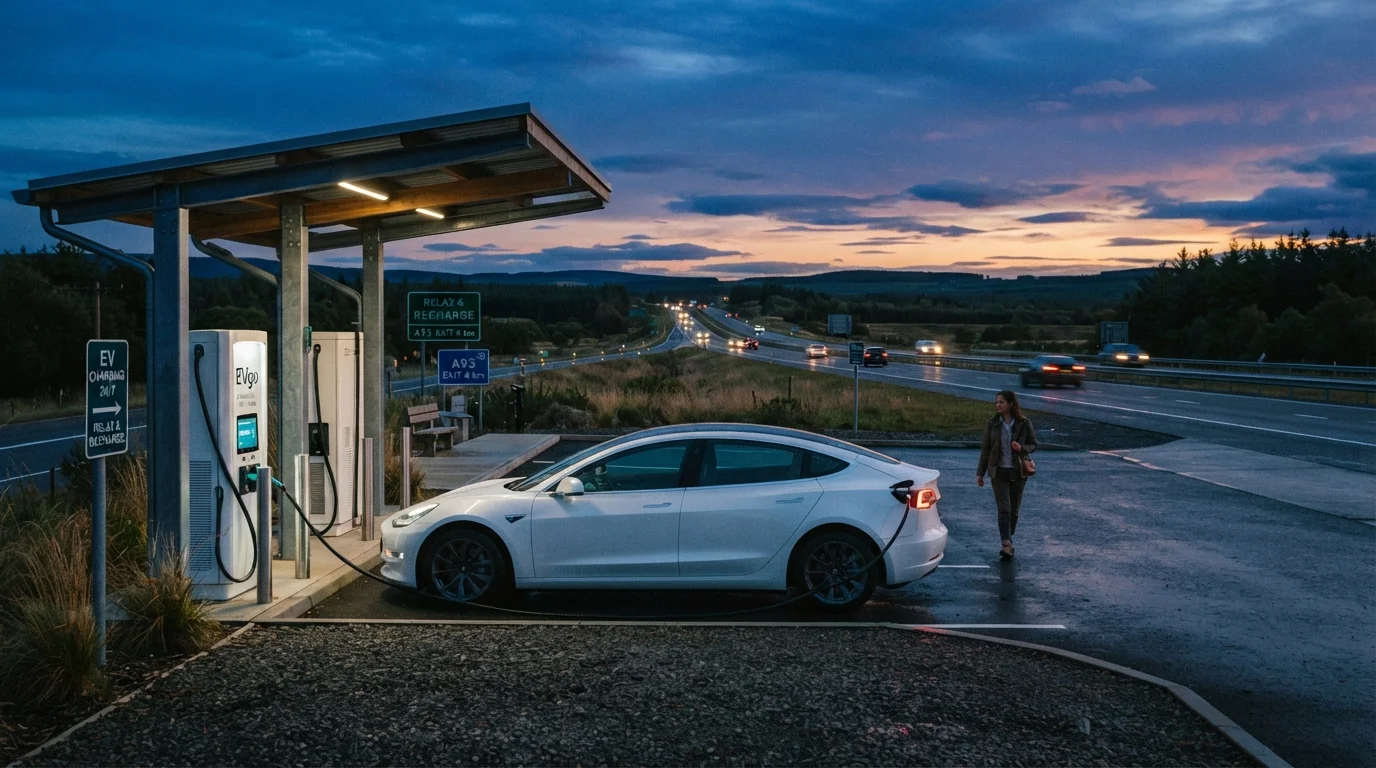
Where Range Anxiety Comes From
Range anxiety — the fear that an electric vehicle will run out of charge before reaching a destination or charger — has become one of the most persistent barriers to EV adoption in the United States. Surveys consistently show it ranks among the top reasons consumers hesitate to buy electric. But how much of that anxiety reflects the actual driving experience, and how much is driven by misconception?
The answer is both. Some fears are rooted in real limitations that the industry is still working to address. Others are based on outdated assumptions or a mismatch between perceived need and typical driving behavior. Understanding the difference matters — for consumers evaluating a purchase and for policymakers shaping infrastructure investment. For a broader look at what's shaping EV hesitancy, see what's driving and slowing EV adoption globally.
Myth
EVs don't have enough range for everyday driving.
Fact
The average American's daily driving distance falls well below the rated range of most current EVs.
Federal travel data consistently shows the median American drives fewer than 40 miles on a typical day. With most EVs now offering 200 miles or more per charge, the math simply doesn't support everyday range anxiety for most drivers. The concern is largely a mismatch between perceived need and actual behavior.
Myth
EV range ratings accurately reflect what you'll get in the real world.
Fact
EPA range estimates are generated under controlled test conditions and can differ significantly from real-world results.
The EPA's range testing protocol uses standardized speeds and temperature conditions. Factors like highway driving at 75+ mph, running the heater or air conditioning, carrying passengers, and hilly terrain all reduce range. Drivers treating the EPA number as a guarantee are likely to be disappointed — it's better understood as a benchmark for comparison, not a guarantee.
Myth
Cold weather barely affects EV range.
Fact
Freezing temperatures can reduce real-world EV range by 20–40%, a well-documented and physics-based limitation.
Lithium-ion batteries operate less efficiently in cold temperatures, and cabin heating in an EV draws directly from the battery pack — unlike combustion vehicles, which recycle engine waste heat. Organizations including AAA and Consumer Reports have published cold-weather range testing that confirms material range losses at low temperatures. This is one area where dismissing concerns would be inaccurate.
Myth
Public charging infrastructure is too sparse to make EVs practical.
Fact
Urban and suburban charging networks have expanded substantially, though rural coverage gaps remain a legitimate concern.
The U.S. public charging network has grown considerably over the past several years, with thousands of new ports added annually. For drivers in metropolitan areas, access to Level 2 and DC fast chargers has improved significantly. However, rural and highway corridor coverage is still uneven — making long-distance travel in certain regions a genuine planning challenge, not just a perceived one.
Myth
You have to charge an EV to full every night, just like a phone.
Fact
Most EV owners charge to 80–90% routinely and rarely need a full charge for daily use.
Battery management best practices for most EVs actually recommend avoiding regular 100% charges to preserve long-term battery health. Many owners charge to 80% overnight on a home Level 2 charger and find that sufficient for several days of typical driving. The charging routine is less demanding than the phone analogy suggests.
What the Real-World Data Shows
According to the U.S. Department of Transportation's National Household Travel Survey, the average American drives roughly 37 miles per day. That figure sits comfortably within the rated range of nearly every EV on the market today, many of which advertise 200 to 350-plus miles per charge. For the overwhelming majority of daily use cases — commuting, errands, school runs — range is not a practical constraint.
~37 miles
Average U.S. daily driving distance
According to the U.S. Department of Transportation's National Household Travel Survey, this figure sits well within the range of most current EVs.
20–40%
Potential range loss in freezing temperatures
Testing by organizations including AAA indicates real-world range can fall substantially in cold weather, depending on heating load and vehicle design.
200+ miles
Typical rated range for current EVs
Most new electric vehicles available in the U.S. market are rated for at least 200 miles per charge under EPA test conditions.
Where legitimate concerns arise is in specific scenarios: long-distance road trips, cold-climate driving, and regions with sparse public charging infrastructure. In winter conditions, lithium-ion battery performance can drop meaningfully — credible estimates from testing organizations suggest real-world range can fall 20–40% in freezing temperatures depending on heating demands and vehicle design. These are documented, physics-based limitations. First-time owners who underestimate cold-weather impacts often feel blindsided; our guide on pitfalls that catch new EV drivers off guard covers this and other common missteps in detail.
Public charging has grown substantially — the U.S. Department of Energy has tracked consistent year-over-year increases in public charging ports — but access is unevenly distributed. Urban and suburban drivers generally have adequate options; rural corridors remain underserved. That infrastructure gap is a genuine concern, not a myth. Acknowledging it honestly is essential for building consumer trust.
Rural Charging Gaps Are a Real Limitation
While urban charging infrastructure has improved markedly, drivers in rural areas and along certain highway corridors face genuine coverage shortfalls that can make long-distance EV travel unreliable. This is not a myth — it's an acknowledged gap that federal and state programs are actively working to close. Consumers in rural regions should research charging availability along their common routes before committing to an EV purchase.
Range anxiety, in short, is partly a perception problem and partly a real infrastructure challenge. Separating the two is the first step toward addressing both. For a wider look at EV misconceptions beyond range, the article on electric vehicle myths still circulating in the news covers battery lifespan, charging costs, and more.
The content on this site is for informational purposes only and is not a substitute for professional advice. Always consult a qualified professional for guidance specific to your situation.