

Our Verdict
Over a five-to-ten-year ownership window, EVs frequently come out ahead on total cost for drivers who can charge at home and log moderate-to-high annual mileage. The savings on fuel and routine maintenance are real, but they can be partially offset by steeper depreciation and higher insurance premiums in some markets. Anyone doing the math should account for local electricity rates, available tax incentives, and their own driving patterns before drawing conclusions.
EV ownership makes the strongest financial case for commuters with home charging access, relatively high annual mileage, and access to federal or state purchase incentives.
Why the Sticker Price Is Just the Beginning
The purchase price of an EV is the most visible cost, but it rarely tells the full story. Total cost of ownership (TCO) — the sum of purchase price, financing, fuel, insurance, maintenance, and eventual resale value — is the figure that actually determines whether an EV saves or costs money compared to a gas vehicle over the years you own it.
For readers new to the subject, our guide for first-time EV buyers covers the foundational concepts. And if terms like kWh or DC fast charging are unfamiliar, the EV glossary is a useful reference before going deeper.
The calculus is different for every driver. Electricity rates, local incentives, annual mileage, and whether you can charge at home all shift the numbers significantly. There is no single universal answer — but there is a clear framework for thinking it through.
Where EV Ownership Saves Money
The financial case for EVs is strongest in two areas: energy costs and routine maintenance. Both advantages compound meaningfully over a typical five-to-seven-year ownership period.
Lower per-mile fuel costs than gasoline
Electricity is generally cheaper per mile than gasoline across most U.S. regions. The U.S. Department of Energy has estimated that EV drivers can spend roughly half as much per mile on energy compared to the average gas-powered vehicle, though the gap varies with local utility rates and gas prices.
Significantly reduced routine maintenance expenses
EVs have no oil changes, fewer brake replacements (thanks to regenerative braking), and no transmission fluid or spark plug service. The Consumer Reports 2023 auto survey found EV owners reported notably lower maintenance and repair costs than owners of conventional vehicles.
Federal and state purchase incentives available
The Inflation Reduction Act provides a federal tax credit of up to $7,500 for eligible new EVs, and several states layer additional rebates on top. These credits can materially close the purchase-price gap with comparable gas models, though income and vehicle price caps apply.
Potential HOV lane access and reduced tolls
Many U.S. states grant EVs access to high-occupancy vehicle lanes regardless of passenger count, which translates to real time savings for daily commuters in congested metro areas.
Stable, predictable energy costs
Unlike gasoline, residential electricity prices tend to be more stable from month to month, making household energy budgeting more predictable for EV owners who charge primarily at home.
Federal and state purchase incentives add a third dimension. The Inflation Reduction Act's tax credit of up to $7,500 for eligible new EVs can effectively compress the price gap with gas alternatives at the point of purchase, though eligibility rules are complex. See the note below for important caveats.
Incentive Eligibility Changes Frequently
Federal EV tax credit rules — including income thresholds, vehicle price caps, and assembly-location requirements — have shifted multiple times and may continue to evolve. Always verify current eligibility directly with the IRS or a qualified tax professional before factoring credits into a purchase decision. State-level rebate programs vary widely and may have limited funding pools.
For high-mileage commuters, the per-mile savings on energy alone can amount to thousands of dollars annually. At scale, those savings dwarf most routine maintenance costs that EVs also avoid.
The Costs That Complicate the Picture
EVs are not uniformly cheaper to own. Several cost factors work against the headline savings, and they deserve honest attention before anyone commits to a purchase.
Higher purchase price than comparable gas vehicles
EVs still carry a meaningful price premium at the point of sale. Even after incentives, the average transaction price for a new EV has consistently exceeded the broader new-vehicle market average, according to data tracked by Cox Automotive.
Steeper and less predictable depreciation
Rapidly advancing battery technology means today's EV can feel outdated in a few years, pressuring resale values. EV depreciation behaves differently from gas cars in ways that can catch owners off guard.
Public fast-charging costs erode fuel savings
DC fast-charging at commercial stations can cost two to four times more per kilowatt-hour than home electricity rates, narrowing or eliminating the per-mile energy advantage for drivers without reliable home charging access.
Higher insurance premiums in many markets
Insurance industry data has shown that EVs, on average, carry higher comprehensive and collision premiums than comparable gas vehicles, driven by elevated repair costs, proprietary parts, and specialized labor requirements.
Battery replacement is a substantial potential cost
While battery degradation is gradual for most drivers, an out-of-warranty pack replacement can cost thousands of dollars — a risk that affects long-term ownership math, particularly for used EV buyers.
~50%
Estimated per-mile energy cost savings vs. gasoline
The U.S. Department of Energy's Alternative Fuels Data Center has estimated EV drivers pay roughly half the per-mile energy cost of gasoline vehicle drivers on average.
$7,500
Maximum federal EV tax credit (Inflation Reduction Act)
Eligible new EVs qualify for up to $7,500 under the IRA, subject to income limits and vehicle MSRP caps established by the IRS.
40%
Fewer moving parts than a combustion engine
Industry analysts broadly cite EVs as having significantly fewer mechanical components, a primary driver of their lower maintenance cost profile over time.
Depreciation is particularly worth scrutinizing. The EV market is still maturing, and rapid technology advancement means today's competitive range figure can look modest in three years. Understanding how EV resale value works is essential for anyone planning to sell or trade in within five years.
Insurance costs are a less-discussed line item that catches some buyers off guard. Because EV repairs can require specialized technicians and proprietary components, collision claims tend to cost more — and premiums often reflect that. Comparing insurance quotes for any specific EV before purchase is a practical step many buyers skip.
Running the Numbers for Your Situation
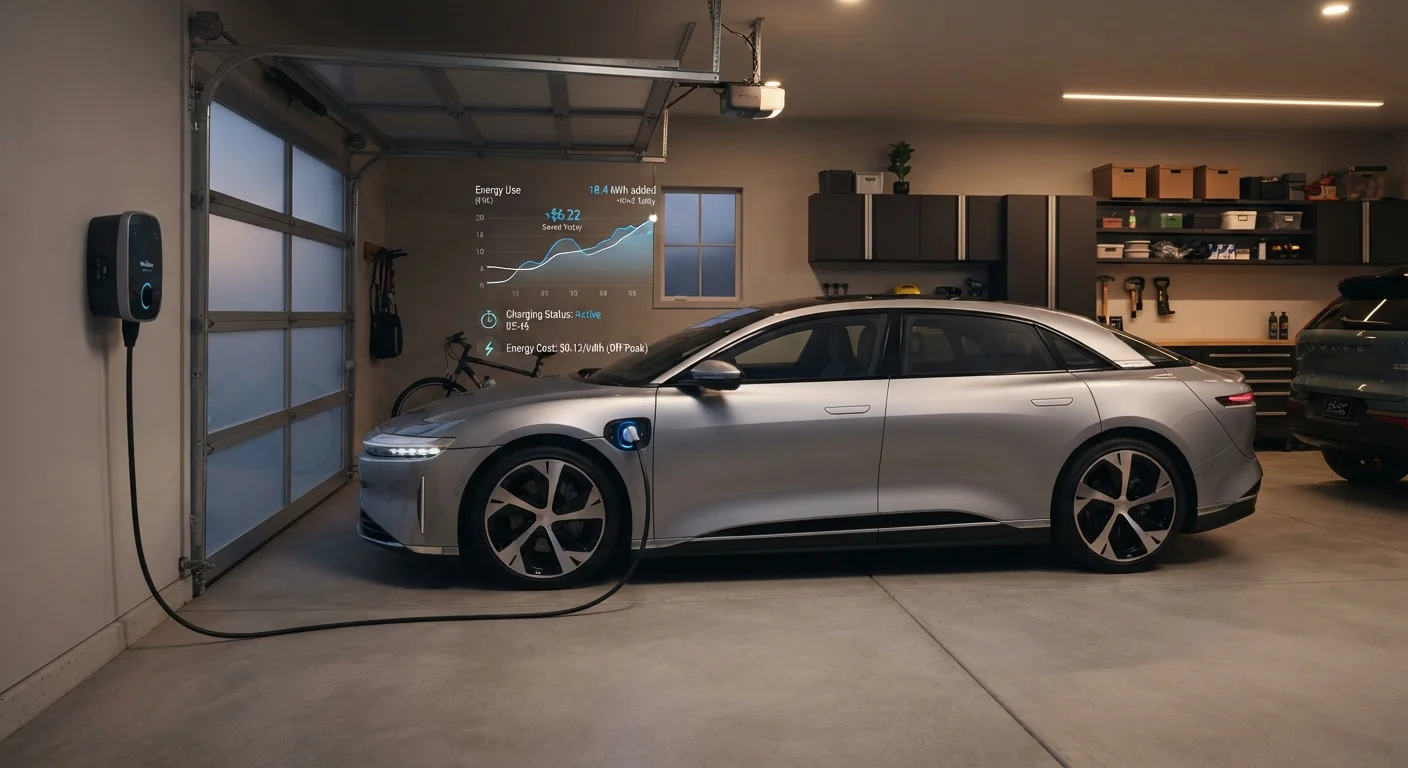
The single most important variable in EV cost of ownership is charging access. Drivers who can plug in at home overnight — typically at rates of $0.10 to $0.16 per kWh in many U.S. markets — enjoy a dramatically lower per-mile energy cost than those who rely primarily on public DC fast chargers, where per-kWh rates can be three to four times higher.
Annual mileage is the second lever. The higher the mileage, the faster the fuel and maintenance savings accumulate relative to the fixed premium on the purchase price. A driver covering 15,000 miles per year will recoup that premium faster than one driving 7,000 miles annually.
Before finalizing any decision, working through a structured checklist is worthwhile. Our practical decision checklist for switching to electric walks through charging access, driving patterns, and budget considerations in a systematic way. And if you're concerned about common financial missteps, pitfalls that catch new EV drivers off guard covers the errors that most often derail the expected savings.
This article is for general informational purposes only and does not constitute financial or purchasing advice. Tax credit eligibility and incentive availability vary by individual circumstances and are subject to change; consult a qualified tax professional for guidance specific to your situation.
The content on this site is for informational purposes only and is not a substitute for professional advice. Always consult a qualified professional for guidance specific to your situation.