

Start here
From Fringe to Mainstream: How Thrifting Got Here
Understand the drivers
What's Driving the Resale Boom
Learn the language
Key Terms Every New Thrifter Should Know
Think critically
The Trade-Offs and Tensions Worth Knowing
See the full picture
How Secondhand Fits Into the Bigger Fashion Picture
From Fringe to Mainstream: How Thrifting Got Here
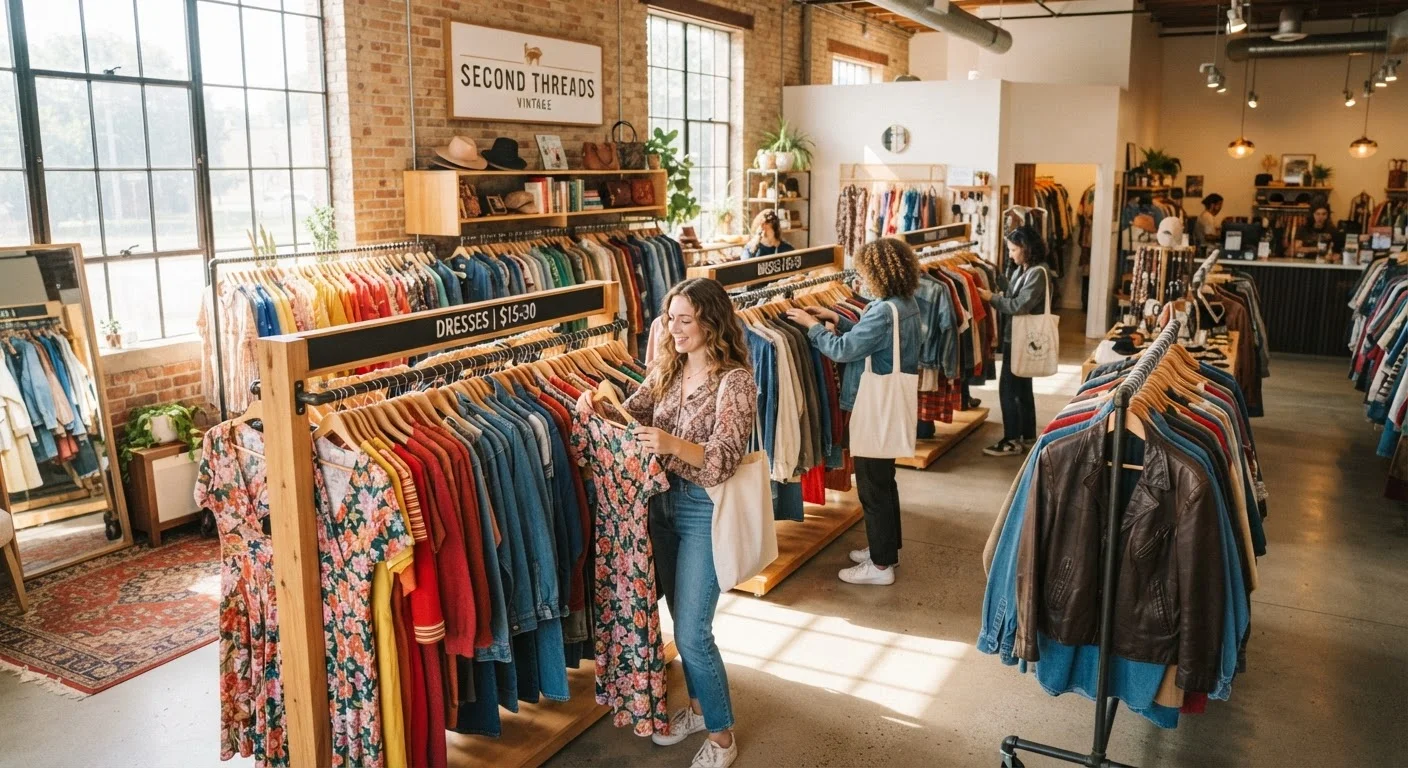
Not long ago, shopping at a thrift store carried a stigma — it was something people did quietly, out of necessity. Today, it's a Saturday plan, a TikTok genre, and a multi-billion dollar industry. The shift didn't happen overnight, and it wasn't driven by any single moment. It accumulated over years as economic pressures, environmental awareness, and a growing appetite for individuality pushed millions of Americans toward pre-owned clothing.
Resale platforms transformed what had been a local, physical, hit-or-miss experience into something searchable, scalable, and social. Peer-to-peer selling apps allowed anyone with a closet to become a seller, while curated resellers built entire businesses around sourcing and authenticating secondhand goods. Physical thrift chains — some nonprofit, some commercial — expanded their footprints as foot traffic grew. By the early 2020s, industry analysts were tracking the secondhand apparel market as one of the fastest-growing segments in U.S. retail.
This isn't just a shopping trend. It connects to how Americans are rethinking consumption more broadly — a theme explored in our piece on the rise of deinfluencing and shifting values around ownership.
What's Driving the Resale Boom
Several forces converged to make secondhand shopping feel not just acceptable but appealing — even aspirational.
- Economic pressure: As clothing prices rose alongside broader inflation, pre-owned items offered a way to access quality garments — sometimes including designer or durable pieces — at lower price points. This is a practical calculation many households made independently.
- Environmental concern: Awareness of the fashion industry's environmental footprint grew significantly among younger consumers. Buying secondhand is widely understood as a way to extend a garment's life and reduce the demand for new production, though the full picture is more complicated (more on that below).
- The hunt for uniqueness: Mass retail produces the same items in enormous quantities. Secondhand shopping, by contrast, is unpredictable — you might find a 1990s denim jacket that nobody else has. That appeal to individuality resonates strongly in a culture increasingly aware of how algorithmic trend cycles flatten personal style. See how this intersects with streetwear's influence on American fashion for context on how subculture aesthetics shape mainstream choices.
- Social media visibility: Thrift haul videos, vintage styling posts, and resale platform integrations made secondhand fashion visually compelling and easy to discover. Platforms rewarded this content because it performed well, creating a feedback loop that normalized and celebrated the practice.
Starting Out? Keep Expectations Flexible
Secondhand shopping rewards patience and an open mind more than a strict list. Going in with a general sense of what you need — a denim jacket, a work blazer, a particular color palette — gives you direction without making the unpredictable inventory feel like a failure. The best finds usually happen when you're not looking for something specific.
Key Terms Every New Thrifter Should Know
Thrifting
Shopping for pre-owned clothing and goods at charity stores, consignment shops, or similar low-cost secondhand retailers, typically where items have been donated.
Resale platform
A digital marketplace — app or website — where individuals or businesses sell pre-owned clothing directly to buyers, often with search and authentication features.
Vintage
In fashion, clothing that is generally at least 20 years old and reflects the recognizable style of the era in which it was made.
Deadstock
New, unworn merchandise that was never sold through its original retail channel — often old inventory with original tags still attached.
Consignment
A selling arrangement where the original owner brings items to a store or platform, which sells them on their behalf and takes a percentage of the sale price.
Fast fashion
A retail model that produces large volumes of trend-driven clothing quickly and cheaply, designed to be replaced frequently rather than worn long-term.
Navigating secondhand fashion is easier once you understand the vocabulary. Sellers, platforms, and shoppers all use specific terms that carry real distinctions — especially around pricing and what you're actually getting. Knowing whether something is described as vintage, pre-owned, or deadstock, for instance, tells you a lot about its age, condition, and likely cost. Our dedicated piece on vintage vs. retro terminology goes deeper on two of the most commonly confused labels.
The Trade-Offs and Tensions Worth Knowing
The secondhand shift is a genuine cultural movement, but it comes with real complications that honest coverage can't skip.
Thrift store gentrification is a widely discussed concern. As thrifting became fashionable among middle- and higher-income shoppers, prices at many stores rose and competition for quality items intensified. For lower-income shoppers who had long relied on these stores as a primary clothing source, this shift created friction — the democratic promise of affordable secondhand clothing is under pressure in many markets.
Environmental claims deserve scrutiny. Buying secondhand can reduce demand for new production, but the calculus depends on behavior. If a person buys ten secondhand items they didn't need instead of two new ones they would have worn for years, the environmental math doesn't straightforwardly favor secondhand. Transportation emissions from individual shipments also add up on peer-to-peer platforms.
Quality and fast fashion overlap. A significant portion of donated clothing comes from fast fashion labels — items produced cheaply and not designed for longevity. Thrift stores are not automatically stocked with durable, well-made garments; sorting and selectivity still matter. This connects to the broader conversation about what clothes are made of and how material quality affects a garment's lifespan.
Sizing Can Be Inconsistent in Secondhand Markets
Vintage and older garments were often sized using different conventions than modern clothing. A size labeled on a 1980s blouse may fit very differently from a contemporary garment with the same label. When shopping secondhand — especially online — checking actual measurements rather than relying on size labels tends to produce better results.
How Secondhand Fits Into the Bigger Fashion Picture
Secondhand style doesn't exist in isolation — it's part of a broader rethinking of what Americans want their wardrobes to do. The move toward intentional, longer-lasting closets connects to capsule wardrobe thinking, rental models, and a general fatigue with rapid trend cycles. Our companion piece on rethinking clothing ownership maps these overlapping approaches and their trade-offs.
At its core, the thrift and resale shift asks a simple question: does a piece of clothing need to be new to be good? For a growing number of Americans, the answer is clearly no — and that answer is reshaping retail floors, digital platforms, and the very language people use to talk about getting dressed. Whether you're a committed thrifter or simply curious about the movement, understanding its drivers and its contradictions puts you in a better position to make choices that actually reflect your values. For more on building a wardrobe that holds up beyond the trend cycle, see our guide to wardrobe longevity.
Frequently Asked Questions
Thrifting typically refers to shopping at physical charity or consignment stores where items are donated and priced low. Resale platforms are digital marketplaces where individuals or curated sellers list pre-owned items, often at higher prices reflecting curation, authentication, or demand.
Extending the life of a garment can reduce the demand for new production, which is resource-intensive. However, shipping individual items from peer-to-peer platforms does carry a carbon footprint. The environmental benefit depends heavily on what buying secondhand replaces in your overall shopping habits.
In fashion, vintage generally refers to clothing that is at least 20 years old and reflects the style of its era. Items from the past five to twenty years are sometimes called 'pre-owned' or 'secondhand' rather than vintage, though usage varies across sellers and platforms.
As thrifting became more popular and culturally desirable, demand rose sharply. Some stores adjusted pricing to reflect this demand, and resellers who buy items cheaply to sell at a profit further tightened supply for budget shoppers.
Many people do build wardrobes primarily from secondhand sources, though it requires more time and flexibility than traditional retail shopping. Availability varies by location, season, and size range, so it works best when combined with patience and a clear sense of what you're looking for.
Secondhand fashion is often discussed as a counterpoint to fast fashion — the model of producing large volumes of cheap, trend-driven clothing quickly. Buying pre-owned items keeps garments in circulation longer, but critics note that fast fashion's overproduction also floods donation centers with low-quality items.
The content on this site is for informational purposes only and is not a substitute for professional advice. Always consult a qualified professional for guidance specific to your situation.