

Why Trend Cycles Burn Through Wardrobes
The fashion industry runs on speed. Micro-trends now spike and vanish within weeks, fueled by social media algorithms that surface a new aesthetic before the last one has even reached store shelves. The result for most shoppers is a closet stuffed with pieces that felt urgent at purchase and feel obsolete by the following season.
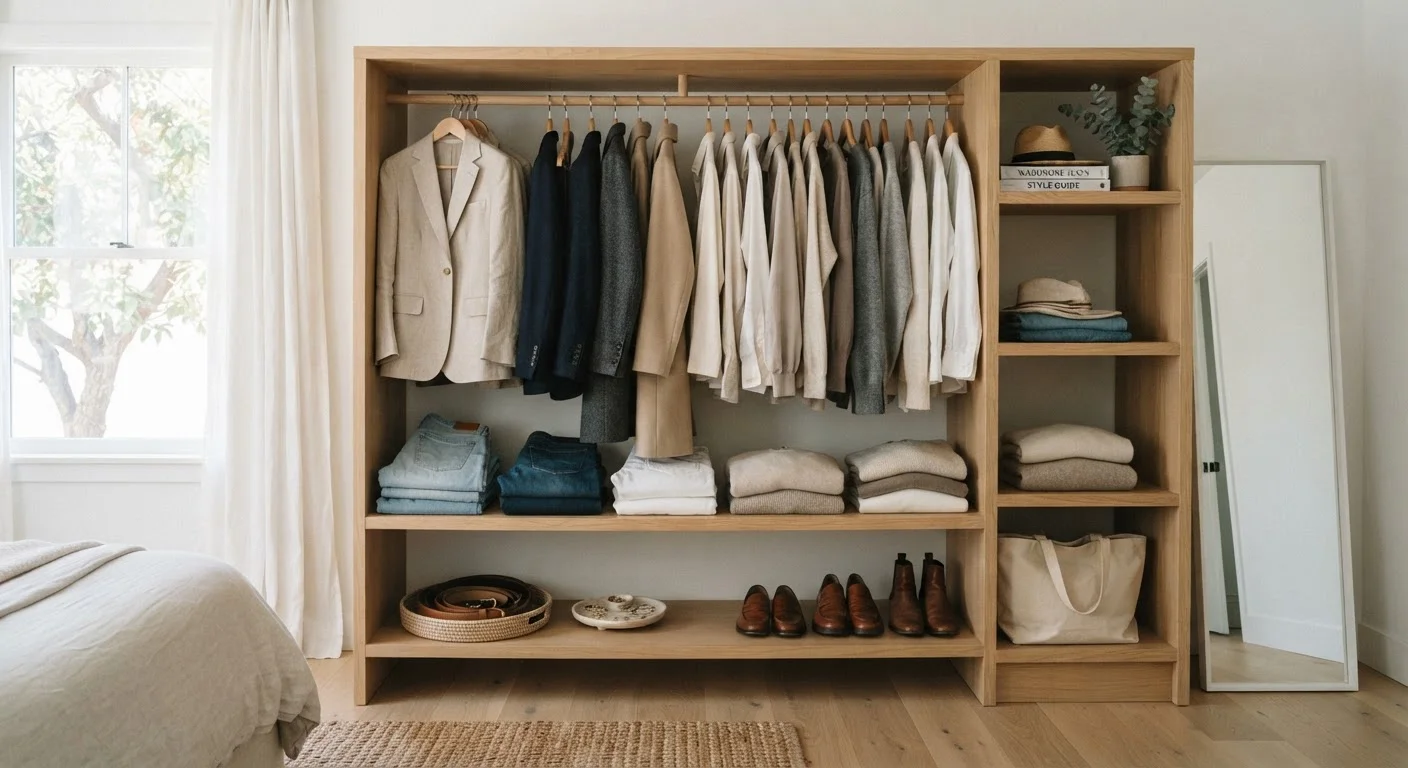
The good news: dressing well has never required keeping pace with every trend. A wardrobe built on clear principles — not impulse — stays functional, visually coherent, and worth wearing year after year. Understanding the difference between a passing trend and an enduring style is the first step toward getting there.
For a deeper look at the philosophies behind this choice, see Capsule Wardrobe vs. Trend-Driven Shopping — a breakdown of both approaches and who each suits best.
Where to Start: Your Lifestyle, Not the Runway
Before buying a single item, audit what you actually do each week. A wardrobe that works in real life is built around real routines — commutes, social events, outdoor time, and the spaces between. Many closets fail because they reflect aspirational identity rather than lived reality.
Map your week honestly: How many days do you need polished, workable outfits? How many are casual? How often are you traveling or outdoors? Those answers dictate the ratio of pieces you actually need. Versatility earns its keep when one piece can serve three different contexts.
Principles for Pieces That Stay Relevant
Once you understand your lifestyle, apply these core principles when evaluating any potential addition to your wardrobe. They work across gender expressions, budgets, and aesthetic preferences — whether your style leans minimalist, classic, or maximalist.
Shopping secondhand is an increasingly practical way to apply these principles without overspending. Resale platforms and thrift stores now carry quality classic pieces at accessible prices. The thrift and resale shift in American fashion has made building a considered wardrobe easier and more affordable than ever. If you're rethinking how much you own altogether, how Americans are rethinking clothing ownership offers useful context on rental and capsule models.
“Style is a way to say who you are without having to speak. The best wardrobes aren't the largest — they're the most considered.”
— Rachel Zoe, Fashion designer and style authority
Putting It Together: Maintaining a Wardrobe That Lasts
A trend-resistant wardrobe isn't a static archive — it evolves gradually and intentionally. Each season, do a brief review: What are you actually reaching for? What has sat untouched for six months? Remove pieces that no longer fit well or serve a real function, and donate or resell them rather than letting them crowd out what you use.
When you do add something new — including a trend-driven piece you genuinely love — ask whether it works with at least three things already in your closet. If it only pairs with other items you'd still need to buy, it may be more cost than it's worth.
For travelers, these same instincts transfer directly to packing. The carry-on packing method frequent flyers actually use relies on exactly this kind of wardrobe clarity — versatile pieces that mix and match efficiently. And if you're curious about how evolving style norms are expanding the definition of a functional wardrobe, The Gender-Neutral Wardrobe is worth a read.
The goal isn't a perfect wardrobe — it's a useful one. Built deliberately and maintained with intention, it becomes something that saves you time, money, and mental energy every single day.
The content on this site is for informational purposes only and is not a substitute for professional advice. Always consult a qualified professional for guidance specific to your situation.