

Start here
What Does Gender-Neutral Fashion Actually Mean?
Understand the context
The Cultural Forces Behind the Shift
See it in action
What Gender-Neutral Dressing Looks Like in Practice
Think critically
Challenges and Critiques Worth Knowing
Apply it
How to Start Thinking About Your Own Wardrobe
What Does Gender-Neutral Fashion Actually Mean?
Gender-neutral fashion — sometimes called genderless or ungendered clothing — refers to garments designed and marketed without assuming the wearer's gender. Instead of dividing a store into a men's wing and a women's wing, a gender-neutral approach asks a simpler question: does this fit well and feel right on the person wearing it?
Gender-neutral fashion
Clothing designed and sold without gendered labels or assumptions, intended to be worn by people of any gender based on personal fit and preference.
Binary categories
The traditional division of clothing — and many social systems — into two distinct groups: men's and women's. Gender-neutral fashion challenges whether this division is necessary.
Unisex clothing
An older term for clothing meant to suit any gender, though it historically defaulted to a masculine fit. Often used interchangeably with gender-neutral, but the two concepts differ in intent.
Capsule wardrobe
A curated, small collection of versatile clothing pieces that mix and match easily, emphasizing quality and longevity over quantity and trend-chasing.
Silhouette
The overall shape or outline of a garment as it appears on the body — a key factor in gender-neutral design, where shape often matters more than category labels.
This is different from historical notions of "unisex" clothing, which typically defaulted to a masculine template sized for a narrower range of bodies. Today's gender-neutral conversation is more expansive: it questions why binary categories exist in the first place and what we lose — creatively and practically — by maintaining them. For a broader look at where American fashion is heading, the Fashion Trends hub tracks these shifts in real time.
The Cultural Forces Behind the Shift
Fashion has always reflected social change, and the move toward gender-neutral dressing is no exception. Several intersecting forces have pushed this conversation into the mainstream over the past decade.
Generational attitudes: Younger Americans — particularly Gen Z — have grown up with broader, more fluid conversations about gender identity. Research consistently shows this generation is more likely to reject binary frameworks across many areas of life, including clothing.
Social media visibility: Platforms like Instagram and TikTok have given visibility to style communities that have long mixed gendered clothing norms. What once existed in subcultures now circulates globally within hours, accelerating trend adoption and normalization.
Retail strategy: Major American retailers have responded by introducing ungendered sections, renaming departments, or restructuring sizing guides. This isn't purely ideological — it's also commercially pragmatic. Brands recognized an underserved market.
Workwear evolution: The pandemic-era dissolution of strict office dress codes created room to question long-standing wardrobe rules. See how office dressing is being reinvented post-pandemic for the broader context of how professional wardrobes are shifting.
Fashion History Already Broke These Rules
Many wardrobe staples we now consider neutral — denim jeans, blazers, trench coats — were once coded as strictly masculine before women adopted them en masse. The current shift toward gender-neutral fashion is part of a much longer continuum of clothing categories evolving alongside culture.
What Gender-Neutral Dressing Looks Like in Practice
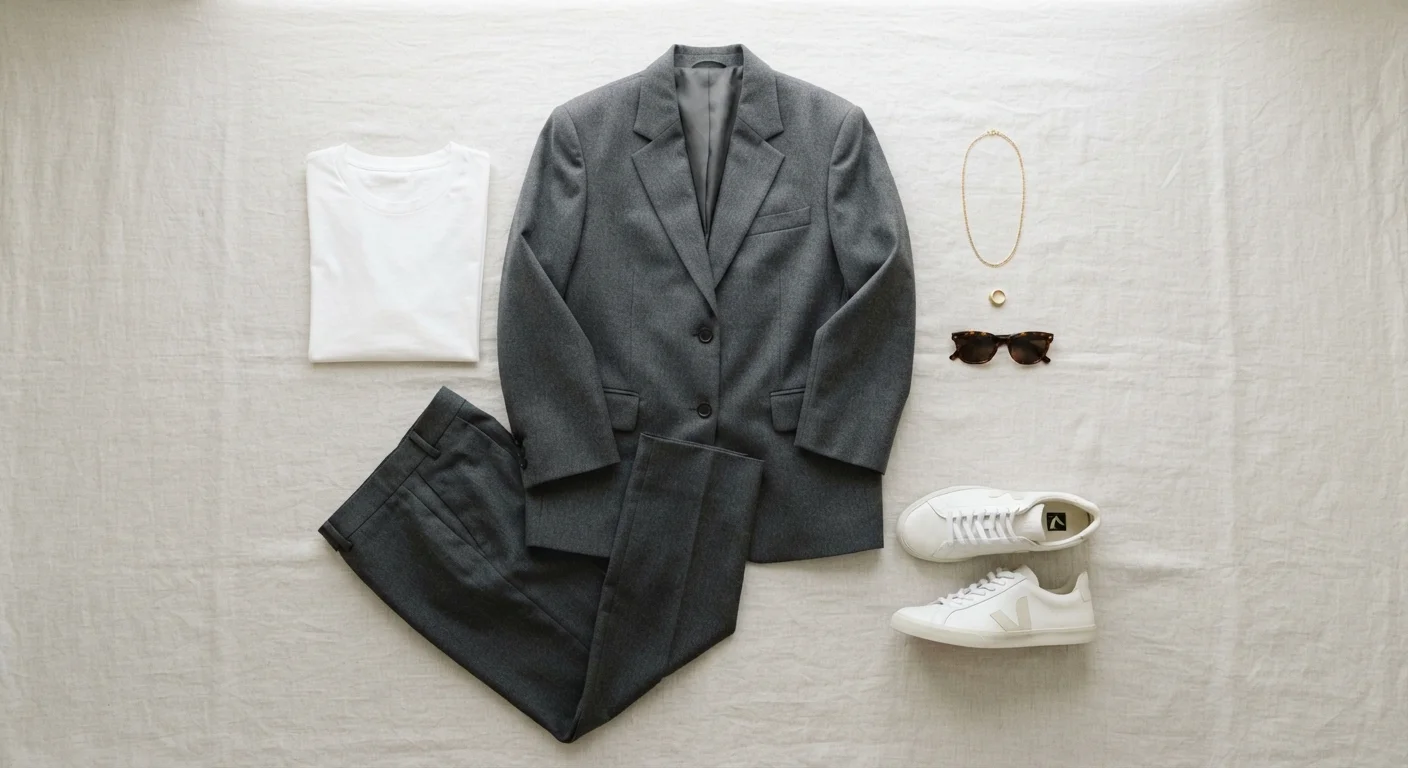
On a practical level, gender-neutral dressing often centers on silhouette, fabric, and proportion rather than prescribed categories. Common wardrobe anchors include:
- Straight-leg or wide-leg trousers that work across body types without requiring gendered tailoring cues
- Oversized outerwear — blazers, denim jackets, and coats — that layers easily regardless of the wearer
- Plain knits and tees in neutral or earth-toned palettes, prioritizing texture and drape over decoration
- Minimal footwear like chunky loafers or clean sneakers that have long straddled gendered categories
This approach connects naturally to the growing interest in capsule wardrobes — curated, versatile collections built to last. The secondhand, rental, and capsule wardrobe movement shares a similar philosophy: fewer, better pieces that serve multiple purposes. Fabric choices matter here too — read about the materials shaping American fashion to understand what makes gender-neutral basics hold up over time.
Challenges and Critiques Worth Knowing
No cultural shift arrives without friction, and gender-neutral fashion has its share of legitimate critiques.
Sizing inclusivity: Calling something "gender-neutral" doesn't automatically make it accessible. If the range stops at a size medium or assumes a narrow height and shoulder width, the label is more marketing than meaningful inclusion.
Price barriers: Gender-neutral lines, particularly those positioned as premium or designer, can carry price points that make the aesthetic inaccessible to many consumers. Inclusive language without inclusive pricing has drawn criticism from fashion commentators.
The aesthetics debate: Some critics argue that much of what gets labeled gender-neutral defaults to a minimalist, androgynous look that doesn't actually accommodate the full range of how people want to dress. Bold prints, fitted silhouettes, and traditionally feminine details often get left out of the conversation.
The tension between truly rethinking clothing categories and simply rebranding existing styles is one the industry continues to navigate. Understanding those distinctions helps consumers make more informed choices.
Marketing Language vs. Meaningful Change
When a brand announces a "genderless" collection, it's worth examining the details: Does the sizing actually reflect a wide range of bodies? Are the prices comparable to gendered equivalents? Is the styling genuinely versatile? Labels evolve faster than systems, so a critical eye is useful when navigating the current retail landscape.
How to Start Thinking About Your Own Wardrobe
You don't need to overhaul your closet or commit to a particular identity to engage with gender-neutral fashion ideas. The most useful entry point is simply asking: Am I choosing this because it feels right, or because it was placed in my designated section?
A few practical starting points:
- Audit what you already own for pieces that work regardless of gendered context — you likely have more than you think.
- Experiment with proportion. An oversized shirt or a structured blazer can shift the feel of an outfit without requiring new purchases.
- Look for wardrobe building strategies that emphasize longevity over trend-chasing. The principles for building a wardrobe that survives trend cycles apply well here.
- Consider whether your shopping habits reflect your actual preferences or inherited category assumptions.
Gender-neutral fashion, at its core, is less about a specific look than about expanding the range of choices available — and feeling at ease in what you wear. That's a principle anyone can engage with, wherever they land on questions of style and identity.
Frequently Asked Questions
Gender-neutral fashion refers to clothing designed and marketed without reference to a specific gender. Rather than placing items in a men's or women's section, these pieces are intended to be worn by anyone, with cuts and silhouettes that prioritize personal fit and style over binary categorization.
They overlap but aren't identical. Unisex clothing historically meant designing to a middle-ground fit — often defaulting to a masculine baseline. Gender-neutral fashion takes a broader view, questioning why gendered categories exist at all and aiming to serve diverse body types without a default template.
Not at all. People of all gender identities wear clothing that doesn't conform to traditional categories. Gender-neutral fashion is as much about self-expression, comfort, and versatility as it is about identity.
Availability has grown significantly, with many mainstream American retailers now offering ungendered sections or lines. That said, size range and price accessibility remain inconsistent across the market.
Many gender-neutral wardrobe principles — versatility, longevity, and fewer but better pieces — align closely with sustainable fashion values. Clothes designed for anyone, rather than a narrow demographic, can theoretically stay in use longer and across more people.
Exploring broader fashion coverage and cultural trend analysis can give useful context. Runway reports, cultural journalism, and retail industry news are good starting points for understanding how American dressing continues to evolve.
The content on this site is for informational purposes only and is not a substitute for professional advice. Always consult a qualified professional for guidance specific to your situation.