

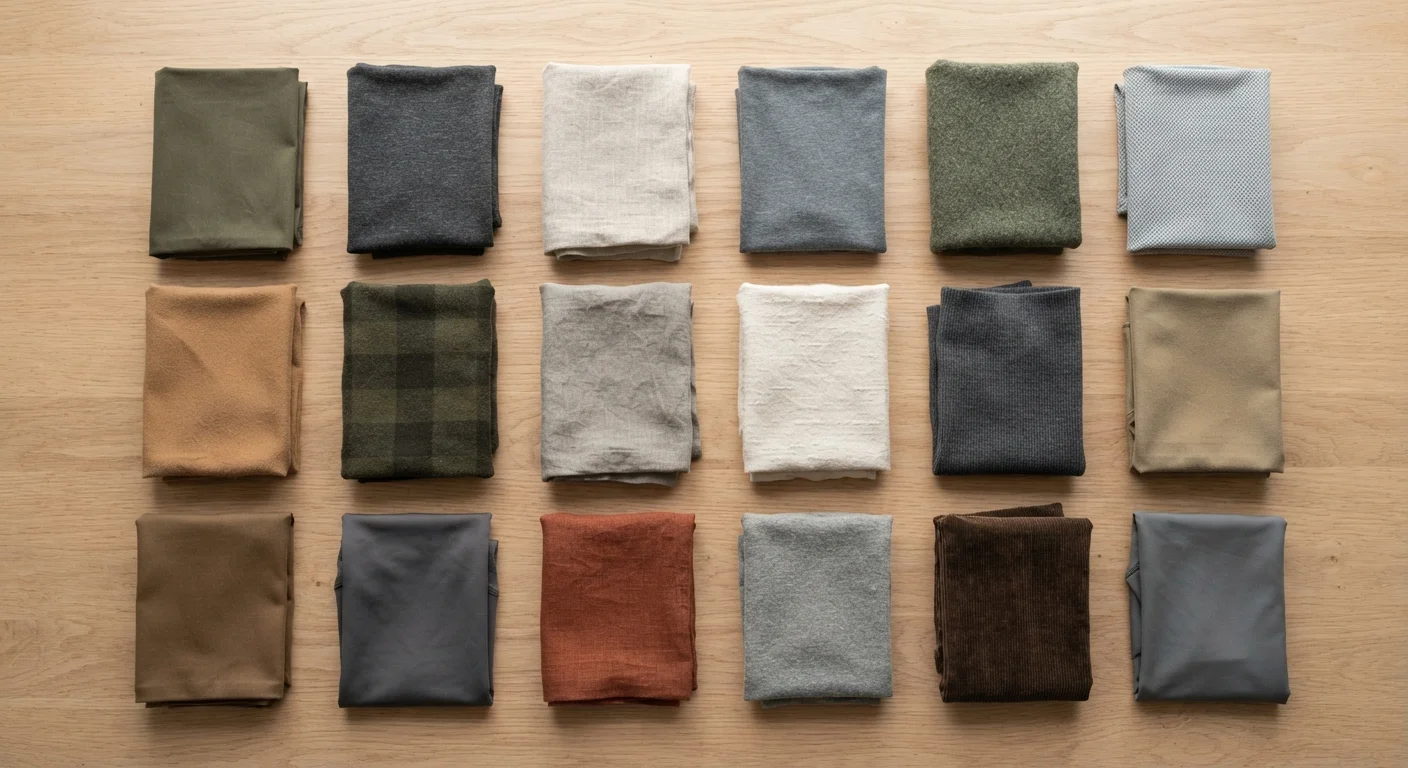
Why Fabric Is Having a Moment
American fashion conversations have long centered on silhouette, color, and brand — but a quieter shift is underway. Consumers are paying closer attention to what their clothes are actually made of. Whether driven by comfort demands, sustainability concerns, or the explosion of athleisure into everyday dress, fabric composition has moved from fine-print afterthought to genuine purchase consideration.
Understanding what sets materials apart — how they feel, perform, and hold up over time — gives shoppers a sharper lens for building a wardrobe that actually works. For a deeper look at how performance fabrics reshaped casual dressing, see the rise of athleisure in American dress.
| Most-worn fiber in the U.S. | Cotton (National Cotton Council of America) |
| Recycled polyester source | Often made from post-consumer plastic bottles |
| Linen plant origin | Flax (Linum usitatissimum) |
| OEKO-TEX Standard 100 | Tests for harmful substances in finished textiles (OEKO-TEX Association) |
| Tencel trademark owner | Lenzing AG (Austria) |
| Microplastic shedding | Documented in synthetic fabrics during machine washing (International Union for Conservation of Nature, 2017 report) |
The Key Fabrics Gaining Ground
Here's a plain-language breakdown of the materials making the biggest impact in American wardrobes right now — and what makes each worth knowing.
Moisture-wicking
A fabric property that draws sweat away from the skin toward the outer surface of the garment, where it can evaporate. Common in performance synthetics like polyester-spandex blends.
Lyocell (Tencel)
A semi-synthetic fiber made from dissolved wood pulp, produced through a closed-loop manufacturing process. Known for softness, breathability, and relatively lower environmental impact compared to conventional rayon.
GOTS Certification
Global Organic Textile Standard — an independent certification verifying that a textile meets specific organic farming and processing criteria throughout its supply chain.
Microplastics
Tiny plastic particles shed by synthetic fabrics during washing. They pass through wastewater systems and have been detected in waterways and ecosystems; their long-term impacts are an active area of research.
Closed-loop process
A manufacturing method in which solvents or chemicals used in production are captured, recycled, and reused rather than discharged as waste. Associated with lyocell fiber production.
Elastane (Spandex)
A highly elastic synthetic fiber — often called Spandex in the U.S. — blended with other fibers to add stretch and shape retention to garments.
Performance Blends
Fabrics like polyester-spandex blends and nylon-elastane combinations dominate activewear and have migrated into everyday clothing. They're engineered to wick moisture, resist pilling, and retain their shape through repeated washing. The tradeoff: most synthetic performance fabrics are petroleum-derived, which raises environmental questions around production and end-of-life disposal.
Organic and Conventional Cotton
Cotton remains the most-worn fiber in America, valued for breathability and softness. Organic cotton — grown without synthetic pesticides — has grown in visibility as consumers scrutinize supply chains more carefully. It's important to note that "organic" certification addresses agricultural practices, not necessarily labor conditions or carbon footprint across the full supply chain.
Linen
Made from the flax plant, linen is one of the oldest textiles in use. It's highly breathable and grows stronger with washing, making it a practical warm-weather choice. It wrinkles easily, which some wearers embrace as part of its character.
Tencel and Lyocell
These semi-synthetic fibers are produced from wood pulp — often eucalyptus — using a closed-loop process that recycles most of the solvent used in production. The result is a silky, breathable fabric that drapes well and is generally considered lower-impact than conventional viscose (rayon).
Recycled Synthetics
Recycled polyester — often sourced from post-consumer plastic bottles — and recycled nylon are increasingly common in outerwear and activewear. They share many performance properties with virgin synthetics while reducing reliance on new petroleum extraction. However, like all synthetic fabrics, they can shed microplastics during washing.
Reading a Fabric Label: What to Look For
The care label stitched inside a garment lists fiber content by percentage — a 55% linen / 45% cotton blend, for instance, will feel stiffer and more textured than a pure cotton equivalent. A few practical things to watch for:
- Blended fabrics often combine the strengths of each fiber — a cotton-polyester shirt may be softer than pure polyester while resisting wrinkles better than pure cotton.
- Percentage matters: a fabric listed as "made with recycled materials" may contain as little as 20–30% recycled fiber. Checking the label tells a more precise story.
- Certifications like OEKO-TEX, GOTS (Global Organic Textile Standard), and bluesign® indicate that a fabric has been independently tested or audited for specific criteria — but each certification measures different things, so it helps to understand what each one actually covers.
For context on how fabric choices intersect with broader consumption habits, the fast fashion vs. slow fashion breakdown is a useful companion read. And if fabric longevity is part of your wardrobe thinking, how Americans are rethinking what they own explores how ownership models are evolving alongside material preferences.
"Sustainable" Fabric Claims: A Nuanced Picture
No fabric is entirely without environmental impact — every material involves land use, water, energy, and transportation. Terms like "eco-friendly" or "sustainable" are not standardized in U.S. apparel marketing, so they can mean different things across brands. Independent certifications (GOTS, OEKO-TEX, bluesign®) provide more specific and verifiable benchmarks. When in doubt, checking what a certification actually measures is a more reliable guide than a general marketing label.
The content on this site is for informational purposes only and is not a substitute for professional advice. Always consult a qualified professional for guidance specific to your situation.