

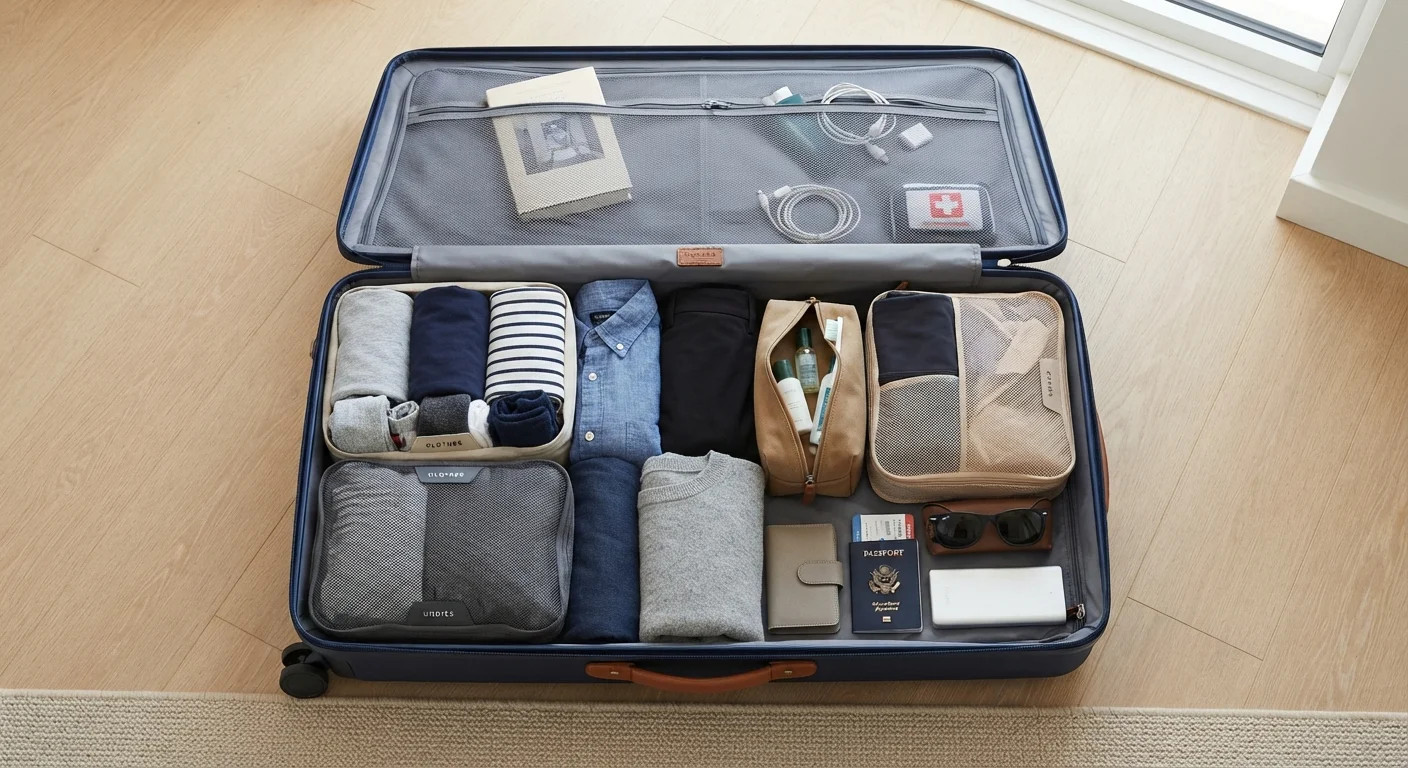
Why Packing Method Matters as Much as What You Pack
Most travelers who struggle with carry-on space aren't bringing too much — they're packing inefficiently. The same ten items can consume wildly different volumes depending on how they're organized. Experienced travelers treat packing as a repeatable system, not an improvised task done the night before departure.
Carry-on travel offers real advantages: no checked bag fees, no wait at baggage claim, and no risk of a delayed or lost suitcase. But those advantages disappear if the bag is overstuffed, poorly balanced, or packed in a way that requires unpacking at security. If you're weighing whether to check a bag at all, the trade-offs between carry-on and checked luggage are worth reviewing before your next trip.
Check Airline Size Limits Before You Pack
Carry-on size rules vary by airline and even by aircraft type. A bag that clears security on one carrier may be gate-checked on another. Always verify the maximum dimensions and weight allowances on your airline's official website before your trip, and measure your bag when fully packed.
The methods below — rolling, bundling, and layering — are not competing approaches. Most seasoned travelers combine all three, applying each technique to the clothing type it suits best.
What you will need
Gear and Preparation
Having the right organizational tools makes a measurable difference. Packing cubes in particular have become standard among frequent flyers because they compress clothing, speed up security screening, and make repacking at hotels significantly faster.
Packing Cubes
Compress and separate clothing into labeled sections, making repacking faster at each destination.
Compression Bags
Remove excess air from bulky items like sweaters or down layers to shrink their footprint.
Soft Packing Organizer or Toiletry Pouch
Keeps liquids and personal-care items contained and easy to pull out at security screening.
Before packing any gear, address the psychological side of the problem. Research into traveler behavior consistently finds that packing anxiety — the fear of not having the right item — drives overpacking more than actual need. Understanding why overpacking happens can help you approach your packing list more objectively.
Pack a Versatile Capsule Wardrobe
Frequent flyers often select clothing in two or three complementary colors so every top pairs with every bottom. This multiplies outfit combinations without adding items. For more on building clothing that travels well, see wardrobe versatility principles.
Step-by-Step: The Layering System
Follow these steps in order. Each layer builds on the last, and skipping ahead — or packing in reverse — typically results in wasted space and a bag that's harder to close.
Build Your Packing List First
Before touching your bag, write down exactly what you plan to bring. Frequent travelers typically follow a formula: one outfit per two days for casual trips, with items chosen to mix and match across categories. Laying clothing flat on a bed before packing lets you spot redundancies and remove them before they consume space.
Place the Structural Layer First
Start with flat, rigid, or heaviest items against the bag's back panel — the side that rests against the overhead bin wall. Jeans, a laptop sleeve, shoes (in a bag or wrapped in a shower cap), and flat shoes fit here. Distribute weight evenly left to right so the bag rolls without tipping.
Roll Casual and Knit Clothing
Tightly roll T-shirts, underwear, socks, casual pants, and knitwear into cylinders. Rolling reduces air pockets more effectively than flat folding for these fabrics and causes fewer creases. Stand rolls upright in packing cubes or line them side by side in a single layer — this also makes individual items visible without unpacking everything.
Use the Bundle Method for Dress Clothing
The bundle method — also called interfolding — is preferred by frequent business travelers for suits, blazers, and dress shirts. Lay your largest garment (a blazer or dress) face-down in the bag, letting the sleeves and skirt hang over the edges. Add progressively smaller items on top, then wrap the outer layer's excess fabric around the bundle and fold it over. This distributes the fold across the entire garment rather than creating a single hard crease.
Fill Gaps With Soft Items
Scarves, thin sweaters, and gym clothes are flexible enough to fill the irregular voids that remain after structural and rolled layers are in place. Press them into corners and along the sides of the bag. Compression bags are useful here for a single bulky down layer if needed.
Pack Your Personal Item Strategically
Most airlines allow a personal item — typically a backpack or tote — in addition to a carry-on. Laptop, reading material, medications, a change of clothes, and in-flight comfort items belong here. This bag should be accessible throughout the flight, making it the right place for anything you'll need during a long-haul journey or a layover.
Overstuffing Can Get Your Bag Gate-Checked
Overhead bin space fills quickly on full flights. If your bag cannot close cleanly or fit in the sizer at the gate, staff can require you to check it at the last minute — often at a higher fee. Pack to roughly 80% capacity to leave room for items acquired during the trip and to keep the bag maneuverable.
Arriving Organized: What to Expect at Security and the Gate
A well-packed carry-on should pass through security without requiring you to dig through the bag. Liquids, electronics, and any medically necessary items should be near the top or in your personal item. At the gate, carry-on bags are sometimes measured or weighed on busy routes — particularly on regional jets with smaller overhead bins.
If you're navigating a tight connection, a compact, organized bag makes a meaningful difference. For guidance on managing the connection itself, the airport layover navigation guide covers what to do when time is short and gates change.
Once you've internalized a packing system, the process becomes faster each trip. Most frequent travelers report that a consistent method — not a perfect bag or the lightest gear — is what ultimately makes carry-on travel sustainable across longer or more complex itineraries.
The content on this site is for informational purposes only and is not a substitute for professional advice. Always consult a qualified professional for guidance specific to your situation.