

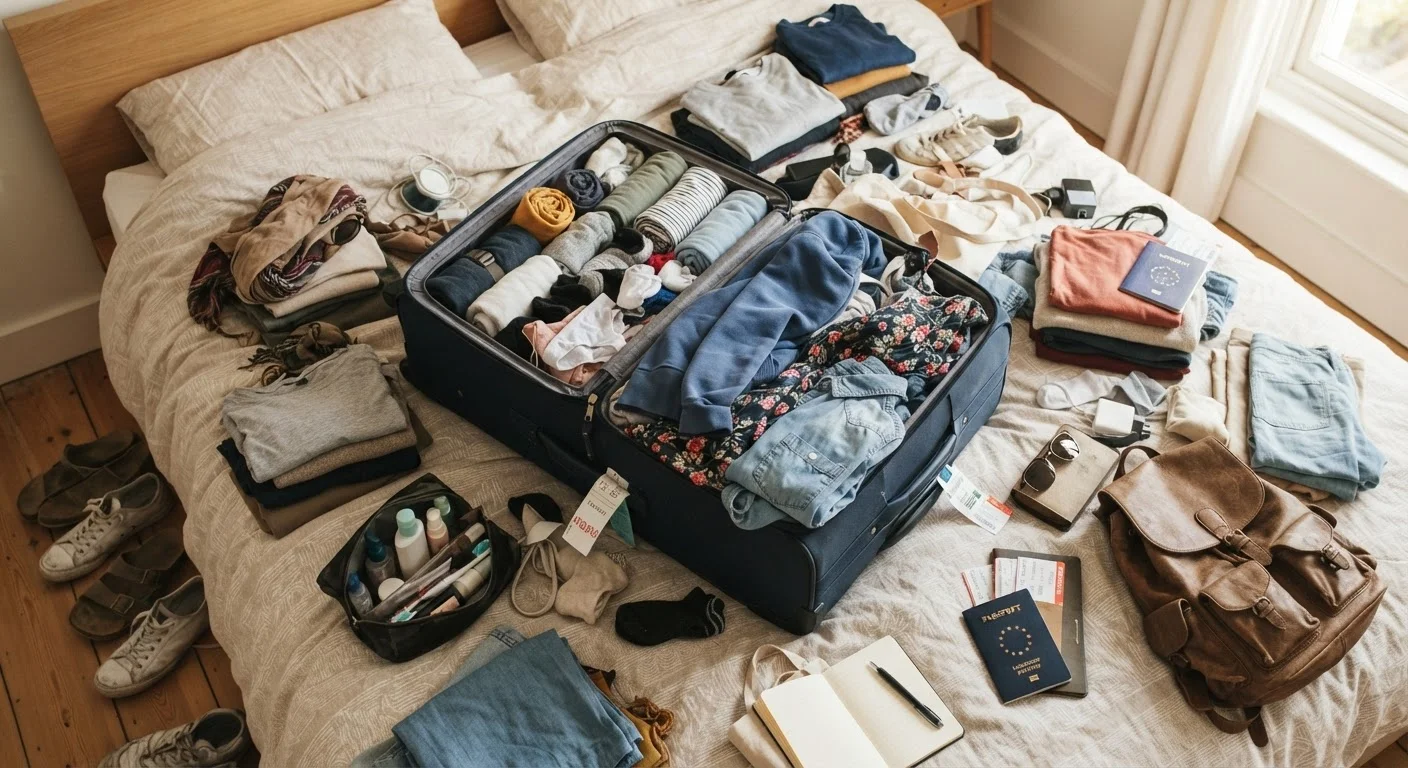
The Psychology Behind Overpacking
Most travelers don't overpack because they're careless — they overpack because uncertainty feels uncomfortable. The instinct to prepare for every possible scenario is a normal cognitive response to unfamiliar environments, but it translates poorly into suitcase management.
Research in behavioral psychology broadly supports the idea that humans overestimate the range of situations they'll actually encounter, a tendency sometimes called "worst-case wardrobe planning." A traveler heading to a beach destination might still pack business-casual clothes "just in case," despite having no realistic plans that call for them. The same logic drives duplicate toiletries, excessive footwear, and redundant layers.
There's also a comfort element. For many people, seeing a full bag provides a sense of security before departure — a tangible signal that they're prepared. The problem is that this feeling doesn't survive contact with a heavy bag at the airport, a cramped overhead bin, or a cobblestone street. Understanding these psychological drivers is the first step toward changing the habit.
Packing for hypothetical scenarios rather than planned activities.
Why it happens: Travelers imagine worst-case situations — a surprise formal dinner, unexpected cold weather — and pack defensively for events that rarely materialize.
Duplicating toiletries and personal care items already available at the destination.
Why it happens: Travelers default to packing full-size versions of items out of routine, without checking whether the destination provides them or whether travel sizes suffice.
Bringing more shoes than the trip realistically requires.
Why it happens: Shoes are heavy and bulky, yet travelers routinely pack three or four pairs by matching each to a specific outfit rather than selecting footwear that works across multiple contexts.
Skipping a packing list and relying on memory instead.
Why it happens: Packing often happens under time pressure, and a mental checklist feels faster — but memory-based packing consistently produces both forgotten essentials and unnecessary duplicates.
Not accounting for items that can be purchased or borrowed at the destination.
Why it happens: Travelers assume local availability of things like sunscreen, over-the-counter medicine, or beach towels is uncertain, so they pack items that are widely sold at most destinations.
Practical Habits That Lead to Lighter Packing
Experienced travelers — including frequent flyers and travel journalists — tend to converge on a handful of strategies that reliably reduce bag weight without sacrificing preparedness. These aren't minimalist experiments; they're practical systems that hold up across trip types and destinations.
Build around a color palette. Choosing clothes in two or three complementary neutral tones means every piece can combine with every other piece, effectively multiplying outfit options without multiplying item count. This single habit can reduce clothing volume by a third or more for most travelers.
Check laundry availability before you pack. Hotels, hostels, and short-term rentals across much of the world offer guest laundry or have laundromats nearby. Knowing this before departure changes the equation: a five-day trip may only require three days of clothing.
Write a list — then cut it. Packing from memory almost always results in extras. A written list forces conscious decisions and, crucially, enables a second pass. Many seasoned travelers pack everything on their list, then remove two or three items before closing the bag. That final audit is where unnecessary weight disappears.
For travelers managing multi-stop itineraries, keeping bags light becomes even more important. See the guide to planning multi-destination trips for a broader framework on keeping complex travel manageable. For specifics on fitting more into less space, carry-on packing techniques used by frequent flyers offer concrete methods. And if you're weighing whether to check a bag at all, this breakdown of carry-on versus checked luggage covers the practical trade-offs.
Airline Baggage Rules Vary Significantly
Weight and size limits differ across airlines, fare classes, and routes — including within the same booking if it involves multiple carriers. Always verify current baggage policies directly with each airline before travel, as policies can change and excess baggage fees can be substantial. This is especially relevant for international itineraries involving a mix of full-service and low-cost carriers.
The content on this site is for informational purposes only and is not a substitute for professional advice. Always consult a qualified professional for guidance specific to your situation.