

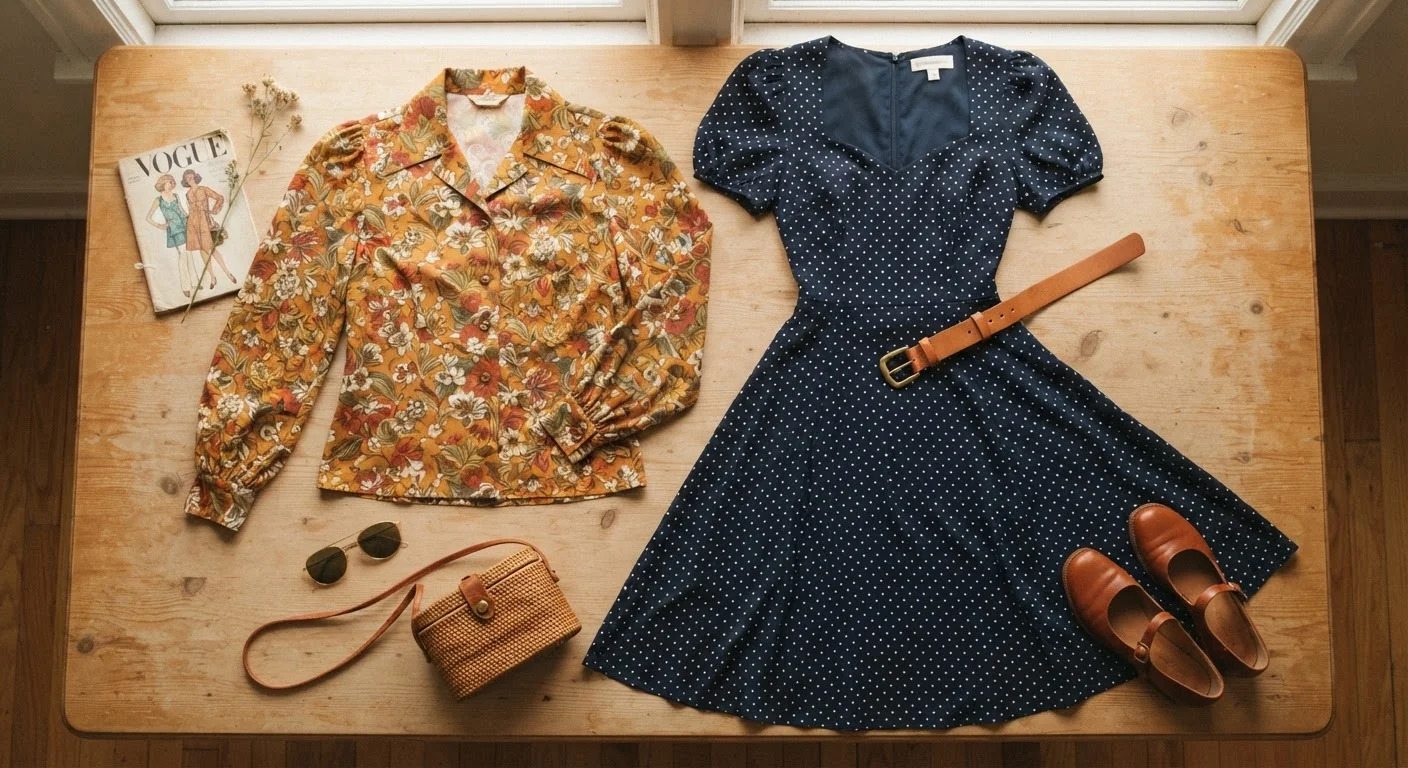
Option A
Vintage Fashion
The real deal — original garments from a previous era.
Best for: Collectors, history enthusiasts, and shoppers who want authentic, one-of-a-kind pieces with genuine provenance.
Option B
Retro Fashion
New clothes designed to evoke the look and feel of the past.
Best for: Trend-followers who love a nostalgic aesthetic but prefer accessible, reproducible styles at various price points.
Two Words, Two Very Different Meanings
Walk into any thrift shop, scroll through a resale app, or browse an independent boutique and you'll encounter both terms constantly — often used as though they're synonyms. They aren't. Vintage and retro describe fundamentally different things, and conflating them leads to real confusion about what you're actually buying, wearing, or paying for.
The fashion industry broadly defines vintage as any garment produced at least 20 years ago. Some stricter collectors and auction houses set the threshold at 25 or even 50 years, but the 20-year benchmark is the most widely accepted contemporary standard. A vintage piece is an original artifact of its era — it was made then, worn then, and has survived to now.
Retro, by contrast, refers to newly manufactured clothing that deliberately mimics the visual language of a past decade. A dress sewn in 2024 with a 1970s-inspired wrap silhouette, earthy palette, and oversized collar is retro. It evokes the past; it was not made there. The distinction is straightforward once you know it, but marketing language — "vintage-inspired," "retro-style," "throwback vibes" — blurs the line relentlessly.
| Criterion | Vintage Fashion | Retro Fashion |
|---|---|---|
| Age of garment | At least 20 years old (original) | Newly manufactured |
| Design intent | Authentic period piece | Deliberately nostalgic aesthetic |
| Sustainability impact | Circular — no new production | Same footprint as new clothing |
| Sizing | Varies; often differs from modern standards | Contemporary sizing standards |
| Availability | Finite; one-of-a-kind | Mass reproducible |
| Condition variability | Wear, fading, or repairs possible | New condition |
| Price range | Varies widely by era and rarity | Consistent with new retail pricing |
Why the Distinction Actually Matters
For casual dressing, the difference might seem academic. But it carries real stakes across several dimensions.
Authenticity and Value
Genuine vintage garments are finite objects. A 1965 mod shift dress or a 1980s power blazer from a storied American label cannot be reproduced exactly — the original fabrics, dyes, and construction techniques belong to their moment. That scarcity can translate to monetary and cultural value, particularly for collectors and fashion historians. Retro pieces, however beautifully made, are reproducible by definition.
Sustainability Claims
One of the most common misunderstandings involves sustainability. Buying vintage is genuinely circular — you're extending the life of an existing garment and bypassing new production entirely. Retro fashion, on the other hand, involves all the manufacturing inputs of any new clothing line. Calling a retro purchase "sustainable" because it looks old-fashioned is a significant stretch. For a deeper look at how secondhand markets intersect with sustainability, the resale shift in American fashion is worth exploring.
Fit and Condition
Vintage sizing often differs substantially from modern standards — a dress labeled "size 12" from the 1960s may fit closer to a contemporary size 6 or 8. Vintage pieces also come with the natural wear of their age: fading, fragility, and occasional repairs. Retro clothing is built to today's sizing and construction norms, making it more immediately wearable for most shoppers.
A Note on the Term "Antique" Clothing
In some collecting circles, garments over 100 years old are classified as "antique" rather than vintage — a distinction more common in formal auction and museum contexts than in everyday fashion retail. For most practical shopping purposes, vintage covers anything from the early 20th century onward that meets the age threshold. If provenance and precise era matter to you, it's worth consulting specialist dealers or authentication resources.
How to Spot the Difference When Shopping
A few practical checks help separate genuine vintage from retro reproductions when you're browsing in person or online.
- Check the label: Union labels, country-of-origin stamps ("Made in USA," "Made in England"), and brand logo styles can help date a garment. Many vintage authentication guides cross-reference label designs by decade.
- Examine construction: Vintage garments often feature hand-stitched details, metal zippers, and heavier fabrics not commonly used in contemporary production.
- Look at the fabric content tag: Care labels indicating fiber content by percentage became federally required in the U.S. in 1971 — so any piece without one is likely pre-1971 or counterfeit.
- Ask the seller directly: Reputable vintage dealers and resale platforms typically provide era information, provenance, and condition notes.
Understanding these signals also connects to broader wardrobe decisions. If you're weighing whether to build around timeless pieces or follow seasonal trends, the capsule wardrobe vs. trend-driven shopping comparison lays out both philosophies clearly. And for context on what "slow" and "fast" production actually mean, the fast fashion vs. slow fashion breakdown is a useful companion read.
The content on this site is for informational purposes only and is not a substitute for professional advice. Always consult a qualified professional for guidance specific to your situation.