

Where Streetwear Came From
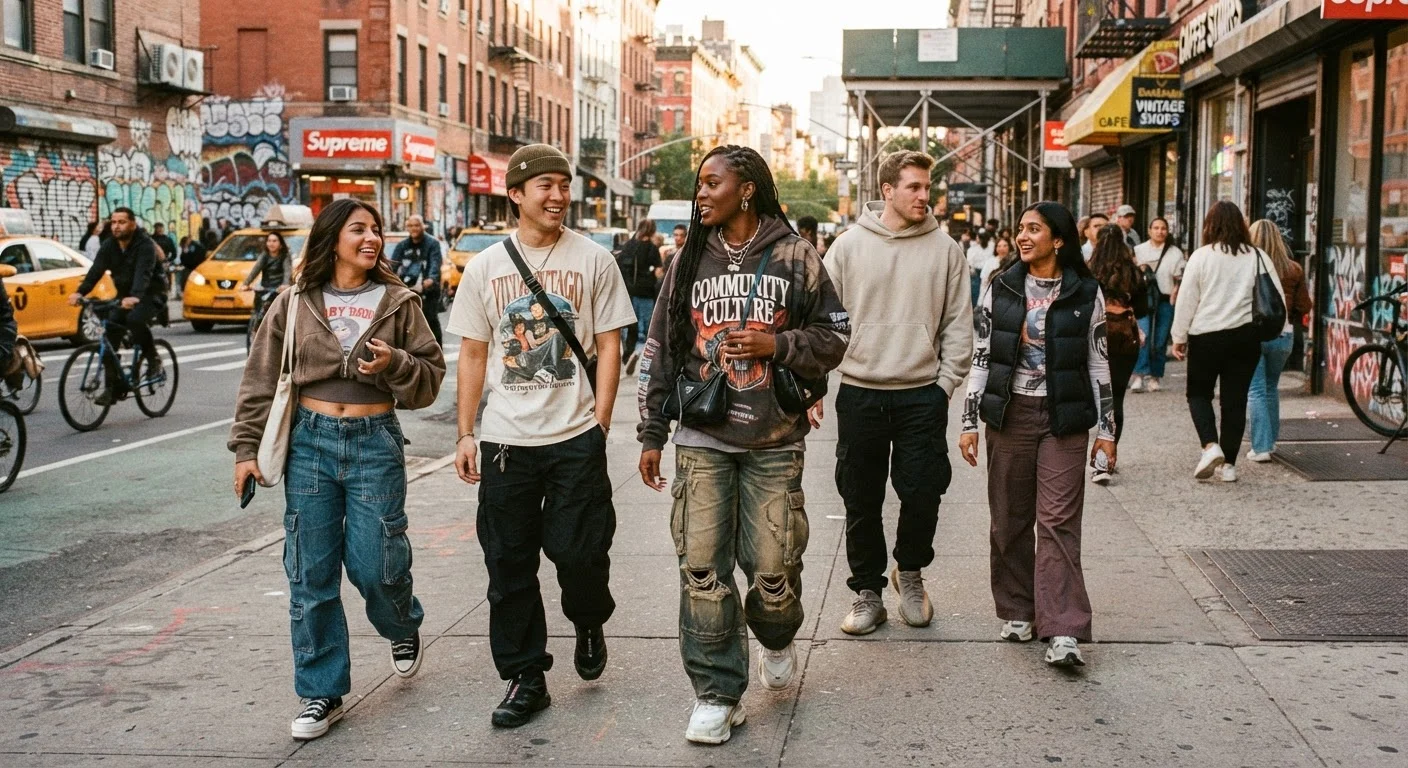
Streetwear didn't begin on a runway. It took shape in the 1980s on Southern California skate ramps and in New York City's emerging hip-hop scene, where young people were dressing to communicate identity, community, and defiance of the fashion establishment. Surfers, skaters, and rap artists wore what felt authentic — not what department stores promoted.
Early brands operated outside traditional retail, selling directly to communities through small shops and word of mouth. The aesthetic borrowed freely: military surplus, athletic uniforms, workwear silhouettes, and DIY customization all fed into a look that felt genuinely democratic. As hip-hop gained cultural momentum through the late 1980s and 1990s, its visual codes — logo-heavy gear, baggy fits, bold sneakers — traveled with the music into wider American consciousness. You can trace a direct line from those early community-driven wardrobes to the rise of athleisure that redefined casual American dress in the following decades.
The Mechanics of the Movement
What made streetwear structurally different from conventional fashion was its distribution model. While traditional apparel followed seasonal cycles — spring/summer, fall/winter — streetwear brands pioneered the "drop": a limited, time-specific product release designed to generate excitement and scarcity. This transformed consumers from passive buyers into active participants who followed brand announcements the way fans track concert tickets.
The internet amplified everything. Online communities allowed streetwear enthusiasts to share releases, debate authenticity, and build the kind of informed, passionate audience that luxury brands had cultivated for decades but through entirely different means. Social media turned individual style into broadcast media, and streetwear's visual boldness — logo-forward, color-saturated, immediately readable — translated perfectly to the scroll.
$billions
Global sneaker resale market estimated value
Industry analysts have consistently placed the global sneaker resale market in the multi-billion-dollar range, driven primarily by limited-edition streetwear-adjacent releases.
1980s–90s
Decade streetwear subcultures emerged
Skateboarding, hip-hop, and surf communities in American cities during this era established the visual and commercial templates streetwear still operates on today.
Top 3
Influence on global casual fashion trends
According to multiple fashion industry trend reports, streetwear ranks among the top influences on casual and athleisure categories in the U.S. and globally.
Sneakers became the clearest symbol of streetwear's economic power. Limited releases routinely sold out in minutes, and the secondary resale market grew into a multi-billion-dollar ecosystem — a dynamic that connects directly to the broader secondhand and resale shift reshaping how Americans buy and sell clothing.
When Luxury Fashion Paid Attention
By the mid-2010s, the fashion establishment had taken careful notice. Legacy luxury houses began collaborating with streetwear labels, bringing together audiences and aesthetics that had previously occupied entirely separate market tiers. The result was a deliberate blurring: hoodies appeared in high-fashion runway shows, sneakers paired with tailored suiting, and the once-rigid hierarchy between "elevated" and "casual" dress began to dissolve.
This crossover wasn't merely stylistic — it was commercial strategy. Younger consumers, the most sought-after demographic for long-term brand loyalty, had grown up in streetwear culture. Reaching them required speaking a visual language that had originated not in design studios but on city streets. The outcome reshaped what American mainstream fashion looked like at every price point, from mass-market retail to department store floors.
“Fashion has always moved upward from the streets — the clothes that people actually live in eventually tell designers what the future looks like.”
— Fashion industry observer, Cultural commentator on American style trends
The influence also opened up questions about cultural credit. Much of streetwear's aesthetic vocabulary — its graphic traditions, its relationship to music, its embrace of bold color — drew from Black American and Latino cultural creativity. As the style entered premium commercial spaces, conversations about who benefits from cultural movements became more prominent across the industry.
What Streetwear Changed — and What Comes Next
The most durable legacy of streetwear may be its redefinition of what counts as "dressed up." A generation of Americans now moves through offices, social events, and even formal occasions in sneakers and hoodies — clothing categories that once signaled only youth subculture. This shift overlaps meaningfully with the growth of gender-neutral fashion, since streetwear's preference for oversized, unisex silhouettes normalized dressing outside strict gender categories long before it became a formal retail conversation.
Streetwear also helped make performance and technical fabrics desirable outside athletic contexts. Moisture-wicking materials, durable canvas, and lightweight nylons all entered everyday fashion through the streetwear pipeline.
What's next is harder to predict — that uncertainty is part of the culture's character. Communities on platforms like Reddit and Discord continue to drive micro-trends that surface in mainstream retail months later. The cycle of influence has accelerated, but its direction remains, as it always has, street-up rather than top-down. For readers curious about how consumption habits themselves are evolving alongside these style shifts, rethinking clothing ownership offers a useful companion lens.
Frequently Asked Questions
Streetwear grew out of 1980s and 1990s subcultures in cities like New York and Los Angeles. Skateboarding, hip-hop, and surf communities each contributed distinct elements — graphic imagery, baggy silhouettes, and bold sneaker culture. Small independent brands began producing limited runs of clothing that spoke directly to these communities.
The shift happened gradually through music, sports, and the internet. Hip-hop artists brought streetwear into pop culture visibility, while social media accelerated the spread of styles globally. Luxury labels began collaborating with streetwear brands, giving the aesthetic widespread industry legitimacy.
Drop culture refers to the practice of releasing limited quantities of a product at a specific, often surprise, date and time. This creates urgency and demand that drives consumer engagement. It originated in streetwear and has since been adopted by brands across the fashion spectrum.
Streetwear's core aesthetic remains deeply embedded in American fashion, though it has diversified significantly. Elements like oversized fits, sneaker-forward looks, and graphic designs appear across all retail price points. The culture continues evolving through community-driven trends and online communities.
Sneakers are central to streetwear identity, and limited-edition releases have created a robust secondary market where sought-after pairs often sell for multiples of their retail price. The sneaker resale market is estimated to be worth billions of dollars globally, driven heavily by streetwear enthusiasts.
Yes — streetwear's preference for oversized, unisex silhouettes helped normalize clothing that isn't designed strictly along gender lines. Baggy hoodies, loose trousers, and unisex graphic tees made gender-inclusive dressing feel natural and accessible well before it became a formal retail category.
The content on this site is for informational purposes only and is not a substitute for professional advice. Always consult a qualified professional for guidance specific to your situation.