

Our Verdict
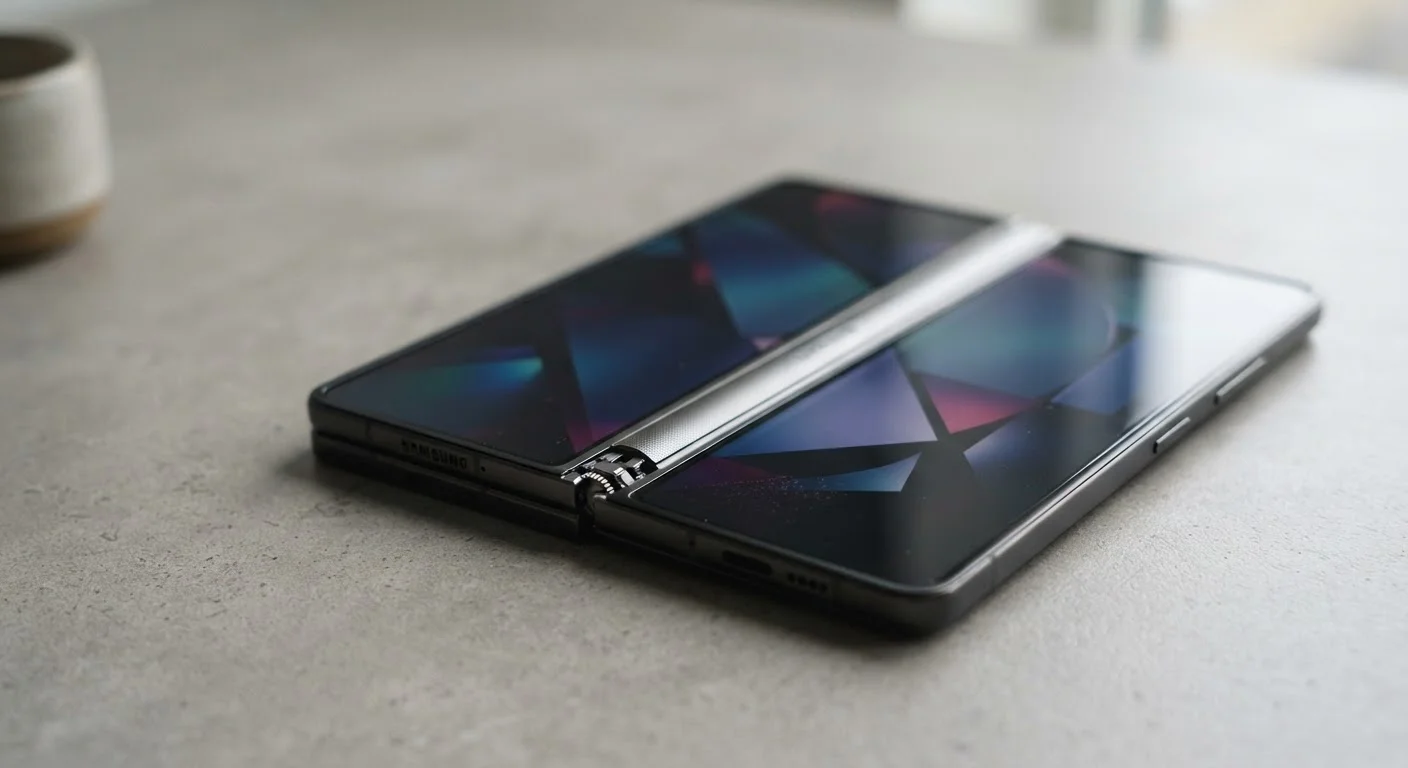
Foldable phones represent a genuine leap in display engineering, but every structural advantage comes with a mechanical or software cost that spec sheets rarely disclose. For users who genuinely need a larger canvas in a compact form — and are willing to handle the device more carefully — the trade-off may be worthwhile. For everyone else, the technology is still maturing toward a point where the compromises shrink.
Foldable phones are best suited to power users who regularly multitask on a single device and prioritize screen real estate over ruggedness and simplicity.
Why Foldable Phones Are an Engineering Puzzle
A smartphone screen that bends without breaking sounds straightforward until you try to build one. Traditional phones rely on rigid glass panels — durable, optically clear, and chemically resistant. Replace that glass with a flexible polymer display and you introduce an entirely different set of mechanical stresses every time the device opens and closes.
The core challenge is material conflict. The display must be thin enough to flex repeatedly, yet stable enough to render accurate colors and resist everyday scratching. Most foldable screens use ultra-thin flexible OLED panels covered by a polymer film rather than hardened glass. That film is measurably softer, which is why fingernails and keys in the same pocket can leave marks that would never appear on a conventional phone. For a deeper look at how OLED technology itself behaves, see what OLED and AMOLED panels actually mean for everyday use.
The hinge adds a second layer of complexity. It must tolerate hundreds of thousands of open-and-close cycles while keeping the two display halves precisely aligned. A fraction of a millimeter of misalignment over time creates uneven stress on the panel — the starting point for display delamination or crease deepening.
The Real Advantages Foldable Design Delivers
Tablet-scale screen that fits in a pocket
Book-style foldables open to displays exceeding seven inches diagonally while closing to roughly standard smartphone dimensions, reducing the need to carry a separate device.
Genuine multitasking on a single device
The larger unfolded canvas supports split-screen and floating-window layouts that are impractical on conventional phone screens, useful for comparing documents or referencing one app while working in another.
Compact fold reduces pocket and bag bulk
Flip-style foldables in particular close to roughly half the height of a standard phone, making them notably smaller when not in active use.
Display technology is genuinely advanced
Flexible OLED panels in current foldables offer high refresh rates and vivid color reproduction comparable to top-tier conventional displays, meaning the folding mechanism does not come at the cost of basic image quality.
Cover screens add useful quick-access functionality
Most book-style foldables include an external display that handles notifications, calls, and simple interactions without requiring the device to be fully unfolded.
The clearest benefit is screen area without permanent bulk. A compact-style foldable that closes to phone dimensions can unfold into a display approaching small-tablet territory. That matters practically for reading documents, video calls, and running two apps side by side — tasks where a standard 6-inch phone screen forces constant scrolling. If you're weighing whether this kind of multitasking advantage makes a foldable more practical than a separate tablet, understanding how tablets and laptops differ in real workflows offers useful context.
The Trade-offs Manufacturers Understate
Visible crease across the display center
The fold line creates a physical ridge in the flexible panel that catches light at certain angles. It diminishes with familiarity but does not disappear, and it is most visible during video playback or when viewing light backgrounds.
Softer screen surface scratches more easily
The polymer film protecting the flexible display is significantly less scratch-resistant than the hardened glass used on conventional phones, meaning the inner screen requires more deliberate care.
Heavier and thicker than comparable non-folding phones
The hinge assembly and dual-panel structure add weight and closed-thickness compared to non-folding devices with similar internal specs, which affects single-handed comfort over extended use.
Many apps do not adapt to the unfolded layout
Despite platform-level support, a large proportion of third-party apps simply scale up rather than reformatting intelligently when the device is opened, leaving blank bars or awkward proportions.
Lower water resistance than non-folding flagships
The hinge gap is an inherent structural weakness for moisture and particle ingress, so current foldables typically carry lower IP ratings than top-tier conventional devices.
Repair costs are substantially higher
Flexible display replacements and hinge repairs require specialized components and service, making out-of-warranty repairs considerably more expensive than equivalent work on a standard smartphone.
The crease running across the center of the folding display is the most discussed compromise, but it is far from the only one. Weight is a genuine usability factor — the hinge assembly and dual-layer structure add meaningful grams compared to a conventional device. Over a full day of use, that difference is noticeable in one hand.
Software adaptation is an underappreciated issue. The Android ecosystem supports flexible displays, but app developers still largely design for fixed-aspect-ratio screens. Many popular apps simply stretch or letterbox rather than reformatting intelligently when unfolded. This is not a hardware flaw, but it limits the experience in ways no spec sheet communicates. It also mirrors a broader pattern covered in hardware features that sound impressive but rarely change daily life — capability on paper does not always translate to capability in practice.
Repair Access and Costs Matter
A cracked flexible display on a foldable is significantly more expensive to replace than a standard glass panel, and the hinge mechanism typically requires specialized service. Before committing to a foldable, it is worth researching the available service options in your area and what out-of-warranty repair costs look like for specific device categories. Manufacturer care plans exist for some foldable lines, but coverage terms and pricing vary considerably.
Repairability is a structural concern. A cracked flexible display on a foldable is significantly more expensive to replace than a standard glass panel, and the hinge mechanism typically requires specialized service. Before committing to a foldable, it is worth researching the available service options in your area and what out-of-warranty repair costs look like for specific device categories.
Durability and Longevity: Setting Honest Expectations
Manufacturer durability ratings for foldables are typically expressed as fold cycle counts — often cited in the hundreds of thousands. That figure sounds reassuring, but it measures the hinge mechanism in controlled laboratory conditions, not the combined stress of drops, dust ingress, temperature swings, and the slight torque applied when opening a phone single-handed.
Water resistance ratings on current foldables are generally lower than those on flagship non-folding devices. The gap around the hinge is an inherent weak point for moisture and fine particulates. These are not dealbreakers, but they are relevant to anyone who uses a phone in variable outdoor environments.
~200g+
Typical weight of current book-style foldables
Most book-style foldable devices exceed 200 grams, compared to the 170–185g range common among non-folding flagship phones from the same manufacturers.
IPX8 vs IP68
Water resistance gap vs. non-folding flagships
Several current foldable models carry IPX8 ratings without a dust-resistance designation, while comparable non-folding flagships from the same brands achieve full IP68 certification.
Good device habits extend any phone's lifespan, and foldables are no exception. Avoiding unnecessary flex cycles, keeping the hinge area clean, and using the provided protective cases consistently all reduce wear. Practical approaches to extending device lifespan apply directly here — heat management and storage habits matter just as much on a foldable as on any other device.
Who Should Think Carefully Before Upgrading
The excitement around foldable launches is real, and the form factor is genuinely novel — but novelty is not the same as necessity. The patterns that drive regrettable tech purchases often cluster around launch windows, and foldables generate significant launch-day enthusiasm. Understanding what drives impulse tech purchases is worth reading before treating a foldable as an upgrade rather than a considered choice.
The core question is whether the expanded screen genuinely solves a problem you encounter daily. For most consumers, a conventional smartphone handles calls, messaging, navigation, and media consumption without the added complexity of a folding mechanism, a polymer screen, or a price point that typically sits well above non-folding flagships. The engineering is impressive — but impressive engineering and the right tool for the job are not always the same thing.
The content on this site is for informational purposes only and is not a substitute for professional advice. Always consult a qualified professional for guidance specific to your situation.