

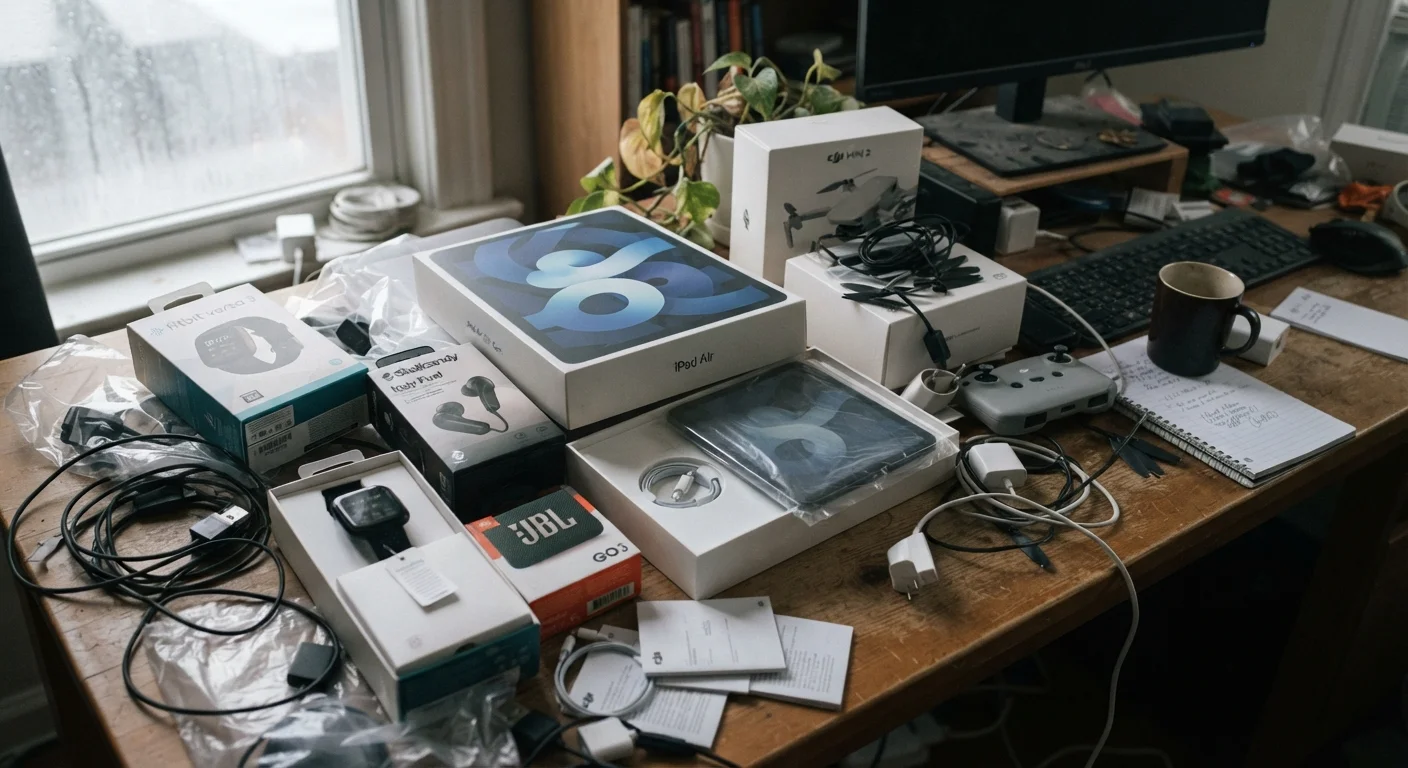
Why Tech Impulse Purchases Feel So Justified
Consumer electronics are engineered to generate excitement. Launch events, countdown timers, and carefully scripted demos create an atmosphere where buying feels less like a financial decision and more like participation in something cultural. That emotional charge is by design — and it reliably overrides deliberate thinking.
What makes tech impulse buys particularly easy to rationalize is that gadgets carry a veneer of practicality. Unlike a splurge on luxury clothing, buying a new phone or laptop can always be justified as a productivity investment, a safety tool, or a long-term saving. Those justifications are sometimes legitimate. Often, they are reverse-engineered to support a decision already made on feeling alone.
Understanding the specific patterns that lead to regret is more useful than a generic reminder to "think before you buy." The mistakes below recur across gadget categories — from wearables to laptops to smart home devices — and they share identifiable triggers.
Buying on launch day before independent reviews exist.
Why it happens: Early availability and social buzz create a sense of urgency. Waiting feels like missing out, and manufacturer demos are optimized to show the product's best case.
Upgrading because of spec comparisons rather than felt limitations.
Why it happens: Benchmark numbers and camera megapixel counts are easy to compare on paper. When a newer model's specs exceed your current device's, it can feel like your device has become inadequate even when your day-to-day experience hasn't changed.
Letting bundle deals determine what you buy.
Why it happens: A device sold alongside accessories or services at an apparent discount makes the total package feel like strong value, even when you had no prior interest in the bundled items.
Buying based on what a device could do rather than what you will do.
Why it happens: Feature lists invite optimistic projection. A rugged outdoor camera sounds appealing even to someone who rarely leaves an urban environment. A professional audio interface is easy to justify as an aspiration.
Ignoring the ecosystem cost of switching platforms.
Why it happens: A competing device can look compelling on hardware alone, without accounting for the apps, subscriptions, accessories, or workflows already invested in a different platform.
How to Evaluate a Tech Purchase More Clearly
The most reliable filter is time. A device that still feels necessary two weeks after you first wanted it is a stronger candidate for purchase than one that caught your attention during a keynote. That gap lets manufacturer messaging fade and practical questions take over: Where would this actually live in my day? What does it replace or improve? What would I stop using if I owned it?
Return Windows Are Shorter Than Regret
Most retailers offer return periods of 14 to 30 days, but gadget regret often sets in after the novelty period ends — which can take weeks longer than the return window allows. If you're unsure at the point of purchase, that uncertainty rarely resolves in favor of keeping the device. It tends to solidify once the excitement fades and the practical limitations become apparent.
Spec literacy also helps. Terms like "neural engine," "pro-grade sensor," or "next-generation connectivity" carry real meaning in some contexts and are marketing shorthand in others. The consumer electronics glossary breaks down the technical language that appears on every spec sheet, which makes it easier to distinguish genuine capability from headline numbers.
It's equally worth consulting what happens after a device's peak relevance window. When a device ages out, repair, resale, and recycling are all viable paths — meaning the purchase decision today connects directly to the cost and effort three years from now. And if a gadget does earn a place in your life, extending its useful lifespan through good habits reduces the pressure to upgrade prematurely.
The goal isn't to eliminate enthusiasm for new technology. It's to make sure that enthusiasm reflects genuine fit — not just a well-executed product launch.
The content on this site is for informational purposes only and is not a substitute for professional advice. Always consult a qualified professional for guidance specific to your situation.