

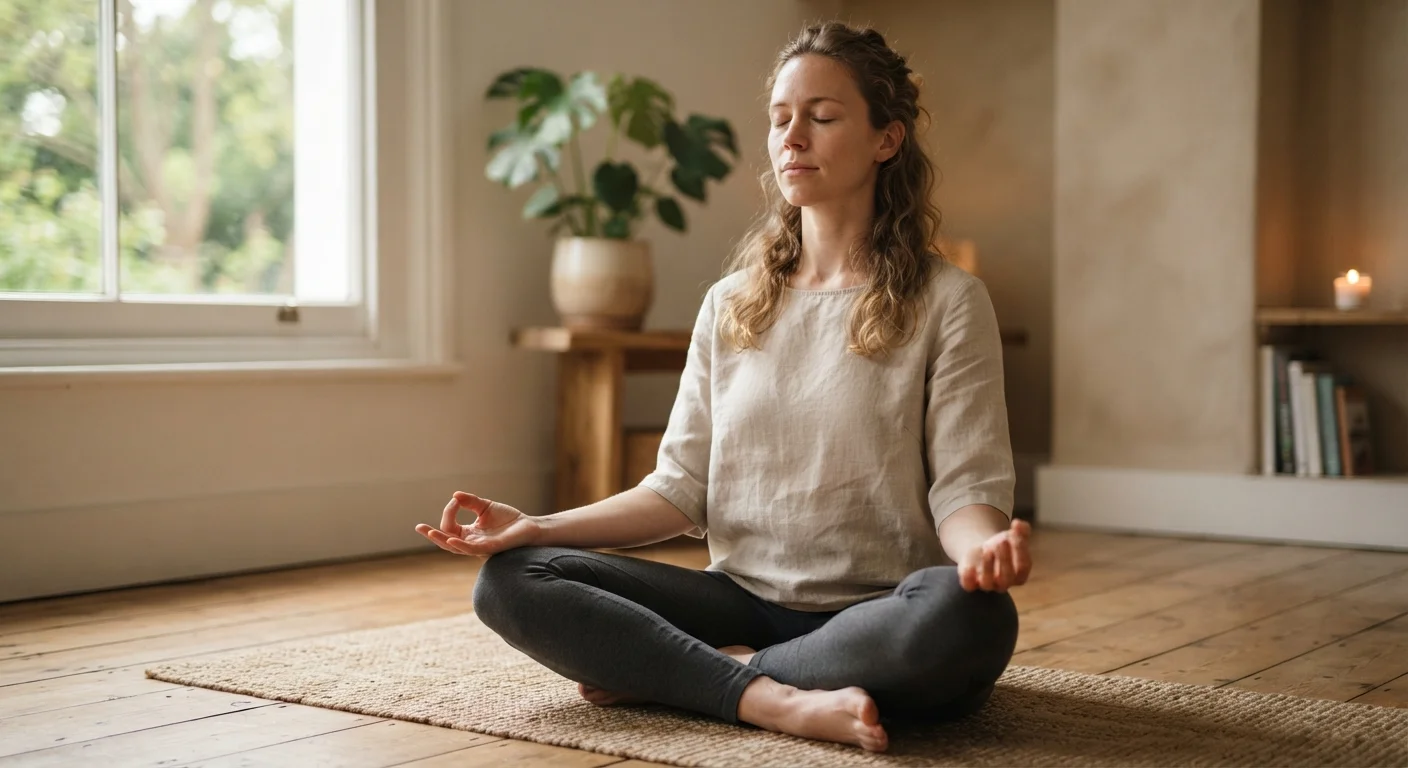
How Breathing Connects to the Nervous System
Breathing is unique among bodily functions: it operates automatically but can also be consciously overridden. This dual-control nature makes it a direct interface between the voluntary and involuntary nervous systems — a quality no other basic physiological process quite shares.
When we breathe slowly and fully, the lungs expand and stimulate the vagus nerve, the longest nerve of the parasympathetic nervous system. This stimulation triggers a calming cascade: heart rate slows, blood pressure may ease, and the body moves away from its threat-response state. This mechanism is sometimes called the baroreflex, referring to the pressure-sensitive feedback loop between the lungs, heart, and brain.
Conversely, rapid, shallow breathing — common during anxiety — tends to signal the sympathetic nervous system to remain active. This is why altering breathing rhythm is central to many stress-management frameworks.
Breathing and Heart Rate Variability
Heart rate variability (HRV) refers to the natural variation in time between heartbeats. Higher HRV is generally associated with better autonomic flexibility and resilience to stress. Some breathwork researchers use HRV as an objective measure to track how breathing interventions affect the nervous system, though interpreting HRV data requires caution and context.
Common Breathwork Techniques and Their Proposed Mechanisms
Several structured techniques have attracted research attention, each operating through slightly different physiological pathways.
- Diaphragmatic (belly) breathing: Engages the diaphragm rather than the chest, promoting fuller lung expansion and stronger vagal activation. Often used in respiratory rehabilitation and anxiety management.
- Box breathing: A four-phase cycle of equal inhale, hold, exhale, and hold intervals. Used in high-stress professional contexts, including by military and emergency service personnel, to support focus under pressure.
- 4-7-8 breathing: Involves inhaling for four counts, holding for seven, and exhaling for eight. The extended exhale phase is thought to be particularly effective at activating the parasympathetic branch.
- Resonant (coherent) breathing: Aims for approximately five to six breath cycles per minute, a rate associated in some studies with maximizing heart rate variability — a marker of autonomic flexibility.
It is worth noting that most of these techniques have been studied in relatively small trials. The general direction of findings is encouraging, but researchers continue to investigate optimal protocols, populations, and long-term effects.
“The breath is a remarkable lever for the nervous system. We cannot directly instruct our heart rate to slow, but we can control our breathing, and the heart follows.”
— Dr. Richard Brown, Associate Clinical Professor of Psychiatry and co-author of published research on breathing practices
What the Evidence Does and Doesn't Show
A body of research — including meta-analyses published in peer-reviewed journals such as Frontiers in Human Neuroscience and Applied Psychophysiology and Biofeedback — suggests that slow-paced breathing practices can produce measurable reductions in self-reported stress, cortisol levels, and physiological arousal markers in the short term.
Where the evidence is thinner is in long-term outcomes and clinical comparisons. Most studies are small, lack active control conditions, and rely heavily on self-reported measures. Breathwork is rarely compared head-to-head with established interventions like cognitive behavioral therapy or medication for anxiety disorders.
This does not make breathwork ineffective — it means the research picture is still forming. Clinicians increasingly incorporate breathing techniques as adjunct tools alongside conventional care, rather than as standalone treatments.
For broader context on how breathwork fits within wellness practice, see our plain-language explainer on mindfulness, which addresses similar questions about evidence and application.
Getting Started Safely and Realistically
Most slow-breathing techniques are accessible without equipment or formal instruction, and carry low risk for healthy adults. A reasonable starting point is simply extending the exhale phase — breathing in for four counts and out for six or eight — which researchers generally regard as the safest entry point for beginners.
Those with cardiovascular or respiratory conditions, a history of fainting, or trauma histories involving body-based practices should speak with a qualified healthcare provider before beginning any structured breathwork practice. Techniques involving rapid or forceful breathing (such as certain yogic or hyperventilation-adjacent methods) carry higher caution for vulnerable individuals.
Breathwork is also increasingly explored alongside physical movement practices. If you are interested in how intentional body awareness intersects with exercise, mindful movement approaches offer a related perspective worth considering.
This article is for general informational purposes only and does not constitute medical advice. Always consult a qualified healthcare professional before making changes to your health practices, particularly if you have an existing medical condition.
Frequently Asked Questions
Normal breathing is automatic and regulated by the brainstem without conscious effort. Breathwork involves deliberately altering that pattern — changing rate, depth, or rhythm — to achieve a specific physiological or mental effect. The intentionality is what distinguishes it.
Research suggests that certain controlled breathing techniques can reduce acute stress markers, lower heart rate, and support mood regulation. Evidence quality varies by technique and outcome studied, and larger, more rigorous trials are still needed. It should be seen as a complementary practice, not a primary treatment.
Box breathing involves inhaling, holding, exhaling, and holding again — each for an equal count, commonly four seconds per phase. This cyclical pattern is thought to slow the heart rate and dampen the sympathetic stress response by lengthening the breathing cycle.
For most healthy adults, slow controlled breathing techniques carry minimal risk. However, hyperventilation-based methods can cause dizziness, tingling, or fainting. People with cardiovascular conditions, respiratory disorders, or a history of trauma should consult a healthcare provider before starting any practice.
Breathwork and mindfulness often overlap — breath awareness is a core element of many mindfulness traditions. However, breathwork specifically involves altering the breath pattern, while mindfulness may simply involve observing the breath as it is. They are related but distinct approaches.
The content on this site is for informational purposes only and is not a substitute for professional advice. Always consult a qualified professional for guidance specific to your situation.