

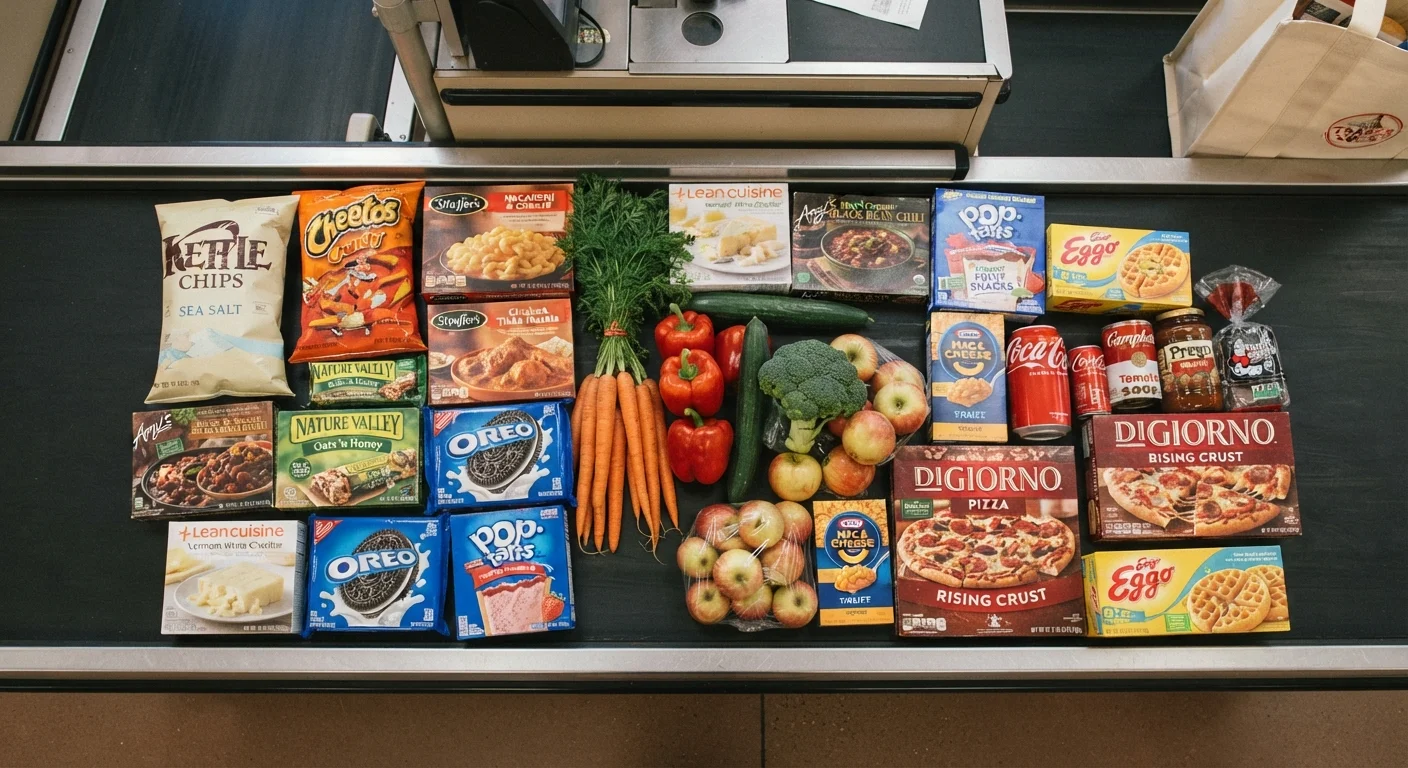
Why Ultra-Processed Foods Are Under the Microscope
Over the past decade, a growing body of epidemiological research has drawn attention to the potential health consequences of diets high in ultra-processed foods. According to data from the National Health and Nutrition Examination Survey (NHANES), UPFs account for roughly 57–60% of daily caloric intake among U.S. adults — a proportion that makes understanding their health effects a genuine public priority.
The surge in research attention has been driven partly by the NOVA classification system, which gave scientists a standardized way to categorize foods by degree of industrial processing. Before that framework, it was difficult to study 'processed food' as a coherent category rather than a loose collection of individual products.
For readers trying to make sense of the headlines, it helps to understand what the research design can and cannot tell us. Understanding how to read health study headlines is an important starting point before accepting any single finding at face value.
~58%
Share of U.S. adult daily calories from UPFs
Analyses of NHANES data have estimated that ultra-processed foods contribute roughly 57–60% of total daily energy intake among U.S. adults.
32%
Higher cardiovascular disease risk association
A 2024 meta-analysis published in The BMJ found that higher UPF consumption was associated with approximately a 32% higher risk of cardiovascular disease mortality across multiple cohort studies.
4
NOVA food processing categories
The NOVA classification, developed at the University of São Paulo, groups all foods and food products into four groups based on extent and purpose of processing.
What the Observational Studies Show
The bulk of UPF research consists of large prospective cohort studies — research designs that track people's diets and health outcomes over time without directly controlling what they eat. Several high-profile examples include the NutriNet-Santé study in France, the UK Biobank analysis, and various analyses from the PREDIMED-Plus trial cohort in Spain.
Across these studies, higher UPF consumption has been consistently associated with elevated risk of conditions including cardiovascular disease, type 2 diabetes, depression, colorectal cancer, and all-cause mortality. The associations tend to persist even after researchers statistically adjust for confounding factors like physical activity, smoking, and socioeconomic status.
However, observational studies have well-documented limitations. People who eat more UPFs may differ from those who eat fewer in ways that are hard to fully account for — income, stress levels, overall dietary quality, and access to fresh food are just a few variables. Association is not causation, and most researchers are careful to say so.
A Controlled Trial Adds a New Layer of Evidence
In 2024, a randomized controlled trial — considered the gold standard of clinical research — offered more direct evidence. Conducted at the National Institutes of Health (NIH) and led by researcher Kevin Hall, the study assigned participants to consume either a diet high in ultra-processed foods or one based on minimally processed foods, with both diets matched for total calories offered. Participants on the UPF diet ended up eating significantly more and gained weight, while those on the minimally processed diet lost weight.
The findings were notable because they moved beyond statistical associations, providing experimental evidence that UPF exposure can influence eating behavior and energy intake. Still, the trial was short-term and conducted in a highly controlled institutional setting, which limits how directly the results translate to real-world eating patterns.
Researchers have also investigated potential mechanisms — including disruption to gut microbiome composition, effects of specific food additives, and the role of ultra-palatability in driving overconsumption. For a closer look at gut health science, see what scientists have established about the microbiome.
Classification Has Real Consequences
How a food is classified under NOVA can significantly affect research conclusions. Some scientists have noted that the system groups foods with very different nutritional profiles into the same ultra-processed category, which may complicate attempts to identify which specific products or ingredients drive observed health associations. Ongoing research is attempting to develop more granular sub-classifications to address this limitation.
Where Researchers Still Disagree
Not all nutrition scientists are convinced that processing itself is the key variable. Some argue that UPFs are harmful primarily because they tend to be high in sodium, sugar, refined starches, and saturated fat — in other words, their nutrient profiles, not some additional harm from the processing. If that is true, focusing on nutrients rather than processing categories might be a more precise approach.
Others question whether NOVA's broad groupings obscure important differences. A mass-produced white bread and a diet soda both qualify as ultra-processed, but their nutritional profiles and potential health effects are quite different. Critics argue the classification may be too blunt a tool for precise scientific conclusions.
The ongoing debate around dietary fats illustrates how contested nutrition science can be — a topic covered in depth in the ongoing nutrition debate around seed oils and saturated fat.
“The consistency of findings across different countries and study designs is striking, but we should be careful not to outpace the evidence. We need more well-designed intervention trials before we can say with confidence that processing per se is the causal factor.”
— Dr. Christopher Gardner, Professor of Medicine, Stanford Prevention Research Center
What This Means for Everyday Decisions
The overall picture from the research is one of reasonable concern but not settled science. The consistent pattern of associations across large and diverse populations is meaningful and has prompted public health agencies in several countries to update dietary guidance to address UPF intake. At the same time, the mechanisms are not fully understood, and much of the evidence is still correlational.
No major health authority currently recommends eliminating all ultra-processed foods. A more practical reading of the evidence suggests that dietary patterns — the overall balance and variety of what people eat over time — matter more than any single food category. Those with specific dietary needs or chronic health conditions should discuss concerns with a qualified healthcare provider rather than making changes based on headlines alone.
This article is for general informational purposes only and does not constitute medical or dietary advice. Please consult a qualified healthcare professional for guidance tailored to your individual health circumstances.
Frequently Asked Questions
Under the NOVA framework, ultra-processed foods are those made predominantly from industrial ingredients with little or no whole food content, plus additives to enhance flavor, texture, or shelf life. Examples include packaged chips, instant noodles, mass-produced pastries, and many flavored yogurts. The category is broad and does not perfectly overlap with 'unhealthy' — some fortified foods and plant-based meat alternatives also qualify.
Current evidence shows a statistical association between high UPF intake and conditions such as cardiovascular disease, type 2 diabetes, and certain cancers. However, most studies are observational and cannot establish direct causation. Researchers are still working to understand whether the processing itself, specific additives, or related lifestyle factors drive the observed risks.
No. Food processing is a spectrum. Pasteurized milk, canned tomatoes, and frozen vegetables are processed but not considered ultra-processed under NOVA. The concern with UPFs centers on extensive industrial reformulation and the addition of substances not typically used in home cooking, not processing in general.
A notable 2024 randomized controlled trial found that participants assigned to a higher-UPF diet consumed more calories and gained more weight over the study period compared to those eating minimally processed foods. It is considered significant because it moved beyond observational data, though researchers note that a single trial cannot settle the broader debate.
No public health body currently recommends complete elimination. Many researchers suggest reducing overall intake rather than treating UPFs as categorically forbidden. Dietary patterns, total food quality, and individual health conditions all matter. Anyone with specific health concerns should speak with a qualified healthcare professional.
NOVA is widely used in research but has also drawn criticism. Some scientists argue it is too broad, grouping nutritionally diverse foods together, and that classifying foods by processing level rather than nutrient profile may miss important distinctions. Researchers continue to debate and refine classification approaches.
The content on this site is for informational purposes only and is not a substitute for professional advice. Always consult a qualified professional for guidance specific to your situation.