

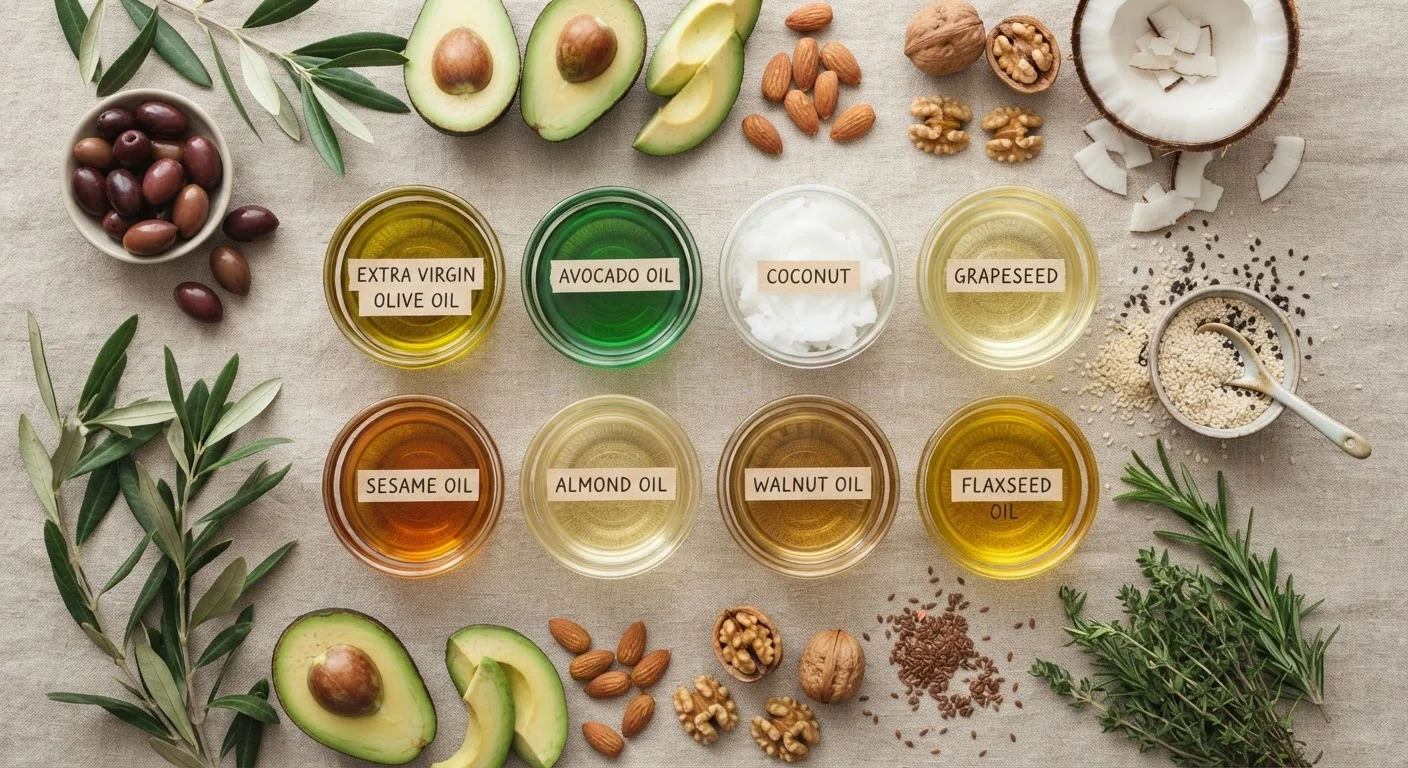
Why the Fat Debate Won't Settle Down
Few nutrition topics generate more online heat than dietary fat. Over the past decade, seed oils — canola, soybean, sunflower, corn oil, and related products — have become a focal point of wellness criticism, while saturated fat has simultaneously experienced a partial reputational rehabilitation in some corners of the internet. Social media is full of confident, contradictory claims about both.
The reality is messier and more interesting than either camp suggests. Nutrition science operates in a space of genuine complexity, where observational studies, randomized trials, and mechanistic research don't always tell the same story. Understanding where consensus exists and where honest disagreement remains is useful for anyone trying to make sense of conflicting headlines. For guidance specific to your own health, a registered dietitian or physician is the appropriate resource.
Understanding why dietary guidelines change can help put the ongoing fat debate in broader context.
Common Myths and What the Evidence Actually Shows
Several persistent claims about seed oils and saturated fat circulate widely online. Below, the evidence is examined for each.
Myth
Seed oils are toxic and a primary driver of chronic disease.
Fact
Current large-scale human evidence does not support characterizing seed oils as toxic; the research picture is more complicated and less alarming.
The "seed oils are poison" narrative draws partly on the observation that linoleic acid, the predominant omega-6 fatty acid in many seed oils, can be converted in the body into compounds involved in inflammatory pathways. However, the human body's use of these pathways is tightly regulated, and population-level studies — including large cohort studies and some randomized controlled trials — have not consistently shown that replacing saturated fat with seed oils worsens health outcomes. Several have shown the opposite. Concerns about oxidation products formed during high-heat cooking are more scientifically grounded but remain an area of ongoing, not settled, research.
Myth
Saturated fat has been completely exonerated by modern research.
Fact
Some studies have complicated earlier findings, but major health bodies still advise limiting saturated fat, particularly compared to unsaturated alternatives.
A series of meta-analyses published in the 2010s found weaker or less consistent associations between saturated fat intake and cardiovascular events than earlier research suggested. These findings prompted genuine scientific debate. However, many researchers argue the key issue is what replaces saturated fat in the diet: swapping it for refined carbohydrates shows little benefit, while swapping it for unsaturated fats generally does. The nuance has sometimes been flattened online into a claim that saturated fat is now considered harmless — a conclusion the weight of current evidence does not support.
Myth
Olive oil is the only "safe" cooking fat — all others should be avoided.
Fact
Olive oil has a strong evidence base, but it is not the only acceptable dietary fat, and categorical avoidance of others is not what the research recommends.
Extra-virgin olive oil is backed by substantial research, particularly from Mediterranean diet studies, and is broadly recommended by health authorities. However, other unsaturated fats — such as those from avocado oil, canola oil, or nuts — also have favorable evidence profiles. The research does not support a blanket rule that only one fat source is acceptable. Dietary diversity, overall eating patterns, and how foods are prepared all play roles that a single-oil rule cannot capture.
Myth
The low-fat dietary guidelines of the 1980s and 1990s were simply wrong and should be ignored.
Fact
Those guidelines were imperfect and have since been refined, but dismissing the entire period of research misrepresents how science develops.
Early low-fat guidance did have significant limitations — most notably, it did not clearly distinguish between types of fat and did not adequately account for what replaced fat in the diet (often refined carbohydrates and added sugars). That context matters. But the response of dismissing all institutional nutrition guidance as corrupted or worthless goes further than the evidence warrants. Nutrition science has advanced considerably, and current guidelines reflect meaningful updates. Understanding how and why health guidelines evolve helps put this kind of revision in proper perspective.
Myth
Eating fat directly causes body fat accumulation.
Fact
Body fat accumulation is driven by overall energy balance and metabolic factors, not dietary fat intake in isolation.
The idea that dietary fat straightforwardly converts to stored body fat oversimplifies a complex metabolic process. Fat, protein, and carbohydrates all contribute to energy intake, and the body's storage of energy as fat depends on total caloric balance, hormonal signaling, activity levels, and individual metabolic factors. High-fat diets can absolutely contribute to excess caloric intake, but research on approaches like Mediterranean and low-carbohydrate diets demonstrates that fat content alone is a poor predictor of weight outcomes.
Where Genuine Scientific Uncertainty Exists
Honest science communication requires acknowledging where researchers genuinely disagree. On saturated fat, some meta-analyses have found weaker links to heart disease than earlier studies suggested, particularly when the comparison is with refined carbohydrates rather than unsaturated fats. This doesn't rehabilitate saturated fat so much as it underscores that dietary patterns — not single nutrients in isolation — drive most of the measurable risk.
On seed oils, the question of whether elevated dietary omega-6 fatty acids tip the balance of inflammatory signaling in meaningful ways in humans remains active and unresolved. Some animal and mechanistic studies raise plausible concerns; large-scale human evidence does not currently support alarm. Researchers are also beginning to ask more refined questions about how different seed oils behave under high-heat cooking conditions and what byproducts may form.
~20:1
Estimated omega-6 to omega-3 ratio in typical Western diets
Researchers have estimated that Western dietary patterns show an omega-6 to omega-3 ratio of roughly 15:1 to 20:1, compared to an ancestral ratio closer to 4:1, according to a frequently cited paper in Biomedicine & Pharmacotherapy.
~70%
Share of US adults with at least one cardiovascular risk factor
The CDC estimates that a large majority of U.S. adults carry at least one major cardiovascular risk factor, underscoring why dietary fat research remains a public health priority.
The broader takeaway is that fat research is genuinely evolving. As with ultra-processed food research, the picture grows more nuanced as methodologies improve.
Practical Orientation Without Prescription
Major health organizations — including the American Heart Association and the World Health Organization — continue to recommend limiting saturated fat and replacing it with unsaturated fat sources where possible. These recommendations rest on a substantial, though imperfect, evidence base accumulated over decades.
At the same time, consuming some seed oils as part of an otherwise varied, minimally processed diet is not supported by current evidence as a meaningful health hazard for most people. The loudest online claims in either direction tend to rely on cherry-picked studies, out-of-context mechanistic data, or the conflation of very high-dose animal research with typical human dietary patterns.
Dietary fat decisions are also inseparable from what else a person eats. As research on gut microbiome health continues to develop, the interactions between fat intake, food processing, and overall dietary quality are likely to become clearer.
This article is for general informational purposes only and does not constitute medical or dietary advice. Consult a qualified healthcare professional or registered dietitian for guidance tailored to your individual health needs.
The content on this site is for informational purposes only and is not a substitute for professional advice. Always consult a qualified professional for guidance specific to your situation.