

Our Verdict
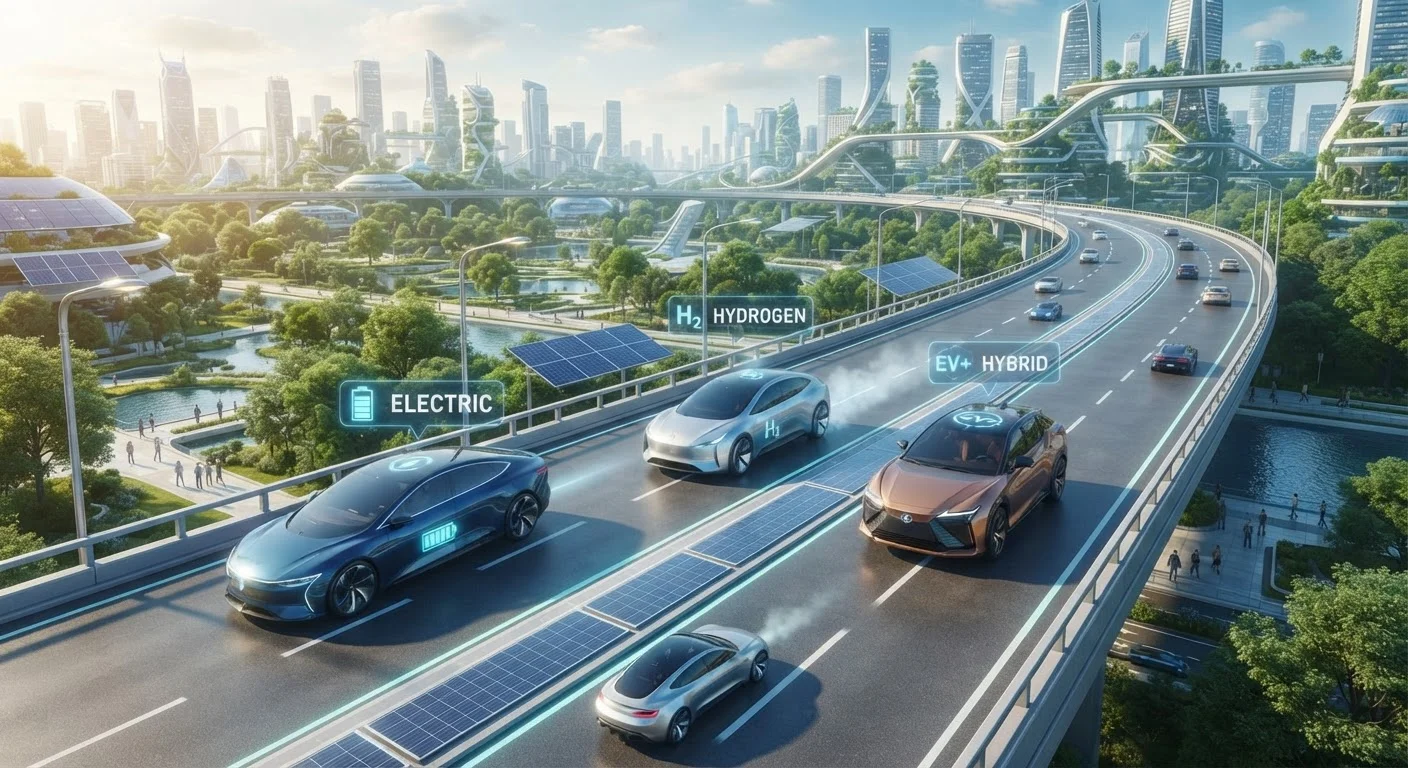
Battery electric vehicles currently lead on efficiency and infrastructure momentum for most everyday drivers. Hydrogen fuel cells show strong potential for commercial, long-haul, and industrial applications where rapid refueling and range are critical. Plug-in hybrids remain a practical bridge technology for drivers not yet ready to commit fully to electric-only mobility.
| Best for | Recommended |
|---|---|
| Daily commuters with home or workplace charging access | Battery Electric Vehicles (BEVs) |
| Long-haul trucking, heavy transport, and fleet operators | Hydrogen Fuel Cell Vehicles (FCEVs) |
| Drivers in areas with limited charging infrastructure | Plug-In Hybrid Electric Vehicles (PHEVs) |
| Those balancing fuel economy with occasional long-distance trips | Plug-In Hybrid Electric Vehicles (PHEVs) |
Three Technologies, One Goal
The push to decarbonize personal and commercial transportation has produced three distinct powertrain approaches: battery electric vehicles (BEVs), hydrogen fuel cell electric vehicles (FCEVs), and plug-in hybrid electric vehicles (PHEVs). Each takes a different engineering path toward the same broad goal — reducing dependence on fossil fuels and lowering tailpipe emissions.
Understanding what separates them matters not just for consumers weighing a vehicle purchase, but for anyone tracking how the auto industry is reshaping itself. As covered in the Electric Vehicles hub, the technology choices automakers make today will define road transportation for decades. Here's how each powertrain actually works — and where each one struggles.
Battery Electric Vehicles: Strengths and Constraints
BEVs draw all their power from an onboard battery pack, charged from the electrical grid. They produce zero direct tailpipe emissions, deliver instant torque, and carry significantly lower per-mile energy costs than gasoline equivalents in most U.S. markets. Mechanical simplicity — fewer moving parts than internal combustion engines — also translates to lower routine maintenance costs over time.
The central constraint is infrastructure. Charging a BEV takes longer than filling a gas tank, and the availability of fast chargers varies dramatically by region. For a detailed picture of where networks stand globally, see the state of EV charging infrastructure. Battery technology is also evolving rapidly — solid-state batteries represent a potentially significant leap in energy density and charge speed, though commercial deployment remains a work in progress.
| Battery EV (BEV) | Hydrogen FCEV | Plug-In Hybrid (PHEV) | |
|---|---|---|---|
| Tailpipe Emissions | Zero | Zero (water vapor only) | Low to zero (electric mode) |
| Refuel / Recharge Time | 20–60 min (DC fast charge) | 3–5 minutes | Gas: minutes; plug-in: hours |
| Infrastructure Availability | Expanding rapidly | Very limited | Gas stations + some chargers |
| Typical Range | 200–400+ miles | 300–400 miles | 20–50 mi electric + gas range |
| Energy Efficiency | High (~3–4 miles/kWh) | Lower (energy losses in production) | Moderate (varies by use) |
| Best Application | Daily commuting, urban fleets | Heavy transport, long haul | Mixed driving, limited charging |
Hydrogen Fuel Cell Vehicles: Promise and Practical Barriers
FCEVs generate electricity onboard by combining hydrogen with oxygen in a fuel cell stack, emitting only water vapor. Refueling takes roughly the same time as a gasoline stop — three to five minutes — and range figures are comparable to conventional vehicles. These characteristics make hydrogen an attractive candidate for heavy transport, buses, trains, and industrial applications where battery weight and recharge time are prohibitive.
The obstacles are substantial. Hydrogen fueling stations are scarce: as of recent industry surveys, the United States has fewer than 100 public hydrogen stations, most concentrated in California. Producing hydrogen also carries its own environmental calculus — the majority of hydrogen today is derived from natural gas (so-called "grey hydrogen"), which generates significant CO₂. "Green hydrogen," produced via electrolysis powered by renewable energy, remains expensive and limited in scale. Until both the fueling network and green production expand meaningfully, FCEVs face a narrower viable market than BEVs.
Evaluating Hydrogen's Environmental Benefit
When assessing a hydrogen vehicle's emissions profile, it's worth asking how the hydrogen was produced. Green hydrogen — made using renewable electricity — carries a much lower carbon footprint than grey hydrogen derived from natural gas. As production methods evolve, the environmental case for FCEVs is expected to strengthen, but the current infrastructure reflects a mostly fossil-fuel-derived supply chain.
Plug-In Hybrids: The Pragmatic Middle Ground
PHEVs combine a battery pack — large enough for a meaningful electric-only range, typically 20–50 miles depending on the vehicle — with a conventional gasoline engine that activates when the battery depletes. For drivers whose daily trips fall within electric range, a PHEV can function much like a BEV during the week while retaining long-distance capability on weekends or road trips.
The trade-off is complexity: PHEVs carry two full powertrains, adding weight, cost, and maintenance considerations. Real-world emissions benefits also depend heavily on how often the vehicle is plugged in; a PHEV driven primarily on gasoline may offer fewer environmental gains than its ratings suggest. For a deeper side-by-side breakdown, BEVs vs. PHEVs: key differences worth knowing covers the distinctions across range, cost, and daily use in greater detail.
What Shapes the Road Ahead
No single powertrain is likely to dominate every segment. Government policy, grid capacity, infrastructure investment, and shifting consumer behavior will all influence which technologies scale. Forces driving and slowing global EV market growth examines how mandates, supply chains, and consumer hesitancy interact in ways that aren't always straightforward.
Heavy transport and industrial sectors may prove to be hydrogen's strongest long-term domain, while BEVs consolidate their position in the personal vehicle market as charging infrastructure matures. PHEVs are likely to remain a transitional technology — valuable in markets where charging infrastructure lags or driving patterns make pure-electric operation impractical. For readers wanting to understand the broader environmental context, misconceptions about EV environmental impact examines lifecycle emissions and what independent research has found.
<100
Public hydrogen stations in the U.S.
Most are concentrated in California, underscoring the infrastructure gap FCEVs face in wider U.S. markets.
~95%
Share of hydrogen from fossil fuels globally
The International Energy Agency estimates the vast majority of hydrogen produced today comes from natural gas or coal, limiting its near-term climate benefit.
20–50 mi
Typical PHEV electric-only range
Range varies significantly by model and battery size; real-world emissions savings depend on how frequently the vehicle is plugged in.
The content on this site is for informational purposes only and is not a substitute for professional advice. Always consult a qualified professional for guidance specific to your situation.