

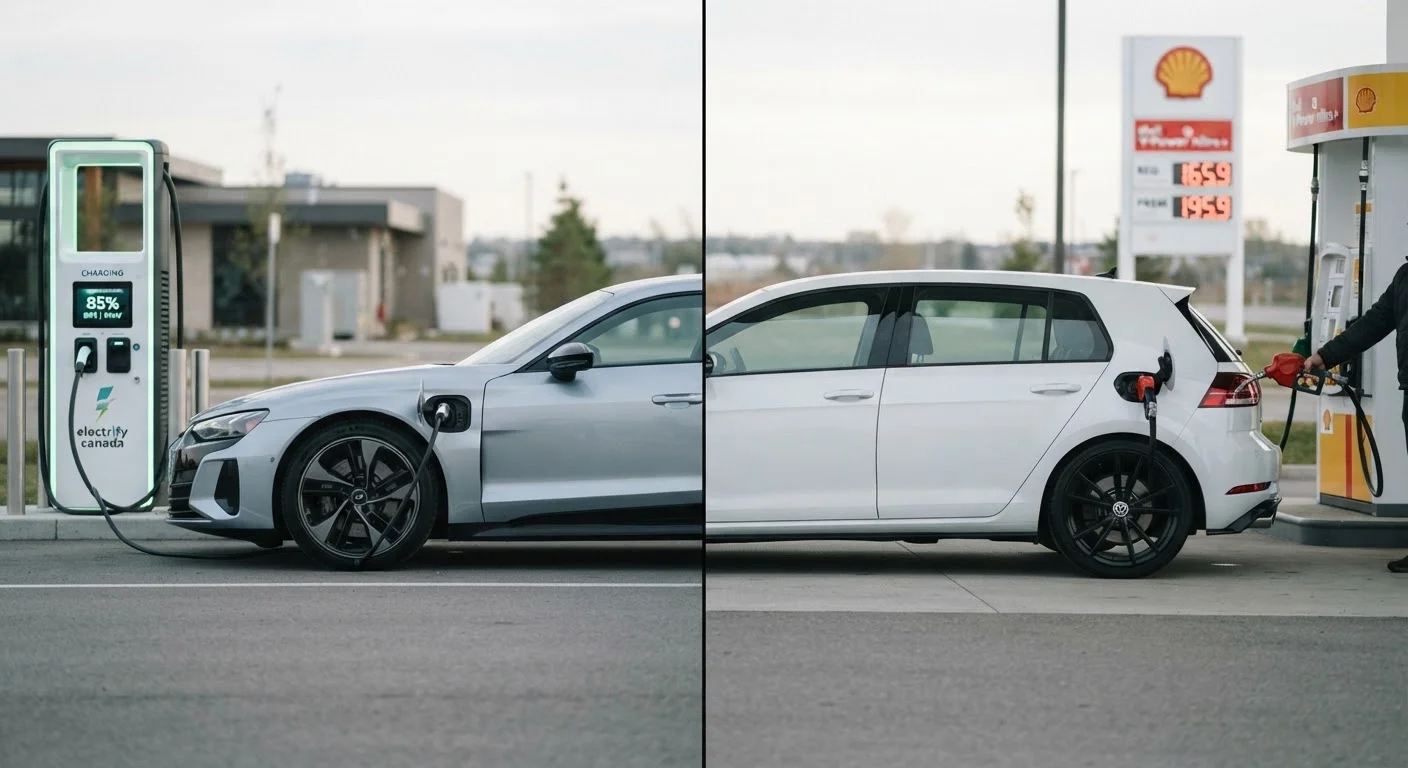
Option A
Battery Electric Vehicle (BEV)
The fully electric, zero-tailpipe-emission choice.
Best for: Drivers who primarily charge at home and want to eliminate gasoline entirely from their daily routine.
Option B
Plug-In Hybrid Electric Vehicle (PHEV)
The flexible bridge between electric and conventional driving.
Best for: Drivers with mixed driving patterns who want electric capability but aren't ready to rely solely on charging infrastructure.
How Each Powertrain Actually Works
A Battery Electric Vehicle (BEV) stores energy in a large onboard battery pack and drives one or more electric motors — that's the entire drivetrain. There is no gasoline engine, no exhaust pipe, and no fuel tank. Drivers recharge by plugging into a home outlet, a Level 2 charger, or a DC fast-charging station.
A Plug-In Hybrid Electric Vehicle (PHEV) layers an electric motor and a smaller battery on top of a conventional gasoline engine. In normal operation, the car runs on electricity until the battery depletes, then the gas engine takes over seamlessly. Unlike a standard hybrid, a PHEV can be plugged in to recharge its battery from an external source rather than relying solely on regenerative braking.
For a deeper look at how these drivetrains compare mechanically, see this engineering overview of ICE and EV powertrains.
| Criterion | BEV | PHEV |
|---|---|---|
| Fuel source | Electricity only | Electricity + gasoline |
| Typical electric range | 200–350+ miles | 20–50 miles |
| Total range | Battery range only | 500+ miles (combined) |
| Tailpipe emissions | Zero | Zero (EV mode) / Yes (gas mode) |
| Charging dependency | High — primary energy source | Low — gas engine as backup |
| Maintenance complexity | Lower — fewer moving parts | Higher — two drivetrains to service |
| Typical upfront cost | Generally higher | Generally lower |
Range, Charging, and Day-to-Day Practicality
Modern BEVs commonly offer 200–350 miles of range on a full charge, with some models exceeding that figure. The catch is that recharging takes time — anywhere from 20 minutes at a high-powered DC fast charger to several hours on a home Level 2 unit. Drivers who charge overnight at home rarely notice this as a burden; those without home access face more planning.
PHEVs typically deliver 20–50 miles of electric-only range — enough for most daily commutes — before switching to gasoline. Total range combining both energy sources can exceed 500 miles, and the car can be refueled in minutes at any gas station. That flexibility makes PHEVs less dependent on charging infrastructure, which remains uneven across many US regions.
~40 miles
Median US daily driving distance
According to the U.S. Department of Transportation, most Americans drive fewer than 40 miles on a typical day — well within many PHEVs' electric-only range.
60,000+
Public EV charging stations in the US
The U.S. Department of Energy's Alternative Fuels Station Locator reports tens of thousands of public charging locations, though coverage varies significantly by region.
~30%
Fewer moving parts in an EV drivetrain vs. ICE
Industry analyses generally estimate that electric drivetrains contain significantly fewer mechanical components than internal combustion engines, reducing potential failure points.
Understanding the terminology around range estimates and charging speeds matters when reading any spec sheet. This EV glossary defines the key metrics, including kWh, WLTP, and DC fast charging ratings.
Cost, Emissions, and Long-Term Ownership
BEVs typically carry a higher purchase price than comparable PHEVs, though federal tax credits — subject to income and vehicle eligibility rules — can narrow that gap. Over time, electricity costs less per mile than gasoline in most US markets, and BEVs shed several maintenance items: no oil changes, no spark plugs, and simpler braking systems due to regenerative braking.
PHEVs cost less upfront in many cases but carry both a battery and a full gasoline drivetrain, meaning two systems to maintain. If a PHEV owner rarely charges and runs primarily on gas, the efficiency gains shrink considerably. Emissions tell a similar story: BEVs produce zero direct tailpipe emissions; PHEVs produce none in electric mode but revert to conventional exhaust once the battery depletes.
Federal Incentive Eligibility Varies
Both BEVs and PHEVs may qualify for federal tax credits under the Inflation Reduction Act, but eligibility depends on vehicle assembly location, battery sourcing, and buyer income thresholds. The IRS and the Department of Energy maintain official eligibility lists that are updated as manufacturer certifications change. Buyers should verify current status directly with those sources before factoring incentives into a purchasing decision.
If you're weighing a first-time switch to either vehicle type, this guide for first-time EV buyers covers ownership costs, charging habits, and what to expect in detail.
The content on this site is for informational purposes only and is not a substitute for professional advice. Always consult a qualified professional for guidance specific to your situation.