

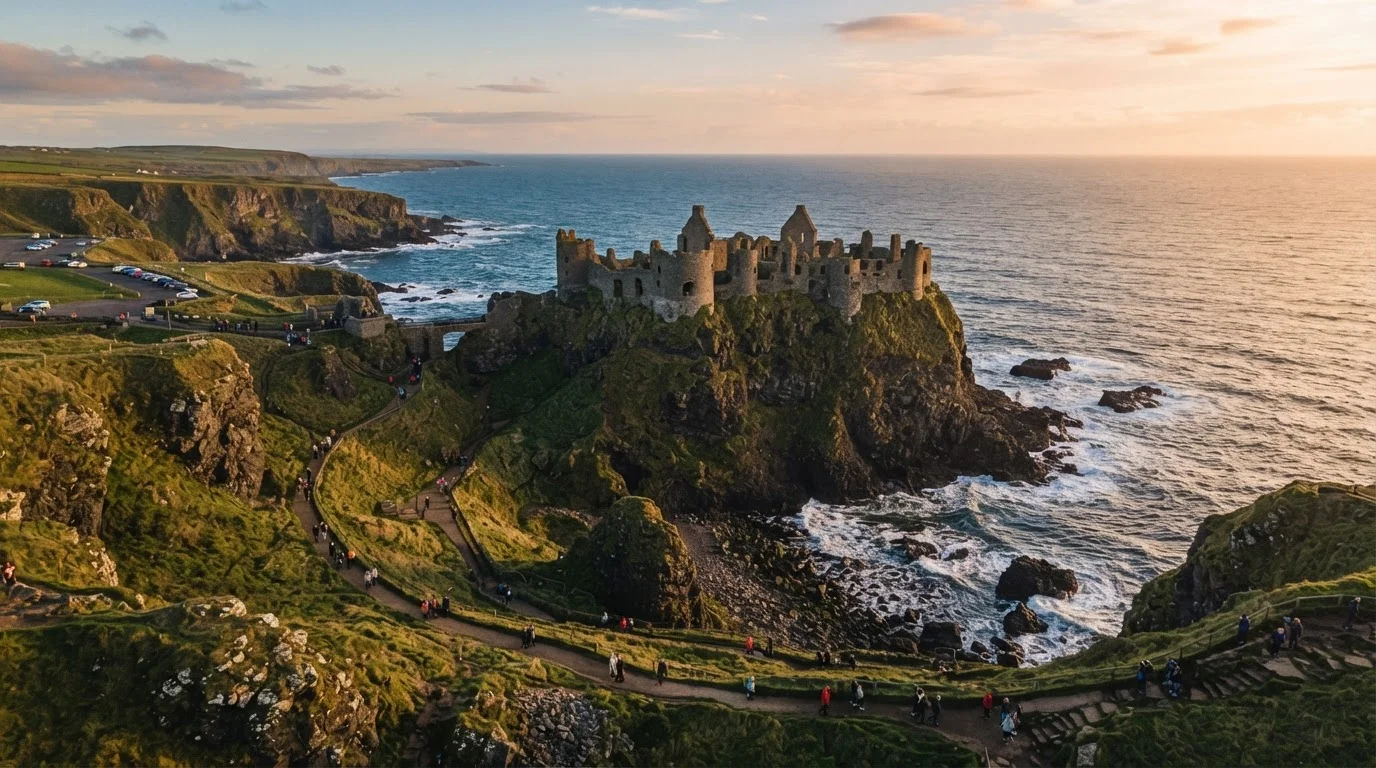
How Set-Jetting Became a Recognized Travel Trend
The idea of visiting a place because it appeared in a film is not new — travelers have been seeking out locations used in classic movies for decades. What has changed is the scale and speed at which screen content now drives real-world travel decisions.
The growth of global streaming platforms beginning in the 2010s fundamentally shifted the dynamic. A show produced in one country can now reach tens of millions of households across dozens of markets within days of release. When a series features a striking location — a remote Irish coastline, a Jordanian desert, a Sicilian hilltop town — that image lands simultaneously with an international audience primed to travel.
Tourism researchers and destination marketing organizations began tracking this pattern more formally in the early 2020s, as data linking streaming viewership to destination search traffic became easier to analyze. The term 'set-jetting' gained traction in travel media as a shorthand for the behavior, which had previously been described by more academic terms like 'film-induced tourism' or 'screen tourism.'
40%
Travelers influenced by screen content
According to a 2023 survey by the travel platform Expedia, approximately 40% of respondents said they had been influenced by a TV show or film when choosing a destination.
3x
Search traffic increase after major series
Tourism boards in several countries have reported destination search traffic rising by as much as three times in the weeks following the release of a prominent streaming series featuring their locations.
Top 5
Film tourism as a booking motivator
Industry analysts tracking booking motivation data have placed screen content among the top five external factors shaping international destination selection in recent years.
Why It's Growing: Streaming, Social Media, and the Visual Pull
Two forces have supercharged set-jetting: the proliferation of streaming content and the influence of social media. Streaming platforms invest heavily in visually distinctive productions, often filming on location rather than on sets — meaning real places get high-quality, extended screen time in front of global audiences.
Social media then accelerates the effect. Viewers share screenshots, fan accounts catalog filming locations, and travel content creators post visits to featured sites. A place can go from obscure to overbooked in a matter of weeks after a popular episode airs. This compresses a cycle that once played out over years into months or even days.
Unlike traditional advertising, the screen exposure feels organic to the viewer. A destination encountered through a compelling story carries emotional resonance that a brochure does not. Travelers who visit are often trying to recreate the feeling of being inside the narrative — what researchers sometimes describe as a search for 'place attachment' through media.
The Real-World Impacts on Destinations
When visitor numbers climb sharply at a filming location, the consequences are not always positive for the communities there. Small towns and rural sites that feature in major productions often lack the infrastructure — parking, waste management, hospitality capacity — to absorb sudden surges. Residents can face rising rents, disrupted daily life, and environmental wear on landscapes they depend on.
This overlap with broader overtourism concerns is significant. As explored in coverage of the hidden costs of overtourism, visitor pressure can damage both physical environments and the social fabric of a destination. Set-jetting, when it concentrates large numbers at a single site with little warning, can accelerate these pressures faster than destination managers can respond.
Some locations have introduced visitor management measures in response — timed entry, access fees, or outright restrictions on access to the most fragile filming sites. Others have leaned into their screen fame more deliberately, channeling tourism revenue into conservation or community programs. For more context on approaches that go beyond managing damage, the concept of regenerative tourism offers a useful framework.
What Responsible Set-Jetting Looks Like
Traveling to a filming location is not inherently problematic — the issue lies in how it is done. Visitors who spread their itineraries across a wider region, spend money with local businesses rather than large tour operators, and follow posted access rules contribute more constructively to the destinations they visit.
Checking whether a specific filming site is on private land or within a protected area before visiting is an essential first step. Many popular screen locations sit inside national parks, heritage sites, or working farmland, where unsanctioned visitor access causes real harm. Official tourism boards in countries with significant filming activity typically publish guidance on which sites are open to visitors and under what conditions.
Set-jetting can also serve as an entry point into deeper engagement with a destination — its history, food, culture, and communities — rather than a brief stop for a photo at a recognizable spot. That orientation sits closer to the principles of slow travel, which encourages spending more meaningful time in fewer places. Travelers planning trips to popular filming destinations can find broader travel planning guidance helpful when preparing for the visit.
Research Access Before You Arrive
Many popular filming locations sit within protected areas, heritage sites, or private land. Before visiting, check the official tourism board or land management authority for the destination to confirm whether public access is permitted and whether any permits or timed entry systems apply. Arriving without this information can result in being turned away — or causing unintentional harm to restricted environments.
Frequently Asked Questions
Set-jetting means choosing a travel destination because it appeared in a movie or TV show. Travelers want to see real locations they recognized on screen. The term is a blend of 'jet-setting' and a film 'set.'
Film tourism has grown significantly alongside the rise of global streaming platforms. Industry observers and tourism boards in several countries have tracked measurable visitor increases following major productions. It is now considered one of the notable emerging drivers of destination selection.
Yes, a sudden surge in visitors to a filming location can strain local infrastructure, raise prices for residents, and damage fragile environments. This is particularly true for smaller or more remote sites not designed to handle large tourist volumes. Travelers are encouraged to research site capacity and local guidance before visiting.
High-profile fantasy and drama series, prestige films, and internationally distributed streaming originals tend to have the strongest effect. Productions that showcase distinctive landscapes or architecture are especially effective at inspiring travel. Documentaries and travel-adjacent cooking shows have also begun influencing destination choices.
Visiting during off-peak periods, choosing lesser-filmed nearby locations, respecting posted access rules, and spending money locally are all ways to reduce negative impact. Checking whether a site has public access restrictions before visiting is also important, as some filming locations are on private land.
Many do. Tourism agencies in countries including New Zealand, the United Kingdom, Iceland, and Croatia have developed dedicated marketing campaigns and itineraries tied to major productions. Some negotiate tourism partnerships during production deals before a show even airs.
The content on this site is for informational purposes only and is not a substitute for professional advice. Always consult a qualified professional for guidance specific to your situation.