

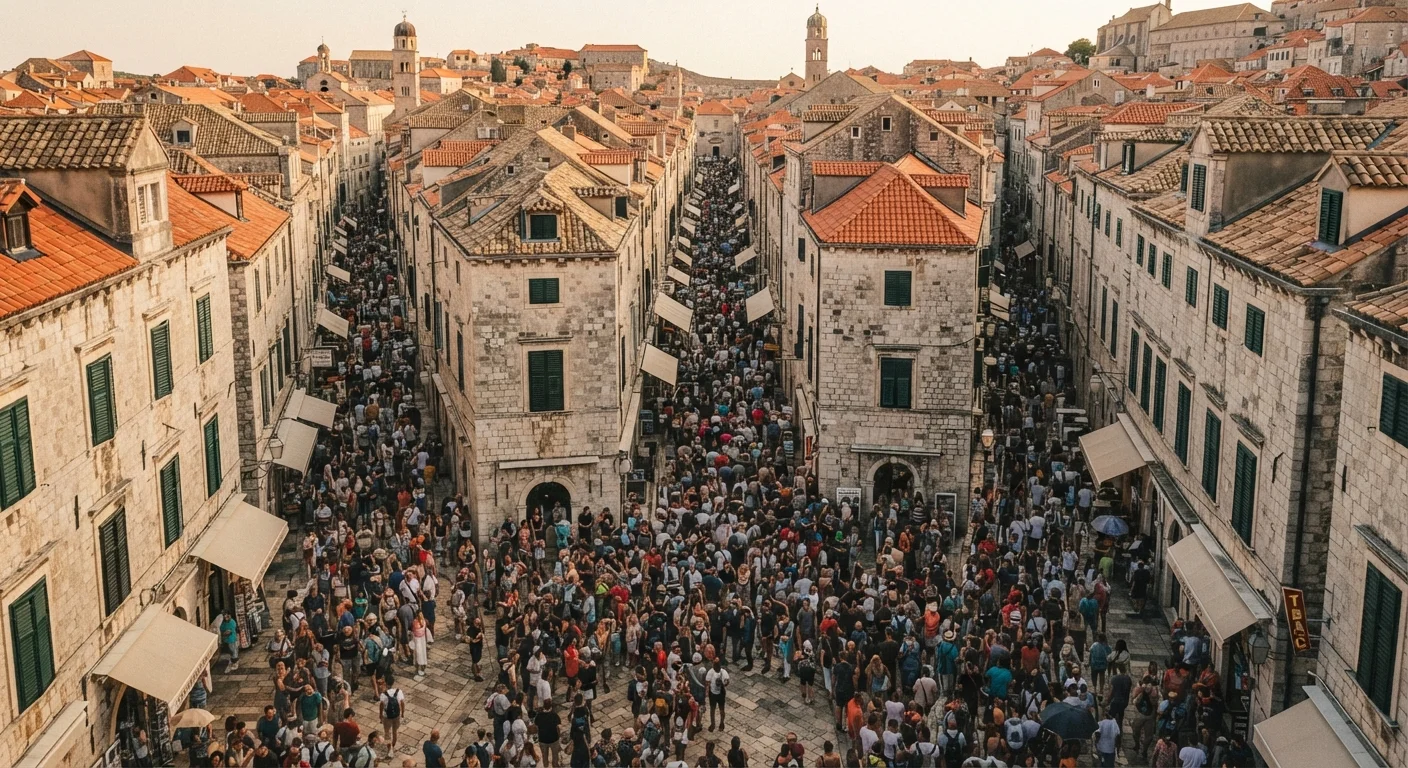
When More Visitors Becomes a Problem
Travel's recovery from pandemic-era restrictions has been uneven — and in some places, overwhelming. Major international destinations reported record visitor arrivals in recent years, and the pressure on infrastructure that was already stretched thin became difficult to ignore. Crowded airports, overwhelmed transit systems, and queues stretching blocks from heritage sites have become routine complaints at destinations that were once considered dream trips.
Overtourism is not a new concept, but it has gained sharper definition as cities, island communities, and natural parks push back against visitor volumes they can no longer manage quietly. The term captures a specific condition: when tourism demand outpaces a location's physical, social, and ecological capacity to sustain it without lasting harm.
Understanding the mechanics of overtourism matters for travelers because it shapes what they actually experience — and what they leave behind. A place that looks idyllic in photographs may be operating well beyond its sustainable threshold by the time any given tourist arrives. For context on how misjudging a destination's reality affects travel decisions, see common traveler misjudgements.
1.4B
International tourist arrivals recorded pre-pandemic
According to the United Nations World Tourism Organization, international arrivals reached approximately 1.4 billion in 2018, placing unprecedented pressure on major destination infrastructure.
~80%
Tourism concentrated in 10% of destinations
Industry research consistently finds that the large majority of global tourist traffic is absorbed by a relatively small share of destinations, intensifying pressure on already well-known sites.
3–4x
Peak vs. off-peak visitor volume difference
At many European heritage sites and beach destinations, visitor numbers during peak summer weeks can be several times higher than off-season figures, creating acute seasonal strain.
The Pressure Points: Infrastructure, Housing, and Culture
Airports are often the first place the strain registers. As passenger volumes climb, facilities designed for earlier traffic levels buckle — longer security lines, crowded terminals, and delayed connections become normalized. For travelers trying to manage tight itineraries, navigating layovers without stress becomes more difficult when the entire system is under pressure.
Beyond airports, the effects move deeper into destination communities. Housing is one of the most documented casualties. When short-term rental platforms expand in residential neighborhoods, long-term housing stock shrinks. Residents who have lived in historic districts for generations find themselves priced out as property owners shift to more lucrative tourist rentals. Barcelona, Lisbon, and Amsterdam have all introduced or debated regulatory responses to this dynamic.
Cultural erosion is harder to quantify but widely reported. When visitor numbers overwhelm a neighborhood's carrying capacity, the local businesses, customs, and community rhythms that made the place distinctive gradually give way to souvenir shops, chain restaurants, and tourism-optimized experiences that serve visitors rather than residents. The destination begins to consume itself.
Why Demand Concentrates — and What's Changing
A core driver of overtourism is concentration: a relatively small number of sites absorb a disproportionate share of global visitor traffic. Social media amplifies this effect by repeatedly surfacing the same iconic images, directing traveler attention toward a narrow set of already-pressured destinations. This creates a self-reinforcing cycle that is difficult to break through individual choices alone.
Seasonality compounds the problem. Even destinations with manageable annual visitor totals can experience acute overtourism during peak weeks, when accommodation, transit, and attractions hit simultaneous capacity ceilings. Travelers who shift their timing — choosing shoulder or off-season periods — can reduce their own contribution to peak crowding. The trade-offs of off-season travel are real, but so are the benefits for both traveler and destination.
Policy responses have emerged unevenly. Some protected natural areas now require advance permits and cap daily entries. Several European cities have imposed short-term rental restrictions or cruise ship limits. Others are experimenting with dispersal strategies — actively promoting lesser-known areas within the same region to redirect some visitor flow. For travelers interested in what lesser-visited destinations actually look like, the destinations hub offers a broader view of where travel interest is shifting.
“Tourism is one of the world's largest industries, but its benefits and burdens are distributed very unevenly. The communities that host visitors often bear costs that never appear on the traveler's itinerary.”
— Harold Goodwin, Responsible Tourism advisor and academic researcher
What Travelers Can Realistically Do
No individual traveler is responsible for systemic overtourism, and framing it purely as a personal ethics problem misrepresents where the real leverage lies — in policy, infrastructure investment, and industry regulation. That said, aggregate traveler behavior does shape destination conditions over time.
Practically, travelers can research carrying capacity concerns before finalizing itineraries, visit during non-peak periods where flexibility allows, and seek out locally owned accommodation and services rather than globally operated platforms. These choices do not eliminate the structural issues, but they reflect an informed approach to travel that accounts for impacts beyond the individual trip. For guidance on packing and planning decisions that shape the overall travel footprint, see packing habits that help travelers go lighter.
It's also worth noting that not every crowded destination is experiencing overtourism in the harmful sense. Popular does not automatically mean damaged. For a closer look at the assumptions and myths that often attach themselves to this topic, overtourism myths worth examining provides useful context. The Travel Tips hub also covers broader strategies for navigating destination research with more accuracy.
Frequently Asked Questions
Common indicators include severe seasonal crowding, rising housing costs that displace longtime residents, degraded natural or historic sites, and strained public services such as water, waste management, and transit. Locals openly expressing frustration with visitor volumes is another widely documented signal.
Venice, Barcelona, Amsterdam, Santorini, Bali, and parts of Thailand and Japan are frequently cited in research and policy discussions as high-pressure destinations. However, overtourism is not limited to famous cities — small towns and natural parks can face equivalent or greater pressure relative to their capacity.
When short-term rental platforms convert residential properties into tourist accommodation, available housing stock for long-term residents shrinks. This reduced supply, combined with tourism-driven income expectations, pushes rents and purchase prices higher — often pricing out lower- and middle-income locals.
Choosing less-visited destinations, traveling during off-peak periods, and supporting locally owned businesses are among the individual actions researchers and planners most commonly highlight. No single traveler resolves a systemic issue, but aggregate behavior shifts do register at a destination level.
Evidence is mixed. Entry fees and permit systems can reduce volume and fund conservation, as seen in some national parks and protected sites. Critics note that pricing mechanisms can also shift access away from lower-income travelers without fixing underlying demand. Policy effectiveness depends heavily on local enforcement and governance.
No. Popularity and overtourism are different conditions. A destination can attract large numbers of visitors and manage them sustainably with adequate infrastructure and planning. Overtourism specifically refers to conditions where visitor volumes cause measurable harm to communities, environments, or the visitor experience itself.
The content on this site is for informational purposes only and is not a substitute for professional advice. Always consult a qualified professional for guidance specific to your situation.