

Why Overtourism Narratives Resist Correction
Overtourism has become one of travel journalism's most reliably viral topics. Images of selfie-stick gridlock at ancient ruins or canals clogged with cruise ships generate strong reactions — and strong reactions tend to calcify into accepted wisdom quickly. The problem is that the most emotionally compelling versions of these stories are often the least precise.
Several myths about overtourism have now circulated long enough to feel like established fact. They shape how travellers justify their choices, how destinations are perceived, and sometimes how policy gets made. Separating what the evidence actually shows from what has become conventional wisdom is worth doing — not to dismiss genuine concerns about tourism pressure, but to ensure the response to those concerns is grounded in reality. For more on how crowd dynamics and travel patterns are shifting, see the rise of slow travel.
Myth
Venice is sinking because of tourist foot traffic and cruise ships.
Fact
Venice's subsidence is primarily caused by natural sediment compaction and historic groundwater extraction, compounded by rising sea levels — not tourist weight or cruise wakes.
The idea that tourists are literally sinking Venice is emotionally resonant but scientifically imprecise. Venice sits on soft sediment in a coastal lagoon and has been slowly subsiding for centuries. Industrial-era groundwater pumping in the mid-twentieth century accelerated the process before it was halted. The more urgent threat today is acqua alta — seasonal flooding driven by sea-level rise linked to broader climate patterns. Cruise ship activity has been studied for wave and sediment disturbance in the lagoon, and stricter regulations have been implemented, but the structural geology of the city is the primary driver of its vulnerability. The distinction matters because misidentifying the cause leads to misidentified solutions.
Myth
If a destination is crowded, it has lost its authenticity.
Fact
Crowd levels and cultural authenticity are not the same thing. Many deeply local places — markets, festivals, pilgrimage sites — have always drawn large numbers of people.
The assumption that authentic places are quiet and undiscovered conflates tourism volume with cultural integrity. Many of the world's most genuinely local gatherings — religious festivals, harvest markets, community fairs — have drawn crowds for generations. What can erode local character is not visitor numbers alone but the economic incentives those numbers create: displacement of local businesses by souvenir shops, conversion of housing to short-term rentals, and infrastructure built for visitors rather than residents. These pressures are real and documented, but they are driven by policy and investment decisions as much as by raw footfall. Traveller assumptions about authenticity often say more about the traveller than the destination.
Myth
Avoiding popular destinations is the environmentally responsible choice.
Fact
Redirecting tourist flows to lesser-known places can shift environmental pressure onto more fragile ecosystems without reducing it overall.
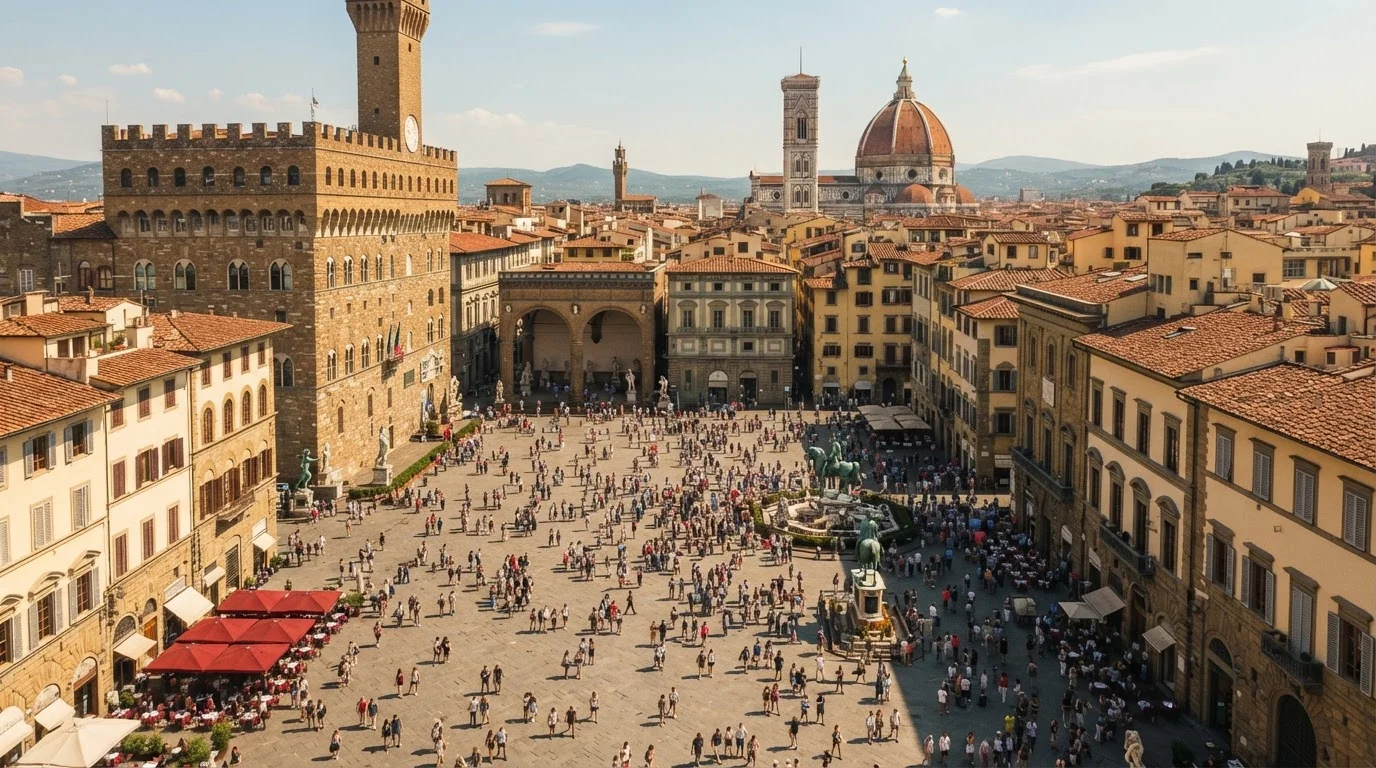
The logic seems straightforward: if Florence is overwhelmed, go somewhere quieter instead. But smaller, less-visited destinations often have less infrastructure — fewer waste management systems, less resilient ecosystems, and communities less equipped to absorb rapid visitor growth. The Azores, for example, have seen rising visitor numbers in recent years, prompting local authorities to actively manage access to sensitive sites. What draws travellers to the Azores includes genuine natural wonders that require careful stewardship. Dispersing tourism is not inherently better; it depends entirely on the carrying capacity and governance of the receiving destination. For a broader look at flight and carbon considerations, see carbon myths in travel.
Myth
Travelling in the off-season solves overtourism problems.
Fact
Off-peak travel helps spread demand but does not resolve structural overtourism issues, and it introduces its own trade-offs for both travellers and local workers.
Seasonality management is a legitimate tool used by destination planners — and distributing arrivals more evenly across the year does reduce peak-period congestion. However, many tourism-dependent workers rely on concentrated seasonal income. Shifting demand to the shoulder or off-peak season can undermine livelihoods built around a short high season. Additionally, some destinations face their worst environmental strain during specific natural cycles, such as nesting seasons or dry periods, regardless of general visitor volumes. Peak season travel trade-offs are worth understanding in full before assuming off-peak is always the responsible option.
Myth
Tourism revenue automatically benefits the communities that host it.
Fact
A significant share of tourist spending often flows to international operators, chains, and platforms rather than staying in local economies — a phenomenon economists call 'tourism leakage.'
The economic case for tourism is frequently overstated at the community level. When travellers book through large international platforms, stay at multinational hotel chains, or join tours operated by foreign companies, a substantial portion of that spending exits the local economy. Research on leakage in developing tourism destinations has estimated that anywhere from 40 to 80 percent of gross tourism revenue may not remain in the host country, though figures vary widely by destination and methodology. Travellers who prioritize locally owned accommodation, guides, and restaurants can make a more direct contribution — though this alone does not substitute for the policy frameworks needed to capture and redistribute tourism income equitably. For context on how overtourism strains communities structurally, see the hidden costs of overtourism.
What Travellers Can Actually Do With Accurate Information
Understanding what overtourism is — and isn't — doesn't reduce the urgency of real problems. Housing displacement in Barcelona, ecosystem degradation on fragile islands, and infrastructure strain in heritage cities are documented and serious. But they require targeted, evidence-based responses, not generalized avoidance of all busy places.
Avoid Basing Travel Choices on Viral Narratives
Social media frequently amplifies extreme images of crowding that don't reflect daily conditions at a destination. Making decisions — whether to go or to avoid a place — based on viral content rather than verified reporting can lead to missed experiences and misdirected concern. Consult travel advisories, destination management organization reports, and recent journalism for a more accurate picture.
For travellers, more accurate framing tends to produce better decisions: choosing locally owned businesses over international chains, engaging with destination management guidelines, respecting posted site capacity limits, and seeking out current reporting rather than relying on years-old viral narratives. The travel trends hub tracks how destinations and travellers are adapting to these pressures in real time.
Overtourism Impacts Are Uneven and Context-Specific
Not every popular destination is equally strained. Overcrowding pressures depend heavily on local infrastructure, governance, housing policy, and the type of tourism involved. Blanket conclusions about any one city or region — based on social media imagery or headline figures alone — often distort more than they clarify. Verify conditions with local reporting and official sources before drawing firm conclusions.
Overtourism is ultimately a governance and planning challenge as much as a traveller behaviour challenge. Individual choices matter at the margins, but systemic change — zoning policy, tourism revenue distribution, access management — determines outcomes more than any single visitor's itinerary.
The content on this site is for informational purposes only and is not a substitute for professional advice. Always consult a qualified professional for guidance specific to your situation.