

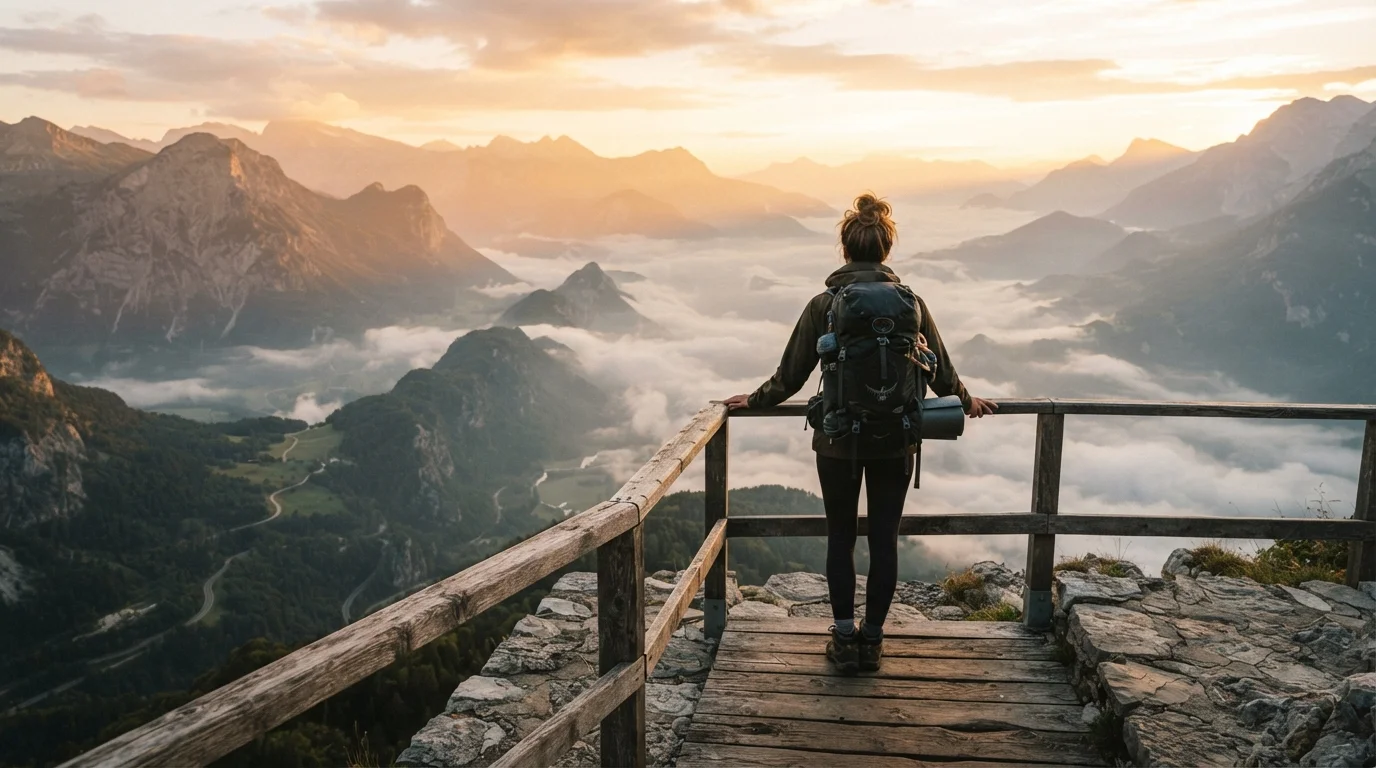
From Fringe to Mainstream: How Solo Travel Gained Momentum
For much of the twentieth century, traveling alone carried a social stigma — an activity associated with either eccentricity or misfortune. Today, that perception has largely reversed. Solo travel has become one of the most discussed and fastest-growing segments in global tourism, driven by overlapping demographic, technological, and cultural forces that have reshaped who travels, why, and how.
Industry surveys have consistently shown a surge in travelers booking trips independently and alone. While precise global figures vary by methodology, multiple hospitality and tourism research firms have noted solo bookings growing at rates that outpace couple and group travel. Hostels, once the default accommodation for solo travelers on tight budgets, have evolved into design-forward social spaces. Cruise lines and tour operators have begun waiving or reducing "single supplements" — the extra fees traditionally charged to solo occupants of double rooms — in response to demand.
Understanding how solo travel compares to group tours helps clarify what's actually driving the choice: flexibility, self-directed pacing, and the ability to build an itinerary around personal interests rather than group consensus.
The Demographics Reshaping the Solo Traveler Profile
Perhaps the most notable demographic shift is the rise of solo female travelers. Several large-scale travel surveys conducted in recent years have found that women now represent the majority of solo travelers in certain markets — a reversal of historical patterns. Online communities dedicated to women's solo travel have grown into significant information networks, sharing destination knowledge, safety experiences, and logistical advice.
Millennials and Gen Z travelers are also disproportionately represented in solo travel data, partly because these cohorts came of age during a period when independent travel norms were already shifting. At the same time, older travelers — particularly retirees and empty-nesters — represent a quieter but significant solo travel segment, often with more time and financial resources available for extended trips.
Rising rates of single-person households across the U.S. and much of the developed world are a structural factor. When more people live alone, the logistical friction of coordinating travel with a partner or group becomes a regular barrier that solo travel simply removes.
~70%
Solo travelers who identify as women
Multiple travel industry surveys, including data cited by hostel booking platforms and tour operators, have found women consistently representing the largest share of solo leisure travelers.
25%+
U.S. households that are single-person
According to U.S. Census Bureau data, single-person households have grown steadily over recent decades, forming a structural driver of solo travel demand.
1 in 4
Global travelers who book solo trips
Tourism industry analysts, including data compiled by Visa's Global Travel Intentions survey in recent years, have tracked roughly this proportion of leisure travelers traveling alone.
Technology, Remote Work, and the Logistics of Going Alone
The practical barriers to solo travel have dropped considerably over the past decade. Navigation apps, real-time translation tools, and global communication platforms have made independent travel in unfamiliar countries far more manageable. Online review ecosystems give solo travelers access to detailed, peer-sourced safety and logistics information before arriving anywhere.
Remote work has introduced a new category of solo traveler — the person who combines professional obligations with independent travel, sometimes called a "digital nomad." While this label has become something of a cultural shorthand, the underlying pattern is significant: when work is location-independent, the calendar constraints that once made extended solo trips impractical largely disappear.
This flexibility also connects to a broader travel philosophy. Solo travel frequently overlaps with the slow travel movement, in which travelers prioritize depth over breadth — spending longer in fewer places rather than rushing through a checklist of sights. Solo travelers, unconstrained by others' itineraries, are often well-positioned to travel this way.
Verify Entry and Safety Information Directly
Visa requirements, vaccination rules, and travel advisories change frequently and vary by destination. Before any solo trip, consult your government's official travel advisory portal and the destination country's embassy or consulate website. Do not rely solely on social media or travel blogs for entry or safety information.
Industry Adaptation and What It Signals
The travel industry's response to solo travel growth is itself a useful indicator of how mainstream the trend has become. Hotel chains have introduced single-occupancy room categories. Tour operators have launched small-group departures explicitly designed for solo travelers, providing social connection without requiring travelers to bring their own companions. Some cruise lines have built dedicated single cabins into new ship designs for the first time in decades.
This commercial adaptation matters beyond its business implications. When an industry recalibrates its products to serve a demographic, it tends to accelerate the normalization of that demographic's behavior — more visibility creates more travelers, which generates more product development.
Solo travel also intersects with purpose-driven travel trends. Travelers going alone often have greater scheduling flexibility to engage in voluntourism and impact travel programs that require specific departure windows or extended commitments — something harder to arrange within a group.
For those weighing their options, group travel among friends is also surging and presents its own appeal. The growth of both trends simultaneously suggests that travelers are becoming more intentional — choosing their travel style based on what an individual trip actually calls for, rather than defaulting to habit.
Explore trending destinations that solo travelers are increasingly choosing, and consider how your own travel style fits within these evolving norms.
Frequently Asked Questions
Safety depends heavily on destination, preparation, and individual circumstances. First-time solo travelers are generally advised to start with destinations that have well-established tourist infrastructure. Always check current travel advisories from official government sources before departing, as conditions can change.
Multiple factors contribute, including greater financial independence, expanded online communities sharing destination knowledge, and a cultural shift normalizing solo travel for women. Many women also report that solo travel offers autonomy that group or partner trips don't provide.
It often can, since costs like hotel rooms aren't split. However, the travel industry has developed products to close this gap, including single-supplement waivers on certain tours and social-focused hostels designed for cost-sharing. Budget and planning approaches vary widely.
Solo travel prioritizes individual flexibility and self-directed itineraries, while group tours offer structure, built-in companionship, and logistics handled by an operator. Both have distinct trade-offs in terms of cost, social experience, and spontaneity.
Researchers and industry analysts point to several converging factors: rising rates of single-person households, remote work flexibility, social media communities normalizing solo trips, and a growing cultural emphasis on personal experience and autonomy.
Many destinations have developed infrastructure, safety records, and communities that make them frequently cited among solo travelers. Factors to weigh include transportation reliability, accommodation options, language accessibility, and current safety conditions — all of which should be verified with up-to-date official sources.
The content on this site is for informational purposes only and is not a substitute for professional advice. Always consult a qualified professional for guidance specific to your situation.