

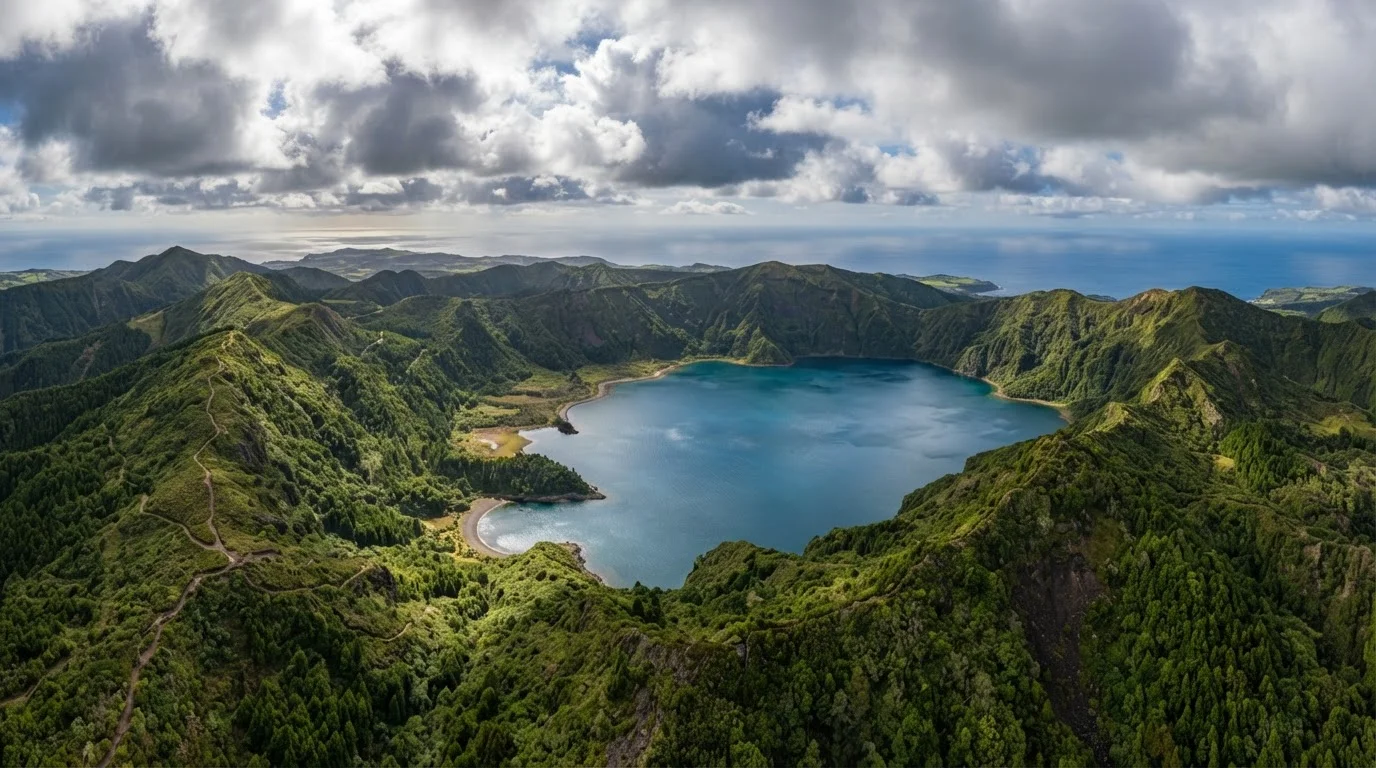
An Archipelago Built on Fire and Water
Nine islands, no two identical, spread across 370 miles of open Atlantic: the Azores occupy a geography unlike anywhere else in Europe. Volcanically active and geologically young, they are a direct product of the tectonic forces at work beneath the Atlantic — the same forces explored in destinations like Iceland. For a deeper look at how mid-Atlantic geology shapes visitor experiences, see The Geography Behind Iceland's Dramatic Landscape.
On São Miguel, the largest island, twin crater lakes fill ancient calderas with still, deep water. On Faial, a 1957 volcanic eruption added a new peninsula to the island's coastline within living memory. On Pico, a UNESCO-listed vineyard landscape of black lava walls climbs toward Portugal's highest peak. The geological drama is not historical abstraction — it remains visible and, in some places, actively felt.
Fumaroles vent steam from hillsides. Thermal springs feed outdoor pools at Caldeira Velha and the Furnas valley, where geothermal heat is used to slow-cook a traditional stew called cozido das Furnas underground. This intersection of natural spectacle and everyday culture is central to what draws travelers here.
Geothermal Activity and Visitor Safety
Several areas in the Azores, including parts of Furnas valley on São Miguel, sit within geologically active zones. Visitors should follow marked paths and posted warnings near fumaroles and hot springs. Local park authorities publish current safety guidance, and travelers are encouraged to check conditions before visiting thermal areas.
Marine Life and the Draw of the Open Atlantic
The Azores sit at the convergence of three ocean currents, creating nutrient-rich waters that support an exceptional concentration of marine species. Over 20 species of cetaceans have been recorded in the archipelago, including resident sperm whales that can be observed year-round in the channel between Pico and Faial.
Whale watching here has roots in the islands' whaling past. Former vigias — land-based lookout points once used by whalers to spot spouts — are now used by conservation-minded tour operators who radio boat captains with directions in real time. The transition from hunting to observation over the latter half of the 20th century is often cited as a model for sustainable marine tourism.
20+
Cetacean species recorded in Azorean waters
The Azores are widely recognized by marine researchers as one of the world's most biodiverse cetacean habitats, with species ranging from resident sperm whales to blue whales during migration.
9
Islands in the archipelago
The nine islands are grouped into three geographic clusters — Eastern, Central, and Western — each with distinct volcanic character and visitor infrastructure.
~1,000 mi
Distance from mainland Portugal
The Azores' mid-Atlantic position places them geographically closer to North America than to continental Europe, contributing to their distinct climate and biodiversity.
Beyond cetaceans, the Azores offer diving in waters that include seamounts, hydrothermal vents, and rays of manta rays that congregate around specific islets seasonally. For travelers whose primary interest is wildlife, the Atlantic setting offers an immersive alternative to more visited European coastal destinations.
Why Travelers Are Choosing the Azores Over Crowded Alternatives
Travel patterns across the past decade have shifted meaningfully. Overtourism concerns — crowds, price inflation, cultural friction — have prompted a growing segment of European travelers to look beyond the obvious summer destinations. The Azores, with limited hotel capacity and a geography that inherently caps visitor numbers on smaller islands, have emerged as a beneficiary of that shift.
This aligns with broader travel trends reshaping trip planning globally. The appeal of the Azores dovetails specifically with the rise of slow travel, which favors deeper, longer stays over rapid multi-destination itineraries. Spending a week or more on a single island — hiking trail networks, exploring local markets, learning the rhythms of a small Portuguese community — aligns well with what the archipelago naturally offers.
Travelers comparing Portuguese destinations more broadly will find the Azores occupy a distinct niche. Unlike the beach resort culture of the Algarve or the historic centers of Lisbon and Porto, the islands emphasize outdoor activity and natural landscape. For context on how the Azores compare to the mainland experience, Coastal Portugal vs. the Alentejo Interior offers useful framing on Portugal's contrasting travel moods.
Plan Around Island-Specific Strengths
Each Azores island has a different character and infrastructure level. São Miguel is best suited for first-time visitors with the widest range of services, while Flores and Corvo are remote and require more planning. Researching the specific islands on your itinerary — rather than treating the Azores as a single destination — generally leads to a more informed trip.
It is worth noting that increased visibility brings its own pressures. The smaller islands in particular have limited infrastructure, and travelers are generally encouraged to follow local guidelines, stay on marked trails, and respect protected natural areas. Official tourism authorities and park services publish current guidance that visitors should consult before arrival.
Travel conditions, entry requirements, and local regulations can change. Travelers should verify all visa, safety, and practical information with official government and destination sources before making plans.
Frequently Asked Questions
The Azores are part of Portugal and the European Union's Schengen Area. US citizens can generally visit for up to 90 days within a 180-day period without a visa, but travelers should verify current entry requirements with the Portuguese consulate or official EU sources before travel.
The Azores have a mild, year-round oceanic climate, but summer months (June through September) tend to offer the most stable weather and warmest sea temperatures. Spring and autumn can bring more rain but fewer visitors. Weather can change quickly due to the islands' mid-Atlantic position.
São Miguel is the largest island and has the most tourist infrastructure, including the famous Sete Cidades crater lakes and Furnas thermal valley. However, each island has a distinct character, and visitors often choose based on interests such as hiking, whale watching, or diving.
The Azores are widely regarded as one of the best places in the world for whale watching, with resident sperm whales present year-round and migratory species passing through seasonally. Sightings are common but can never be guaranteed; operators use traditional land-based lookouts to spot whales before boats depart.
Azores Airlines operates direct transatlantic routes from several US cities, including Boston and New York, to Ponta Delgada on São Miguel. Connections through Lisbon are also available. Flight schedules and availability vary by season, so checking current airline timetables is recommended.
The content on this site is for informational purposes only and is not a substitute for professional advice. Always consult a qualified professional for guidance specific to your situation.