

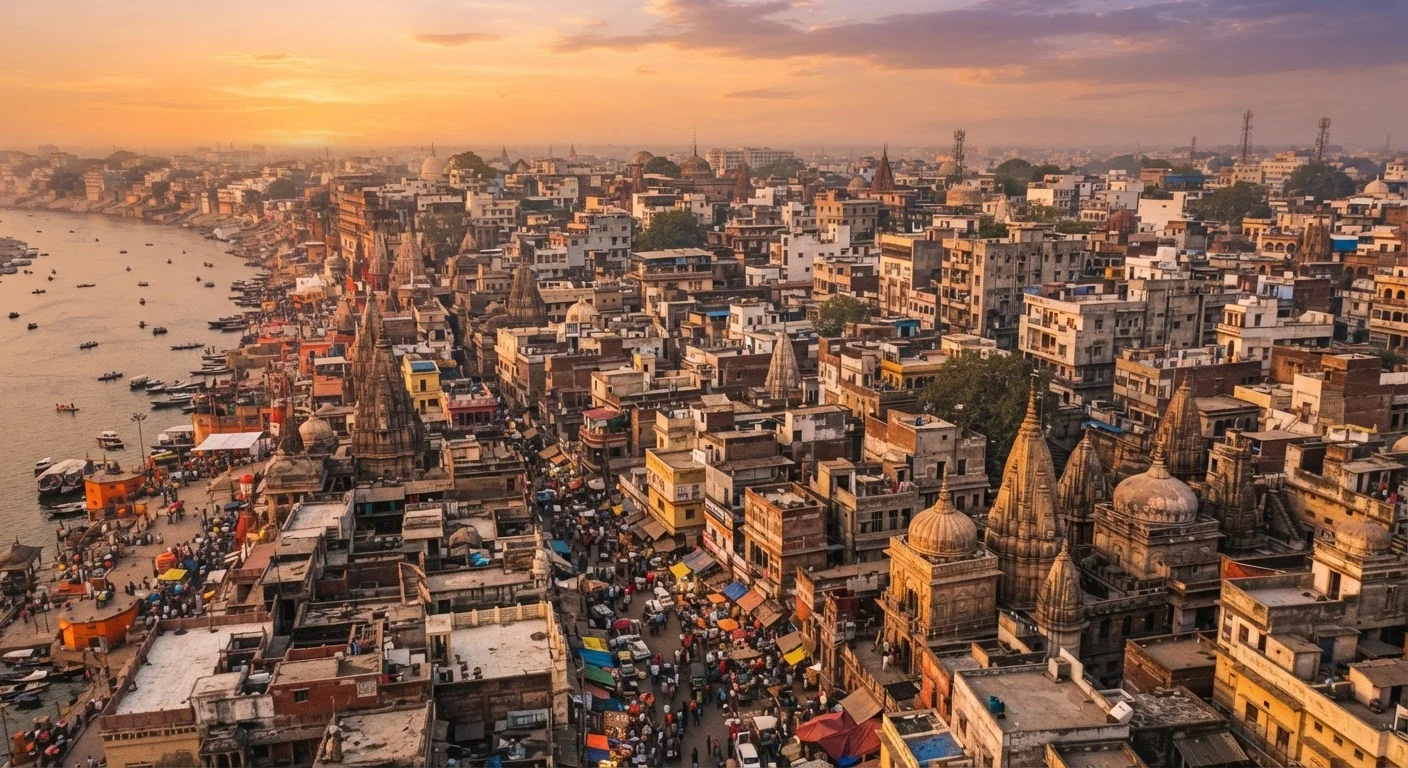
Why First Impressions of India So Often Miss the Mark
India ranks among the world's most visited countries, yet it also generates some of the most polarized traveler reactions — ranging from overwhelming wonder to genuine frustration. In many cases, the gap between expectation and experience traces back not to the destination itself, but to the assumptions visitors carry in with them.
The country's sheer scale, internal diversity, and the way it has been represented in global media create a particular set of misreadings that affect planning, logistics, and daily experience. Understanding where those misreadings typically occur is some of the most useful preparation a first-time visitor can do. See our guide for first-time international travelers for a broader foundation before diving into India-specific considerations.
The mistakes below reflect patterns reported consistently by travelers, not isolated bad luck. Most are avoidable with straightforward adjustments to how you research and plan.
Treating India as a single, uniform destination rather than a subcontinent of distinct regions.
Why it happens: International media and travel marketing tend to compress India into a handful of iconic images — the Taj Mahal, Rajasthan's palaces, Kerala's backwaters — without conveying how radically different each region is.
Severely underestimating the time required to travel between destinations.
Why it happens: Online maps show distances in kilometers, but don't adequately convey road conditions, traffic congestion, or the reality of Indian rail schedules, which are often subject to delays.
Packing a single-style wardrobe without accounting for climate and cultural range.
Why it happens: First-time visitors often plan around one season or one region, not realizing that India simultaneously spans tropical coastlines, high-altitude Himalayan terrain, and arid desert zones.
Assuming English is universally spoken and understood across the country.
Why it happens: English has official status in India and is widely used in government and business, leading visitors to expect consistent comprehension in all settings.
Expecting a single itinerary to meaningfully cover the 'whole country' in two to three weeks.
Why it happens: Travelers accustomed to touring smaller European countries in one trip apply the same logic to India, not accounting for its geographic scale — roughly 3.3 million square kilometers.
Dismissing unfamiliar social norms or negotiating practices as rudeness or inefficiency.
Why it happens: Interactions around pricing, personal space, and directness operate differently across Indian contexts, and visitors sometimes read cultural difference as a problem to solve rather than a norm to understand.
Planning Smarter: What a More Accurate Picture Looks Like
Correcting these misreadings doesn't require insider knowledge — it requires treating India's diversity as the central fact of any itinerary rather than a footnote. The travelers who tend to report the most satisfying experiences are those who go deep into fewer places rather than skimming the surface of many.
Infrastructure Quality Varies Sharply by Region
Road conditions, power reliability, mobile connectivity, and sanitation standards differ significantly between urban centers, smaller cities, and rural areas. What holds true in Mumbai or Bengaluru may not apply in a remote hill district. Research conditions specific to each place on your itinerary rather than assuming uniform standards nationwide.
It also helps to approach the country the way a careful reader approaches a complex story — aware that the version most widely circulated may be a simplified one. Popular travel narratives about destinations often flatten nuance in ways that set visitors up for confusion. India is a frequent subject of exactly this kind of compression.
For travelers attentive to how framing shapes perception — whether reading a news story or reading a map — the same critical habits apply. Outdated assumptions about destinations are worth examining before any significant trip, but especially one to a country as layered as India.
Verify Entry Requirements Before You Travel
India's visa requirements, e-visa eligibility, and entry conditions vary by nationality and can change. Always confirm current requirements through your country's official government travel portal and India's official immigration authorities well in advance of departure. Do not rely on third-party summaries, which may be outdated.
This article is for general informational purposes. Entry requirements, visa rules, health advisories, and local conditions change regularly. Verify all travel-critical details with official government sources and your country's travel authority before departure.
The content on this site is for informational purposes only and is not a substitute for professional advice. Always consult a qualified professional for guidance specific to your situation.