

Our Verdict
Patagonia rewards travellers who arrive prepared for adversity — logistical complexity, weather volatility, and real physical demands are not edge cases but standard features of the experience. The landscapes are genuinely extraordinary, but so are the planning requirements. Travellers who treat this as a structured expedition rather than a conventional holiday tend to report the most satisfying outcomes.
Best suited to experienced independent travellers, hikers, and wildlife enthusiasts who have flexibility in their schedule and are comfortable with unpredictable conditions.
What Patagonia Actually Is
Patagonia is not a country or a single park — it is a vast, loosely defined region covering the southern cone of South America, split between Argentina and Chile. Estimates of its total area vary, but the region is generally considered to span roughly 400,000 square miles, encompassing Andean peaks, Patagonian steppe, glaciers, fjords, and coastline. Key destinations include Torres del Paine National Park in Chile, Los Glaciares National Park in Argentina (home to the Perito Moreno Glacier), and the city of Ushuaia, which markets itself as the world's southernmost city.
Getting there takes significant effort. Most international travellers fly into Buenos Aires or Santiago and connect onward to gateway cities like Punta Arenas, Puerto Natales, or El Calafate. Journey times within the region can be long and expensive, and road conditions range from sealed highways to unpaved gravel routes known locally as ripio. Travellers who underestimate internal distances frequently find their itineraries under pressure from the start. For a broader look at common planning misjudgements, see common traveller assumptions that can complicate a trip.
The Honest Case for Going
Few regions on Earth offer the combination of scale, ecological diversity, and visual drama that Patagonia does. The landscape is frequently described by travellers as transformative in a way that photographs — however widely shared — do not fully prepare visitors for.
Landscapes that are genuinely without parallel elsewhere
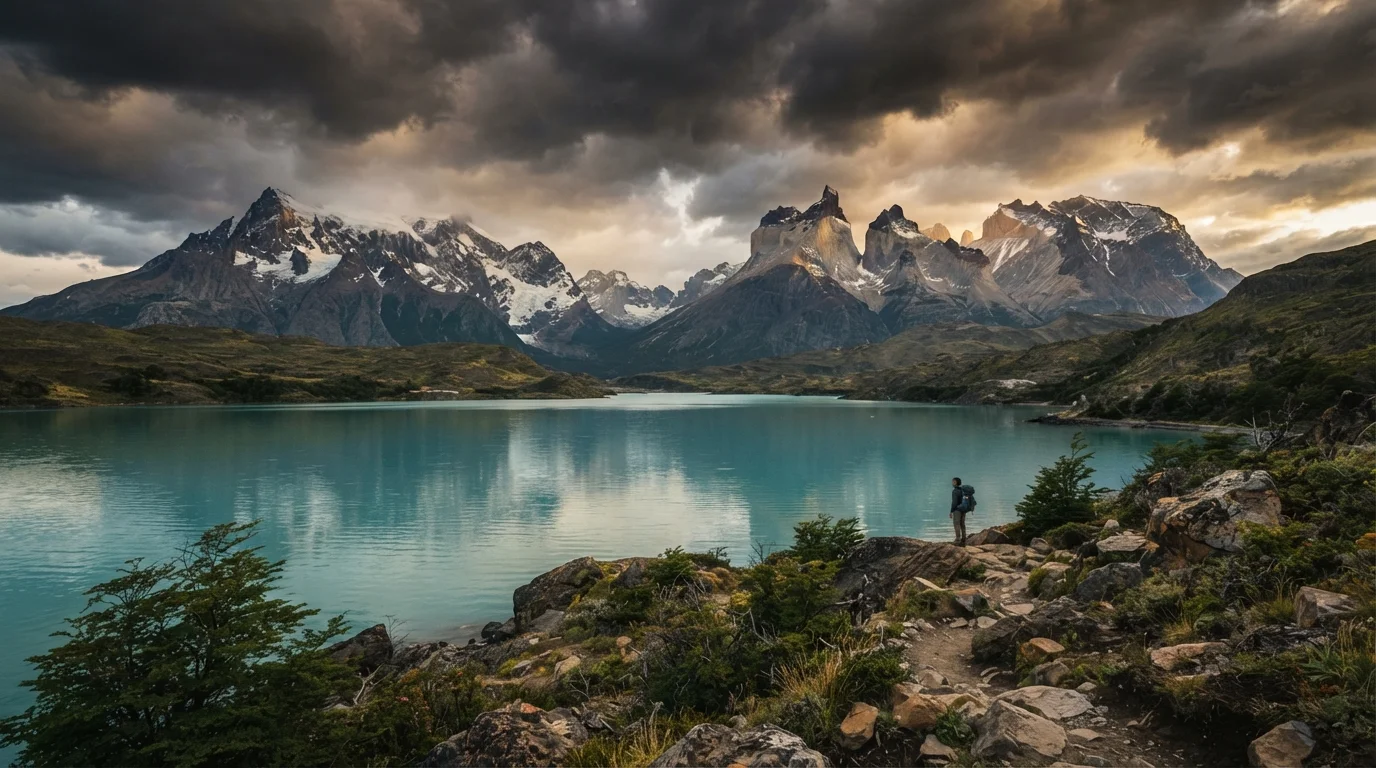
The combination of granite spires, ice fields, and steppe in a single region is ecologically unusual. Torres del Paine and Los Glaciares together protect some of the largest temperate ice masses outside the polar regions.
Accessible and diverse wildlife viewing opportunities
Patagonia supports a wide range of species viewable in open terrain, from Magellanic penguins at coastal rookeries to pumas in Torres del Paine — without the dense jungle cover that limits sightings in other wilderness regions.
World-class trekking infrastructure on key routes
The W Trek and O Circuit in Torres del Paine have well-maintained trail systems with refugio networks, making multi-day wilderness trekking achievable for travellers without technical mountaineering experience.
Relatively low population density means genuine solitude
Away from the most popular parks, vast stretches of Patagonia see very few visitors. Travellers willing to venture off well-worn circuits often find themselves entirely alone in the landscape.
Rich cultural character in gateway towns
Cities like Ushuaia and Puerto Natales have developed distinct identities shaped by frontier history, indigenous heritage, and a culture of outdoor adventure that extends beyond tourism brochures.
Wildlife encounters in Patagonia are also notably accessible. The Valdés Peninsula in Argentine Patagonia hosts southern right whales (seasonally), Magellanic penguins, sea lions, and elephant seals in relatively close proximity. Torres del Paine shelters guanacos, Andean condors, and the elusive puma. Unlike some wildlife destinations, sightings in open steppe country are often possible without specialist guides, though guided excursions generally improve outcomes.
For travellers open to shoulder-season timing, the trade-offs can work in their favour. Visiting just outside peak months can mean thinner crowds on popular trails like the W Trek and the O Circuit. Our coverage of off-season travel trade-offs explores what that timing actually means in practice.
What the Region Pushes Back With
Patagonia's difficulties are real and well-documented. Weather is the most persistent challenge. The region sits in a zone influenced by strong Southern Ocean westerlies, and conditions can shift from sunshine to horizontal rain and back within the same afternoon. Wind speeds in exposed areas — particularly along the steppe and mountain passes — can exceed 60 mph on ordinary days.
Weather is extreme and consistently unpredictable
Strong westerly winds and rapid weather changes are not unusual events in Patagonia — they are structural features of the climate. Travellers should expect to encounter challenging conditions on most multi-day trips regardless of season.
Logistics require substantial advance planning
Accommodation on major trekking routes books out months in advance, internal transport connections are infrequent, and distances between services are large. Spontaneous itineraries are difficult to execute successfully.
Access is expensive relative to other South American destinations
International flights, park entry fees, refugio costs, and internal transport combine to make Patagonia one of the higher-cost destinations on the continent, particularly during peak season.
Physical demands are significant and often underestimated
Major trekking routes involve multi-day mileage on uneven, often wet terrain with wind exposure. Travellers without prior hiking conditioning report high rates of difficulty completing planned circuits.
Medical and emergency services are limited in remote areas
Evacuation from remote parts of the region can be slow and expensive. Travellers with pre-existing health conditions or limited fitness should assess the distance from medical care carefully before planning backcountry routes.
Peak season brings crowding on popular circuits
Despite its size, Patagonia's tourist infrastructure concentrates around a handful of parks and routes. During November to March, these areas can feel significantly congested, diminishing the sense of wilderness some travellers seek.
~400,000
Square miles in the Patagonia region
The region straddles southern Argentina and Chile and is generally estimated at around 400,000 square miles, though definitions of its boundaries vary by source.
45+ miles
Distance covered on the W Trek
The W Trek in Torres del Paine covers approximately 45 to 50 miles over four to five days, according to Chile's national park authority CONAF.
Nov–Mar
Primary trekking season window
Most trekking route operators and park authorities define the core visitor season as November through March, when daylight hours are longest and trail conditions most stable.
Costs are another consistent finding among travellers. Park entry fees for international visitors at Torres del Paine have risen significantly in recent years, and accommodation in gateway towns is priced to match demand during peak season. Budget travel is possible but requires careful advance planning; last-minute availability in high season is limited.
Physical fitness demands also deserve honest mention. The W Trek in Torres del Paine covers roughly 45 miles over four to five days with significant elevation gain and often-wet trail surfaces. Trekkers who have not trained adequately report high levels of discomfort and, in some cases, do not complete planned routes. The region shares some logistical traits with high-altitude destinations, and the preparation mindset described in our article on travelling to high-altitude destinations is broadly transferable here.
Planning Realities Travellers Should Know
Accommodation in popular areas books out months in advance during peak season (November–March). Refugios — mountain huts on trekking routes — operate on a reservation system and are routinely sold out before the season opens. Travellers who arrive without bookings during this window frequently find no options within the parks themselves.
Entry Requirements and Regulations Change
Border crossing rules, visa requirements, and currency regulations in both Chile and Argentina are subject to change and have historically shifted with little advance notice. Travellers should consult official government sources — including their own country's foreign affairs ministry and the relevant embassy websites — for current entry requirements before booking. Do not rely solely on travel forums or third-party sites for this information.
Currency and payment infrastructure vary significantly between Chilean and Argentine sides of the region. In Argentine Patagonia, policies around currency exchange have historically been complex; travellers should verify current entry requirements and financial regulations through official government and embassy sources well before departure, as conditions can change. Visa requirements also differ between the two countries depending on the traveller's nationality.
Patagonia offers a genuinely different travel experience from comparable wilderness destinations. New Zealand's South Island is sometimes drawn as a comparison — both offer fjords, glaciers, and significant trekking — but Patagonia's remoteness, weather extremes, and infrastructure gaps make it a materially harder destination to navigate, particularly for first-time long-haul travellers.
The content on this site is for informational purposes only and is not a substitute for professional advice. Always consult a qualified professional for guidance specific to your situation.