

Why Wellness Apps Feel More Clinical Than They Are
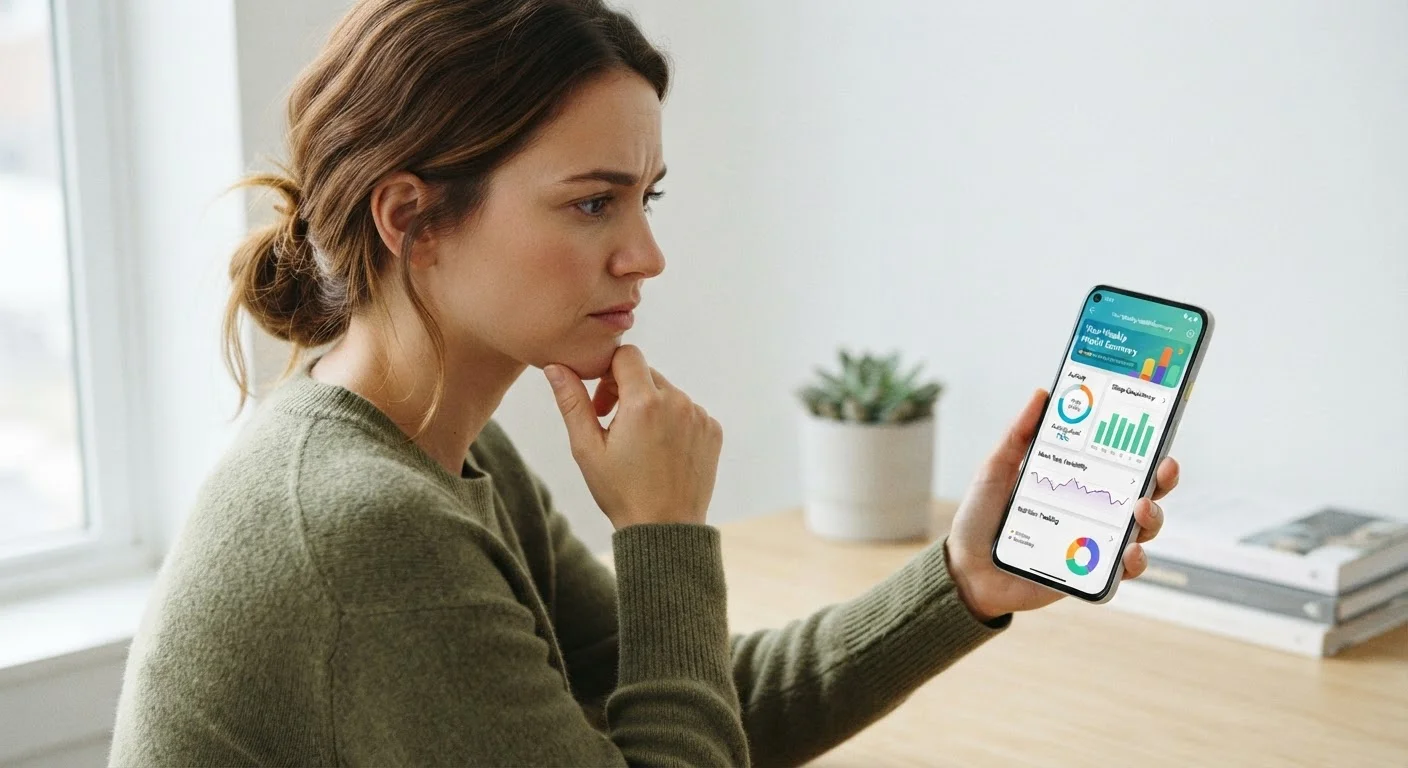
Consumer health and wellness apps have become a fixture of everyday life, offering everything from step counts and calorie estimates to heart rhythm analysis and mood tracking. For many people, these tools genuinely support healthier habits — and there is real value in that. The problem emerges when app data begins to substitute for professional evaluation rather than supplement it.
Part of this dynamic is by design. App interfaces are polished, data is presented with precision, and notifications create a sense of active health management. What they cannot replicate is the clinical judgment that comes from a trained provider who can weigh your symptoms, history, and circumstances together. When evaluating any wellness tool, it helps to apply the same critical lens discussed in our guide on evaluating a new wellness trend before committing to it.
350,000+
Health apps available across major app stores
According to an IQVIA Institute for Human Data Science report, the mobile health app market has grown rapidly, with enormous variation in clinical quality and evidence base.
~33%
Adults who have used a health app to research symptoms
Survey data from the Pew Research Center has found that roughly one in three U.S. adults turns to online or app-based tools when they notice a health concern.
Few
Consumer wellness apps with FDA clearance or rigorous clinical validation
Researchers reviewing app stores have repeatedly found that a small minority of health-related apps carry regulatory clearance or have been validated against clinical gold standards.
Common Mistakes — and How to Avoid Them
Most users don't set out to self-diagnose. The errors tend to happen gradually — an app flags a metric, a user searches for its meaning, and a cycle of interpretation begins that moves further from qualified guidance. Understanding where these patterns start is the first step to using these tools more safely.
Treating an app's output as a clinical diagnosis rather than a general data point.
Why it happens: Health apps are designed to feel authoritative — clean interfaces, confident language, and data visualizations can create an impression of clinical precision that most apps simply do not have.
Ignoring the difference between FDA-cleared medical devices and general wellness apps.
Why it happens: Both categories often live in the same app store and can look nearly identical to a consumer. Marketing language like "clinically inspired" or "doctor-designed" does not equal regulatory clearance.
Allowing health app anxiety — excessive worry triggered by flagged metrics — to displace calm, proportionate self-monitoring.
Why it happens: Wearables and symptom-checker apps can surface data points — heart rate variability dips, sleep score declines — without the context a clinician would use to assess their significance.
Sharing sensitive health data through apps without reviewing privacy terms.
Why it happens: Users typically accept privacy policies without reading them, and many are unaware that consumer health apps operate outside the regulatory protections that govern medical providers.
Using mental health screening tools within apps as a self-diagnosis framework.
Why it happens: Apps that incorporate standardized questionnaires — such as mood trackers or anxiety assessments — can feel definitive because they use structured formats adapted from clinical instruments.
Apps Are Not a Substitute for Clinical Care
No wellness or consumer health app — regardless of how sophisticated its algorithms appear — is a replacement for evaluation by a licensed healthcare provider. If you are experiencing symptoms that concern you, consult a qualified professional rather than relying on an app's output to guide your decisions. This is particularly important for symptoms that are new, persistent, or severe.
Using Apps Responsibly Within a Broader Health Picture
None of this means wellness apps are without merit. Tracking activity levels, monitoring sleep consistency, or logging food intake can provide genuinely useful data — particularly when shared with a healthcare provider who can interpret it alongside a full clinical picture. The key distinction is between using an app as a tool for awareness versus using it as an authority on diagnosis.
Apps that incorporate artificial intelligence add another layer of complexity. AI-driven features may analyze patterns in your data and surface insights that feel highly personalized — but the underlying models are trained on populations, not on you individually. Uncertainty in the output may not always be communicated clearly to the user.
Your Health Data May Not Stay Private
Many wellness apps collect sensitive personal information, including health metrics, location, and behavioral patterns. Unlike hospitals and clinics, most consumer health apps are not governed by HIPAA (the Health Insurance Portability and Accountability Act), meaning your data may be shared with third parties or used for advertising. Before entering personal health information into any app, review its privacy policy carefully. For a broader look at this issue, see the privacy trade-offs of AI-powered apps.
As with other emerging wellness modalities discussed in our overview of fringe-to-mainstream wellness practices, the evidence base for many app-driven health claims remains uneven. Staying informed about what a tool can genuinely do — and what it cannot — is one of the most practical things a health-conscious consumer can do.
This article is for general informational purposes only and does not constitute medical advice. Always consult a qualified healthcare professional with questions about your health or before making decisions based on health-related data.
The content on this site is for informational purposes only and is not a substitute for professional advice. Always consult a qualified professional for guidance specific to your situation.