

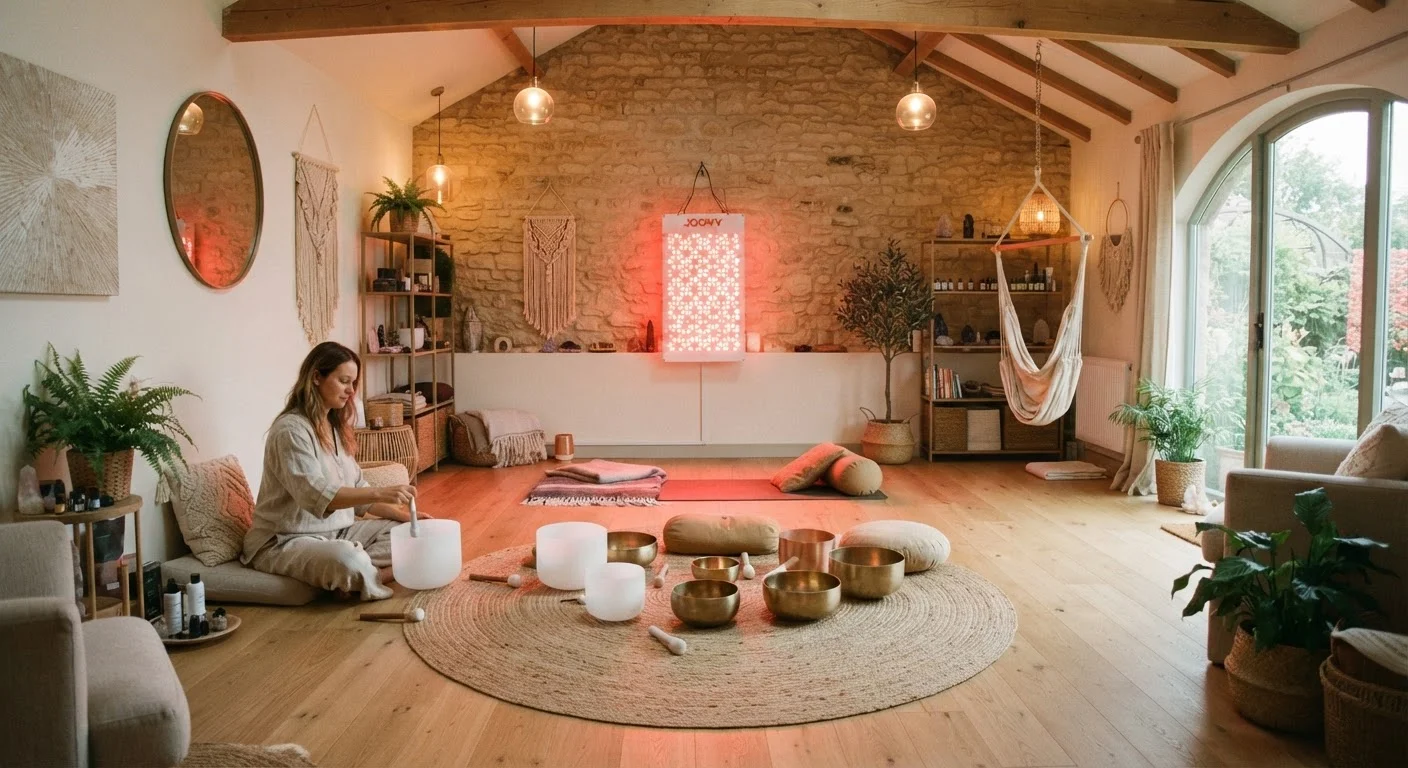
From the Margins to the Mainstream
A decade ago, practices like sound baths and red light therapy occupied the outermost edges of wellness culture. Today, they appear in hospital integrative health programs, athletic training facilities, and mainstream fitness studios. This shift raises a fair question: does mainstream popularity reflect growing scientific credibility, or primarily cultural momentum?
The honest answer is both — and the ratio varies by practice. Some modalities, like certain applications of red light therapy, now have a modest but genuine body of peer-reviewed research behind them. Others remain at an early or speculative stage, with enthusiastic anecdotal support but limited controlled evidence. Understanding where each practice falls on that spectrum matters, especially when making decisions about time, money, and health. For a complementary look at another fast-moving wellness category, see our coverage of functional mushrooms and what science has confirmed.
How to Assess Any Wellness Trend
A useful starting point is asking whether a practice has been studied in peer-reviewed, controlled trials — not just observational reports or testimonials. It is also worth noting who funded the research and how large the studies were. Our guide on evaluating a wellness trend before committing offers a practical framework for applying these questions.
Six Practices, Assessed on the Evidence
Sound Baths
Sound baths involve sustained exposure to acoustic vibrations — typically produced by Tibetan singing bowls, crystal bowls, gongs, or tuning forks — while participants rest in a reclined position. The practice draws on traditions from Himalayan and South Asian cultures and has grown substantially in Western wellness spaces over the past decade.
Scientifically, the picture is cautiously promising but far from conclusive. Small studies, including one published in the Journal of Evidence-Based Integrative Medicine, have found self-reported reductions in tension, anxiety, and fatigue following sound meditation sessions. Researchers hypothesize that slow, layered acoustic frequencies may help induce a relaxation response similar to other mindfulness-based modalities.
However, most available studies are small, lack control groups, and rely heavily on subjective self-reporting. Sound baths should be understood as a complementary relaxation practice rather than a treatment for any diagnosed condition.
Sound baths may promote relaxation, but current evidence remains limited and largely self-reported.
Red Light Therapy
Red light therapy — also called photobiomodulation or low-level laser therapy — uses specific wavelengths of red and near-infrared light to penetrate skin tissue. The proposed mechanism involves stimulating mitochondrial function in cells, which proponents suggest may support tissue repair, reduce inflammation, and improve skin appearance.
Of all the modalities discussed here, red light therapy arguably has the broadest clinical research base. The FDA has cleared certain red light devices for limited applications, including treating musculoskeletal pain and specific dermatological conditions. Research on wound healing and joint pain has shown measurable effects in some controlled settings.
That said, many consumer claims — particularly around hair regrowth, athletic performance, and cognitive enhancement — range from preliminary to unsubstantiated. The quality of evidence varies significantly by application, and not all devices marketed to consumers deliver clinically relevant dosages. Anyone considering red light therapy for a specific health concern should discuss it with a medical professional first.
Red light therapy has FDA-cleared uses, but many consumer claims exceed what the evidence currently supports.
Float Therapy (Sensory Deprivation Tanks)
Float therapy involves lying in a shallow, enclosed tank filled with highly concentrated Epsom salt solution, effectively eliminating external sensory input — light, sound, and gravitational pressure on joints. Sessions typically last 60 to 90 minutes.
Research suggests float therapy may reduce subjective stress and anxiety, with some studies noting measurable decreases in cortisol levels and self-reported pain. A 2018 study published in PLOS ONE found that a single flotation session produced significant reductions in anxiety, stress, depression, and pain across a mixed participant pool.
The research base remains modest in scale, and most studies involve participants who self-selected into float therapy — an important limitation. It is generally considered low-risk for healthy adults, though individuals with certain psychological conditions, open wounds, or skin sensitivities should consult a provider before trying it.
Float therapy shows genuine potential for stress reduction, though the research base is still relatively small.
Infrared Saunas
Unlike traditional saunas that heat ambient air, infrared saunas use infrared light panels to warm the body directly at lower air temperatures. Advocates cite benefits ranging from cardiovascular support to detoxification and improved sleep.
Some observational evidence — notably from long-term Finnish sauna studies — associates regular sauna use with reduced cardiovascular risk, though those studies largely involved conventional rather than infrared saunas. Research specific to infrared saunas is more limited, with some small trials suggesting benefits for blood pressure and subjective fatigue in people with certain chronic conditions.
The "detox" narrative often associated with sauna use is frequently overstated; the liver and kidneys handle most detoxification functions in the body. People with cardiovascular conditions, those who are pregnant, or individuals on medications affecting heat tolerance should seek medical guidance before using an infrared sauna regularly. For a similarly evidence-aware look at another heat-and-cold modality, see what research shows about cold plunging.
Infrared sauna research is promising but limited; the popular detox framing is not well supported by physiology.
Breathwork Practices
Structured breathwork — including techniques like diaphragmatic breathing, the physiological sigh, and practices derived from traditions such as pranayama — has attracted growing scientific attention for its potential effects on the autonomic nervous system. Unlike some other modalities on this list, breathwork is accessible, low-cost, and carries minimal risk for most healthy adults.
Studies have found that intentional, slow breathing can shift the balance between sympathetic (stress-activated) and parasympathetic (rest-and-digest) nervous system activity, reducing heart rate and self-reported anxiety. Research from Stanford published in 2023 found that certain brief breathwork protocols produced greater reductions in anxiety and improvements in mood compared with mindfulness meditation over the same duration.
It is worth distinguishing evidence-backed breath regulation exercises from more dramatic commercial programs that make sweeping health claims. Individuals with respiratory conditions, a history of panic disorder, or cardiovascular concerns should consult a provider before beginning intensive breathwork regimens.
Simple breathwork techniques have among the most accessible evidence bases of any modality in this category.
Grounding (Earthing)
Grounding — or earthing — is based on the premise that direct physical contact with the earth's surface (bare skin on soil, grass, or sand) allows the transfer of electrons from the earth to the body, which proponents claim reduces inflammation and promotes physiological balance.
A small body of research, including studies in the Journal of Inflammation Research, has reported associations between grounding and reduced markers of inflammation and improved sleep in limited samples. However, the evidence base is thin, heavily reliant on small pilot studies, and has attracted methodological criticism. The proposed electron-transfer mechanism remains scientifically contested.
Time outdoors — with or without a grounding framework — is associated with well-documented benefits for mood and stress. The practice of spending time in green spaces has stronger supporting research, as explored in our coverage of forest bathing and nature therapy. Grounding itself warrants more rigorous study before firm conclusions can be drawn.
Grounding's proposed mechanism is scientifically contested; time in nature broadly carries stronger evidentiary support.
Talk to a Provider Before Starting
Even low-risk wellness practices can interact with medications, existing conditions, or individual physiology in unexpected ways. Before committing to a new modality — especially one involving heat, light exposure, or breathwork — a brief conversation with your doctor or a licensed health professional is a sensible step.
Making Informed Choices in a Crowded Wellness Market
The wellness industry is large, growing, and not uniformly regulated. That context makes evidence literacy — the ability to distinguish robust findings from preliminary data or marketing language — a practical health skill. None of the practices covered here are inherently dangerous for most healthy adults when used appropriately, but none should be treated as replacements for established medical care either.
If a practice appeals to you, approaching it as a complement to — rather than a substitute for — evidence-based care is generally the most balanced position. Technology-driven wellness tools deserve the same scrutiny; for context on where digital health tools have limitations, see our piece on wellness apps and the risks of self-diagnosis.
This article is for general informational purposes only and does not constitute medical advice. Always consult a qualified healthcare professional before starting, stopping, or changing any health practice or treatment.
The content on this site is for informational purposes only and is not a substitute for professional advice. Always consult a qualified professional for guidance specific to your situation.