

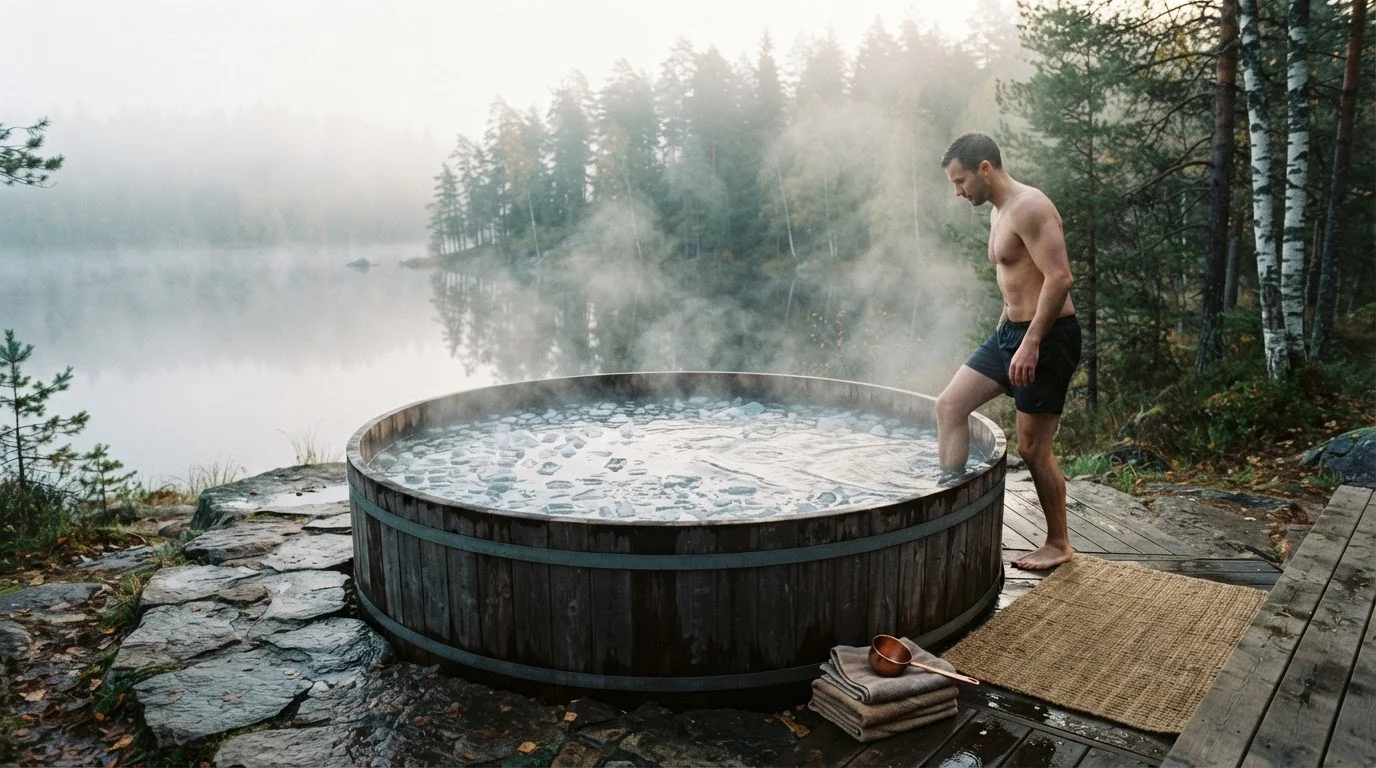
Why Cold Plunging Has Captured Public Attention
Ice baths have been a staple in elite athletic recovery rooms for decades. More recently, they've moved into mainstream wellness culture — showing up in gyms, spas, backyards, and social media feeds at a striking pace. Advocates claim benefits ranging from reduced muscle soreness to improved mood, better sleep, and even metabolic boosts.
But enthusiasm tends to outpace evidence in wellness trends, as our colleagues have explored in pieces like this look at emerging wellness modalities. Cold plunging is no exception. The science behind it is genuinely interesting — and genuinely incomplete. Understanding what's supported, what's overstated, and what's still uncertain is more useful than any blanket endorsement or dismissal.
Myth
Cold plunging after any workout speeds up recovery and makes you fitter faster.
Fact
Cold immersion may reduce soreness, but evidence suggests it can blunt strength and muscle-building adaptations when used regularly after resistance training.
The inflammatory processes that cold water suppresses aren't purely a problem — they're part of the body's signaling pathway for muscle repair and growth. Research published in the Journal of Physiology has found that habitual post-exercise cold immersion may reduce hypertrophic (muscle-building) adaptations over time. Cold plunging may serve endurance athletes better than those primarily training for strength.
Myth
The colder the water, the more benefit you get.
Fact
Research does not support a clear dose-response relationship where colder temperatures produce proportionally greater benefits.
Most studied protocols use water temperatures in the range of roughly 50–59°F (10–15°C). Extremes below this range introduce greater cardiovascular stress without demonstrated additional recovery benefit. There is no established optimal temperature — and going colder primarily increases risk rather than reward.
Myth
Ice baths significantly boost metabolism and help with weight loss.
Fact
Cold exposure does activate brown adipose tissue (brown fat), but the metabolic effect in typical short immersions is modest and not established as a reliable weight-management tool.
Brown adipose tissue burns energy to generate heat, and some research shows cold exposure can activate it. However, the caloric expenditure from short ice bath sessions is small, and studies on cold exposure as a weight-loss intervention in humans remain limited and inconclusive. Presenting cold plunging as a meaningful metabolic intervention goes well beyond what current evidence supports.
Myth
Cold plunging is safe for everyone.
Fact
Cold water immersion carries real risks, particularly for people with cardiovascular conditions, and should not be treated as universally safe.
The cold shock response — a rapid surge in heart rate and blood pressure triggered by sudden cold immersion — poses meaningful risk for individuals with heart disease, hypertension, or arrhythmias. Hypothermia is a real hazard with prolonged exposure, and unsupervised immersion can lead to disorientation or loss of consciousness. Cold plunging is not an inherently low-risk activity.
Myth
Ice baths cure inflammation and are always anti-inflammatory.
Fact
Cold immersion temporarily reduces acute inflammation, but inflammation itself is a necessary part of normal recovery — and suppressing it isn't always beneficial.
Inflammation after exercise is part of the body's repair and adaptation process. Indiscriminately suppressing it — particularly after strength training — may interfere with normal physiological adaptation. The goal isn't to eliminate inflammation but to recover effectively, and those are not always the same thing.
What the Research Does and Doesn't Establish
The most consistent finding in cold water immersion research is a reduction in perceived muscle soreness — the aching, heavy-limbed feeling that follows intense exercise, formally called delayed-onset muscle soreness (DOMS). A 2022 systematic review published in Sports Medicine found that cold water immersion was more effective than passive rest for reducing DOMS in the short term. That's a meaningful finding, but it comes with caveats.
~15°C
Typical water temperature in research protocols
Most cold water immersion studies use temperatures between 10–15°C (50–59°F), though real-world practices vary widely.
11–15 min
Common immersion duration in studied protocols
A 2021 review in the European Journal of Sport Science found most effective protocols ranged from 11 to 15 minutes of immersion.
First, most studies involve trained athletes doing high-intensity exercise — not the general population doing moderate workouts. Second, trial sizes are often small and protocols vary widely (temperature, duration, immersion depth), making direct comparisons difficult. Third — and this is a point worth sitting with — there is growing evidence that the inflammatory response cold water suppresses may actually be part of how muscles grow stronger. Researchers have raised the possibility that regular cold immersion after resistance training could reduce long-term strength gains. A 2019 study in the Journal of Physiology found reduced muscle fiber growth in participants who regularly used cold water immersion compared to active recovery. This doesn't make cold plunging harmful, but it does complicate the picture for people using it primarily to build strength.
For a broader framework on evaluating practices like this, the guide to assessing new wellness trends offers useful questions worth working through before committing.
Safety Considerations That Shouldn't Be Overlooked
Cold water immersion carries real physiological risks that are sometimes minimized in popular coverage. Sudden immersion in cold water triggers what's known as the cold shock response — an involuntary gasping reflex, rapid heart rate increase, and blood pressure spike. For healthy individuals, this is typically transient. For people with cardiovascular disease, hypertension, or arrhythmias, it can be dangerous.
Cold Shock Is a Real Cardiovascular Risk
Sudden immersion in cold water triggers an involuntary gasping reflex and a rapid spike in heart rate and blood pressure. For people with heart disease, hypertension, or arrhythmias, this response can be dangerous. If you have any cardiovascular condition, speak with your doctor before attempting cold water immersion of any kind.
There is also the risk of hypothermia with prolonged exposure, and the hazard of impaired coordination or loss of consciousness if immersion is unsupervised. Reputable sports medicine guidance generally frames ice baths as a supervised, time-limited practice — not an open-ended wellness ritual without guardrails.
This content is for general informational purposes only and is not medical advice. Anyone considering cold plunge practice — particularly those with heart conditions, circulatory issues, Raynaud's disease, or who are pregnant — should consult a qualified healthcare provider first.
This article is for informational purposes only and does not constitute medical advice. Always speak with a qualified healthcare professional before beginning any new wellness practice.
The content on this site is for informational purposes only and is not a substitute for professional advice. Always consult a qualified professional for guidance specific to your situation.