

What Screening Tools Are — and Aren't
Mental health screening tools are structured questionnaires used to assess the likelihood that a person is experiencing symptoms associated with conditions such as depression, anxiety, or post-traumatic stress. They are not diagnostic tests. A screen that returns a high score signals that something may warrant closer attention — it does not tell a clinician, or a person, that a diagnosis is present.
Understanding what mental health actually means is a useful foundation before interpreting any screening result. Mental health exists on a spectrum, and screening tools attempt to capture only a slice of that complexity through standardized questions.
The distinction between screening and diagnosis matters. Diagnosis involves a thorough clinical evaluation — including a patient's history, functioning, and ruling out other causes — conducted by a qualified professional. A questionnaire, no matter how well-validated, cannot replicate that process.
How Common Tools Like the PHQ-9 and GAD-7 Work
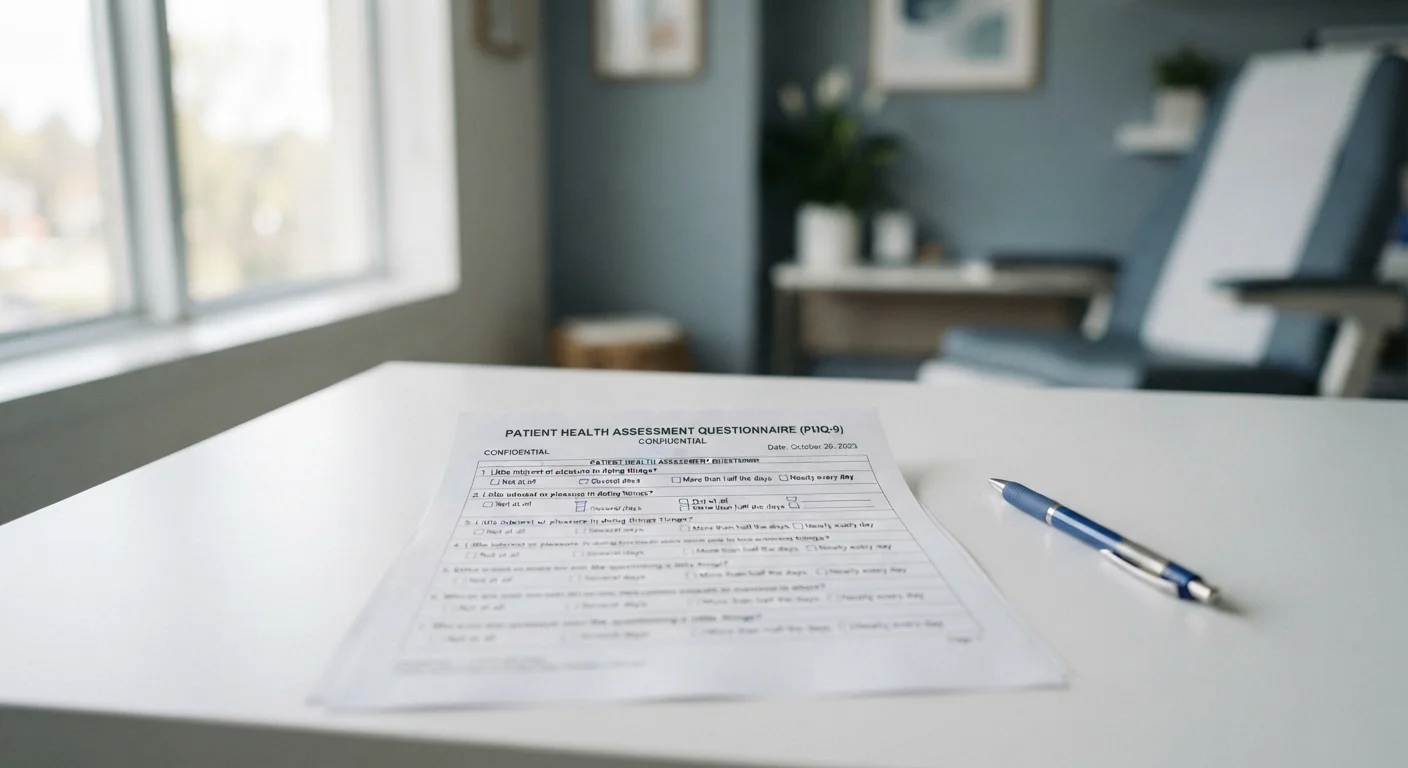
Several screening tools have been extensively studied and are in routine clinical use. Two of the most common are the PHQ-9 (Patient Health Questionnaire-9), used to screen for depressive symptoms, and the GAD-7 (Generalized Anxiety Disorder 7-item scale), used to assess anxiety severity. Both ask respondents to rate how often they have experienced specific symptoms over a defined period — typically the past two weeks — using a scale from "not at all" to "nearly every day."
Scores are tallied and compared against validated thresholds. A PHQ-9 score of 10 or above, for example, is often used as a cutoff suggesting moderate depression symptoms — though clinicians weigh this alongside other information rather than acting on the number alone.
PHQ-9
Most widely used depression screening tool in US primary care
The PHQ-9 is embedded in electronic health record systems across primary care, behavioral health, and hospital settings throughout the United States.
~80%
Sensitivity of the PHQ-9 at a score threshold of 10
Research published in peer-reviewed literature estimates the PHQ-9's sensitivity for major depressive disorder at approximately 80% at the standard cutoff, meaning roughly 1 in 5 cases may not be flagged.
1 in 5
US adults experiencing a mental illness in a given year
According to the National Institute of Mental Health, approximately 1 in 5 U.S. adults lives with a mental illness — underscoring the public health relevance of accessible screening.
Other commonly used tools include the PC-PTSD-5 for post-traumatic stress, the AUDIT for alcohol use concerns, and the Edinburgh Postnatal Depression Scale for perinatal mental health. Each has been developed and validated for specific populations and contexts.
What Screening Tools Cannot Tell You
Screening tools have meaningful limitations that are sometimes obscured when they appear in consumer apps or online wellness platforms. First, they rely entirely on self-report — responses reflect how a person interprets both their own experience and the question being asked. Cultural differences, language barriers, and individual variation in how symptoms are perceived can all affect scores.
Second, no tool has perfect sensitivity (catching everyone who has a condition) or specificity (excluding everyone who does not). False positives and false negatives are built into every validated instrument. The rate at which these occur can also shift depending on the population being screened.
Third, a questionnaire has no awareness of medical context. Thyroid disorders, sleep deprivation, grief, medication side effects, and other factors can produce symptoms that overlap with depression or anxiety. A score reflects reported symptoms — not their cause.
Bring Your Score to Your Next Appointment
If you complete a mental health screen online or through an app, consider printing or noting your score before speaking with a healthcare provider. The number itself is less important than discussing what prompted you to take the screen and what symptoms you've been noticing. Your provider can place the result in the context of your full health picture.
Tools embedded in wellness apps and self-diagnosis platforms may use validated instruments, but the absence of professional interpretation is a significant gap. The technology delivers a number; a clinician provides meaning.
How to Use Screening Results Constructively
The most appropriate use of any mental health screening result — whether from a clinical visit, an employer wellness program, or an online tool — is as a prompt for conversation with a qualified healthcare provider. A high score is not cause for alarm; it is information worth discussing. A low score does not close the door on seeking support if something feels off.
Screening is also increasingly common in workplace settings. Mental health in the workplace has become a recognized concern, and some organizations offer employee assistance programs that include screening access — though confidentiality protections and follow-up pathways vary significantly.
For those interested in a more reflective approach to their wellbeing that goes beyond a clinical score, a mental wellness self-assessment can offer a broader lens on emotional, social, and psychological functioning.
This article is for informational purposes only and is not a substitute for professional medical advice, diagnosis, or treatment. If you have concerns about your mental health, please consult a qualified healthcare provider.
Frequently Asked Questions
A high score suggests you may be experiencing symptoms that are worth discussing with a healthcare provider. It does not confirm a diagnosis. Many factors can influence your score, including recent life events or how you interpreted the questions.
Validated tools like the PHQ-9 can be administered online with reasonable reliability, but accuracy depends heavily on honest self-reporting and context. Without clinical interpretation, results may be misunderstood. Online screenings are best used as a first step, not a final answer.
A trained healthcare professional — such as a primary care physician, psychologist, or licensed counselor — is best positioned to administer and interpret screening results alongside other clinical information about your history and circumstances.
Yes. No screening tool has perfect sensitivity or specificity. Some individuals with a condition may score below a clinical threshold (false negatives), and some without a condition may score above it (false positives). This is why screening is a starting point, not a conclusion.
No. The PHQ-9 (Patient Health Questionnaire-9) measures the frequency of depressive symptoms over the past two weeks. A clinician uses the score alongside other information — such as medical history and functional impairment — to reach a diagnosis.
Routine screening can help detect concerns early, even before significant distress develops. Many primary care settings now include brief screens during annual visits. If you're unsure whether screening is appropriate for you, your doctor is the right person to ask.
The content on this site is for informational purposes only and is not a substitute for professional advice. Always consult a qualified professional for guidance specific to your situation.