

Start here
What Financial Markets Actually Are
Next
The Major Market Types Explained
Then
How Markets Connect to the Economy
Deeper dive
What Moves Market Prices
Apply it
How to Read Market News Without Getting Lost
What Financial Markets Actually Are
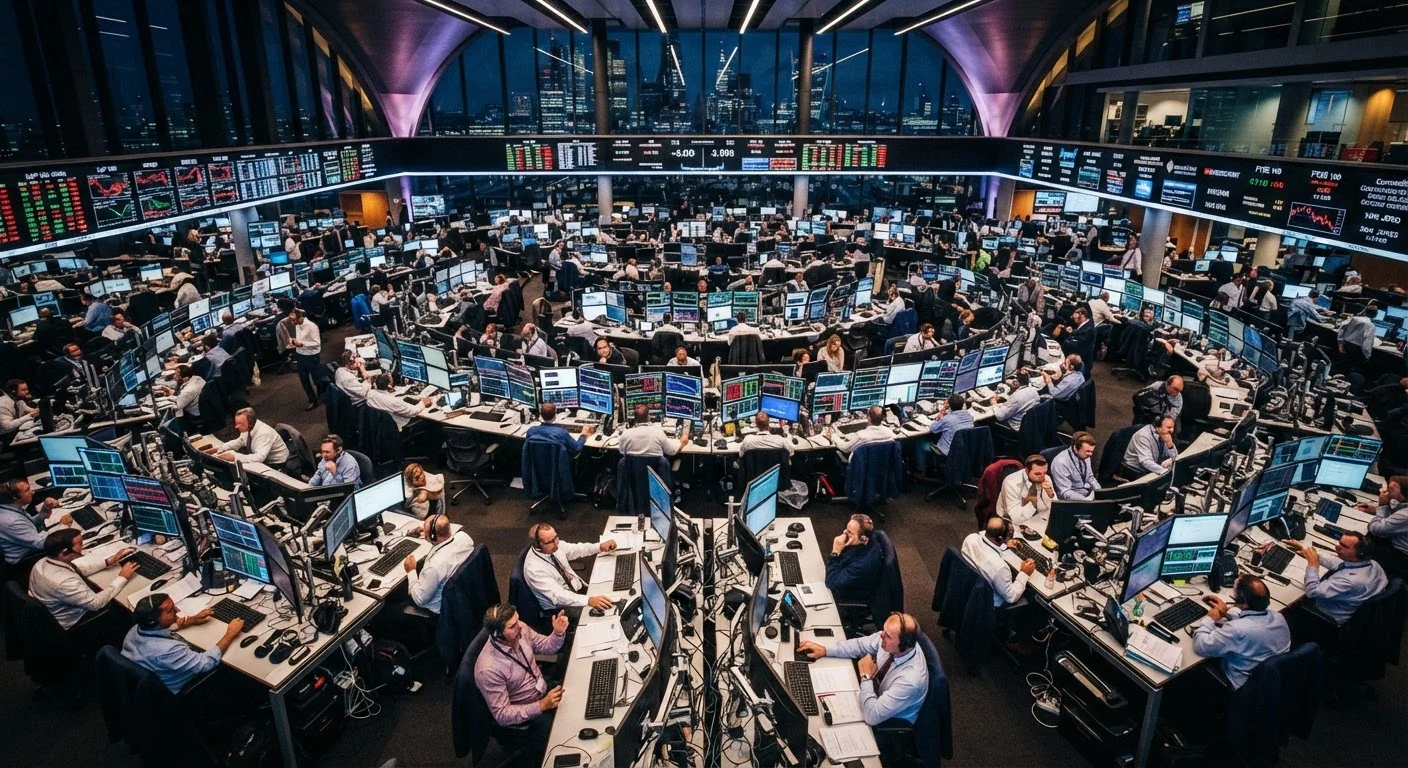
A financial market is any organized system — physical or digital — where buyers and sellers exchange financial assets. Those assets can be shares of a company, government debt, raw materials like oil or wheat, or currencies from different countries. The common thread is that prices are set by the interaction of supply and demand among participants.
Markets exist primarily to solve a practical problem: connecting people who have capital with those who need it. A company seeking funds to expand can issue shares or bonds; investors who want a return on their savings can buy them. This exchange is what allows economies to grow and allocate resources efficiently.
The Major Market Types Explained
Not all financial markets work the same way. Each major type trades a different asset class and serves a distinct economic function.
- Equity markets (stock markets): Where shares of publicly listed companies are bought and sold. Owning a share means owning a small stake in that company. Returns can come from price appreciation or dividends, but losses are also possible.
- Bond markets (fixed-income markets): Where debt instruments are traded. Governments and corporations borrow money by issuing bonds; buyers receive regular interest payments. Bonds are generally considered less volatile than stocks but are not risk-free. See how bonds and equities behave differently across economic cycles.
- Foreign exchange (forex) markets: Where currencies are exchanged. The forex market is the largest in the world by daily volume, and it operates continuously across global time zones. Exchange rates affect everything from import prices to international travel costs.
- Commodity markets: Where raw materials — energy, metals, agricultural products — are traded. Commodity prices influence the cost of goods throughout supply chains. Global trade dynamics play a significant role in how commodity prices ripple into domestic prices.
How Markets Connect to the Economy
Financial markets and the broader economy influence each other, but they are not the same thing. The stock market, in particular, is often treated as an economic scoreboard — but that framing can mislead. What the stock market actually measures is investor expectations about future corporate earnings, not current economic conditions for households.
Still, the connections are real. When credit markets tighten, businesses find it harder and more expensive to borrow, which can slow hiring and investment. When currency values shift, import and export prices change, affecting both consumers and producers. Interest rates set by the Federal Reserve act as a lever that moves through bond yields, mortgage rates, and eventually the cost of everything purchased on credit.
Markets Reflect Expectations, Not Just Facts
A key source of confusion for new readers is that markets often move on anticipated events rather than confirmed ones. By the time an economic report is published, much of its impact may already be reflected in prices. This is sometimes described as markets being 'forward-looking' rather than reactive.
What Moves Market Prices
Prices in financial markets reflect what participants collectively believe an asset is worth at any given moment — and that belief changes constantly. Several major forces drive these movements:
- Economic data: Reports on employment, inflation, and GDP growth signal the health of the economy and shift expectations about future earnings and interest rates.
- Monetary policy: Decisions by the Federal Reserve on interest rates have wide-ranging effects across all asset classes.
- Corporate performance: Earnings reports, revenue guidance, and business news directly affect individual stock prices.
- Investor sentiment: Fear and confidence can amplify market moves beyond what fundamentals alone would justify. Bull and bear market phases often reflect these sentiment shifts as much as underlying data.
- Global events: Trade disputes, geopolitical developments, and supply shocks can ripple quickly across interconnected markets.
Follow Fewer Signals, More Carefully
Rather than tracking dozens of market indicators, new readers often benefit from focusing on a small number of key data points — such as the unemployment rate, the federal funds rate, and a broad equity index. Understanding how those few signals interact builds a stronger foundation than scanning headlines broadly.
How to Read Market News Without Getting Lost
Financial news can feel dense with terminology and contradictory headlines. A few grounding principles help cut through the noise.
First, pay attention to context, not just direction. A market decline of 1% after weeks of steady gains tells a different story than the same decline during sustained economic stress. Second, distinguish between short-term volatility and longer-term trends — daily price swings are normal and rarely signal a structural shift on their own.
Third, understand that financial markets are forward-looking. A stock price today embeds assumptions about what a company will earn months or years from now. This is why markets can behave in ways that seem disconnected from present conditions.
Building basic financial literacy — understanding how credit and debt connect to broader market conditions, for instance — makes news coverage far more interpretable. This article is intended as general financial education and not as investment advice. For decisions about your own finances, consult a qualified financial professional.
Frequently Asked Questions
The stock market is one part of the broader financial market system. Financial markets also include bond markets, currency (forex) markets, and commodity markets. Each serves a distinct function in channeling capital and managing risk across the economy.
No — understanding markets is a general literacy skill, not just an investor concern. Market movements affect interest rates, job conditions, and prices that touch everyday life, regardless of whether you hold any investments.
Markets price in expectations about the future, not just current conditions. Investors may anticipate a recovery or respond to policy changes like interest rate cuts, pushing prices higher even when present economic data looks soft.
An index tracks the combined performance of a selected group of securities. The S&P 500, for example, measures the average performance of 500 large US companies. Indices are used as benchmarks, not comprehensive measures of the whole economy.
When interest rates rise, borrowing becomes more expensive, which can slow business investment and reduce corporate profits — often putting pressure on stock prices. Higher rates also make bonds more attractive relative to equities, shifting where investors place their money.
They are not the same, though both involve risk. Investing is grounded in ownership of real assets or claims on future income, and returns are linked to underlying economic activity. Gambling involves games of chance with no underlying productive asset. That said, all investing carries the possibility of loss, and risk varies significantly by strategy.
The content on this site is for informational purposes only and is not a substitute for professional advice. Always consult a qualified professional for guidance specific to your situation.