

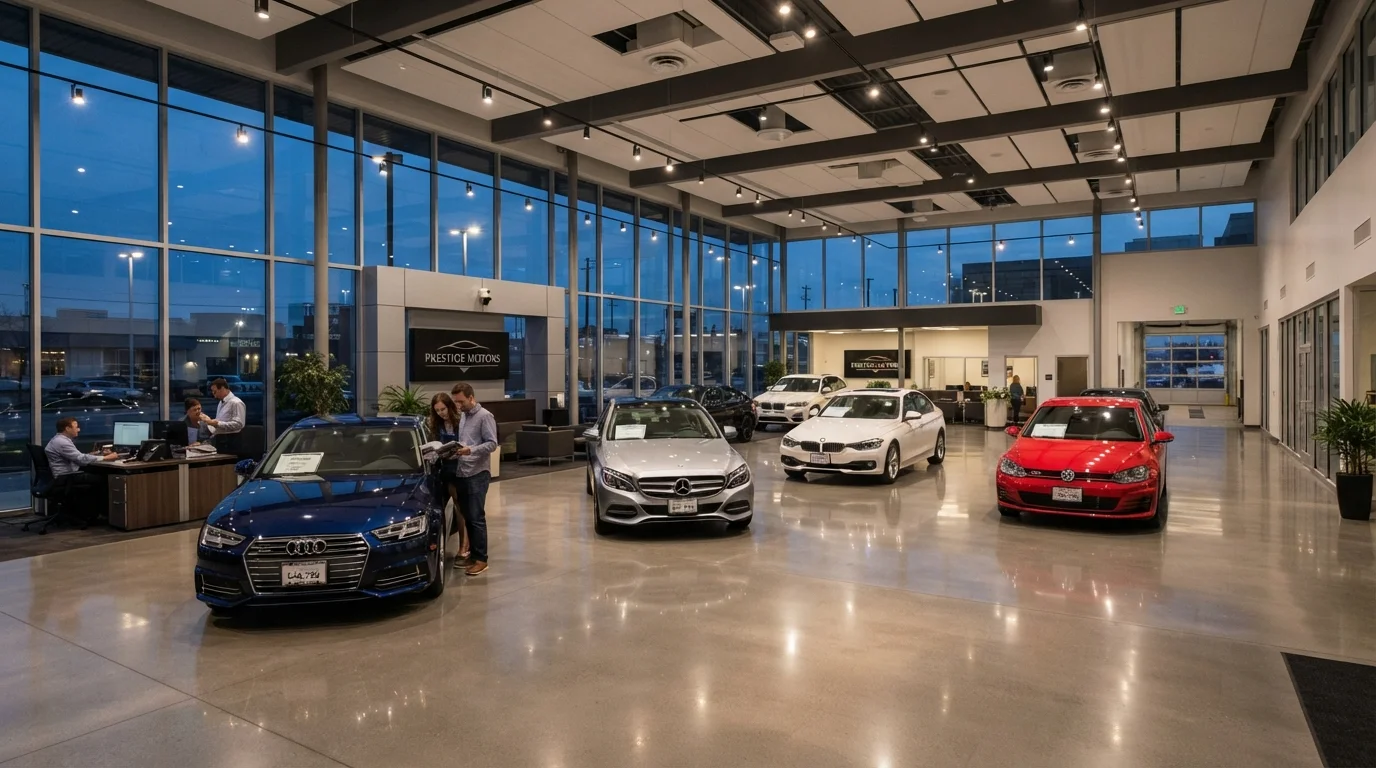
When Supply Chains Collapsed, Prices Climbed
The most immediate trigger for the price surge many consumers experienced was the global semiconductor shortage that began disrupting automotive production around 2021. Modern vehicles contain hundreds of microchips controlling everything from engine management to infotainment screens. When chip supply tightened — driven by pandemic-era factory shutdowns and a surge in consumer electronics demand — automakers were forced to idle assembly lines and dramatically cut output.
The result was historically low dealer inventory. Basic supply-and-demand dynamics took over: with fewer vehicles available and buyers still eager to purchase, transaction prices rose sharply. Dealer markups above sticker price, once rare, became common. The chip shortage's impact on production and inventory illustrates just how deeply this disruption reshaped the sales environment.
$47,000+
Average U.S. new vehicle transaction price (2023)
Industry tracking data indicates average transaction prices exceeded $47,000 in 2023, up from approximately $32,000 a decade earlier.
~$10B
Estimated industry revenue lost to chip shortages
Consulting firm AlixPartners estimated the semiconductor shortage cost the global auto industry roughly $210 billion in lost revenue in 2021 alone.
80%+
Share of U.S. sales that are trucks, SUVs, and crossovers
Light trucks, SUVs, and crossovers now account for more than 80% of new vehicle sales in the U.S., according to industry sales data.
Shifting Consumer Preferences Have Moved the Price Floor
Even before supply shocks hit, the composition of what Americans buy was pushing average prices higher. Over the past decade, consumer demand tilted decisively toward pickup trucks, crossovers, and full-size SUVs — vehicles that command substantially higher prices than the compact sedans and hatchbacks they displaced. Several major automakers exited the passenger car market in the U.S. almost entirely, eliminating the entry-level options that once anchored the lower end of the price spectrum.
This mix shift matters enormously. When affordable options disappear from showrooms, the statistical average transaction price rises even without any individual model becoming more expensive. The economics of consumer choice and the basic supply-and-demand forces behind everyday costs both play a role here.
Understanding What You're Actually Paying For
When evaluating a new vehicle's sticker price, it helps to distinguish between features that reflect genuine added value — such as standard automatic emergency braking — and market-driven premiums driven by inventory shortages. As production normalizes, some of the transactional premiums observed during low-inventory periods tend to ease, even if structural cost increases in technology and materials do not.
Technology, Safety Mandates, and the Cost of Modern Features
Today's base-model vehicles include technology that was optional — or simply unavailable — a decade ago. Automatic emergency braking, lane-keeping assist, backup cameras (now federally mandated), and advanced infotainment systems all add manufacturing cost. These features reflect genuine improvements in safety and connectivity, but each adds hundreds to thousands of dollars to a vehicle's production cost before it reaches a dealer.
Regulatory requirements continue to evolve as well. Emissions standards, fuel economy targets, and emerging mandates tied to the broader EV transition require substantial engineering investment. Regulatory pressures reshaping automakers' decisions are an increasingly significant line item in vehicle development budgets — costs that ultimately appear in the sticker price.
Trade Policy, Materials Costs, and Global Manufacturing Pressures
Upstream cost pressures compound the picture. Raw material prices — particularly for steel, aluminum, and battery-critical minerals like lithium and cobalt — have been volatile. Tariffs on imported components and finished vehicles introduce additional cost at the border, with those expenses frequently passed downstream to consumers. How trade policy shapes which vehicles reach U.S. showrooms and at what cost is a dimension of pricing that consumers rarely see but consistently feel.
The ongoing transition toward electrification adds another layer of complexity. Battery packs remain the single most expensive component in an EV, and the supply chains for critical minerals are still maturing. The broader forces shaping global EV market growth — from policy incentives to infrastructure gaps — will influence how quickly manufacturing scale drives EV prices down. For now, the industry is navigating a period where multiple structural cost pressures are operating simultaneously, making a rapid return to lower price levels unlikely in the near term.
“The auto industry is going through a structural transformation — the cost of electrification, regulatory compliance, and advanced technology is being layered onto vehicles faster than efficiency gains can offset it. Consumers are, in effect, paying for the future of mobility today.”
— Industry Analyst, S&P Global Mobility, Senior automotive market analyst
Frequently Asked Questions
Multiple forces converged simultaneously: chip shortages cut production, inventory fell to historic lows, and demand remained resilient. Automakers and dealers responded by reducing discounts, pushing average transaction prices well above pre-pandemic levels.
Yes. Import duties on vehicles and components increase costs for automakers, and those costs are often passed along to consumers. Country-of-origin rules and bilateral trade agreements shape which vehicles reach U.S. showrooms and at what base cost.
Most industry analysts do not expect a return to pre-2020 price levels. Some normalization has occurred as inventory recovers, but higher technology content, regulatory requirements, and material costs represent permanent upward structural shifts.
Electric vehicles currently carry higher upfront costs due to battery materials and manufacturing complexity. As EV adoption grows and battery costs decline, pricing is expected to gradually converge with comparable combustion vehicles, though the timeline varies widely.
Consumer demand has shifted heavily toward trucks and SUVs, which carry higher margins for automakers. As automakers allocate more production capacity to high-margin vehicles, entry-level sedans have largely disappeared from lineups, removing lower price points from the market.
The content on this site is for informational purposes only and is not a substitute for professional advice. Always consult a qualified professional for guidance specific to your situation.