

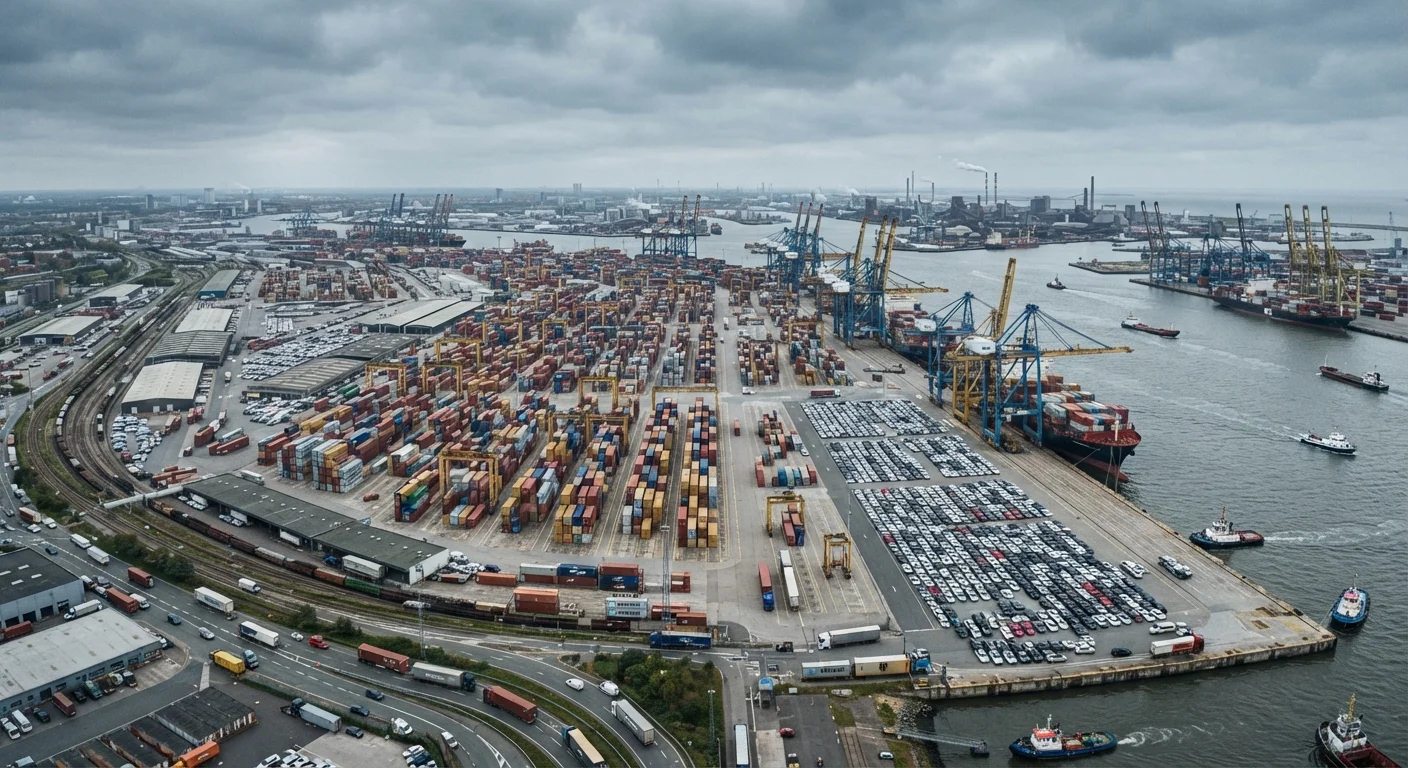
Why Trade Policy Is an Automotive Story
When a new vehicle fails to appear in American showrooms despite being sold in Europe or Asia, trade policy is often the explanation. Import duties, safety homologation requirements, and the fine print of bilateral agreements collectively determine which models are commercially viable in a given market. These aren't abstract economics — they translate directly into the choices consumers see on dealer lots.
The U.S. currently applies a 2.5% tariff on imported passenger cars and the long-standing 25% "chicken tax" on light trucks — a gap that has profoundly shaped the domestic pickup and SUV market for generations. Understanding these mechanisms is foundational to reading the regulatory flashpoints automakers are navigating today.
25%
U.S. tariff on imported light trucks
The so-called "chicken tax" has applied to light truck imports since 1963 and remains a defining factor in North American vehicle market structure.
2.5%
U.S. passenger car import duty
The standard U.S. most-favored-nation tariff rate on imported passenger automobiles, subject to change by executive or legislative action.
75%
USMCA regional content requirement
Under the United States-Mexico-Canada Agreement, qualifying vehicles must contain at least 75% regional value content to receive zero-tariff treatment.
How Tariffs Move Through the Supply Chain
Tariffs don't only apply to finished vehicles crossing a border. Duties on steel, aluminum, semiconductors, and battery components all add cost before a car is ever assembled. A vehicle built in an American factory can still be materially affected by tariffs if its engines, transmissions, or battery cells are imported. This layered exposure makes supply chain geography a strategic priority for every major automaker.
Rules of origin — the criteria embedded in trade agreements like the United States-Mexico-Canada Agreement (USMCA) — specify how much regional content a vehicle must contain to qualify for preferential (often zero) tariff rates. Under USMCA, for instance, a qualifying vehicle must meet thresholds for North American steel and aluminum content and for labor value. Automakers that fall short face the standard tariff rate, changing the economics of production and pricing. These dynamics are part of the broader story of how global trade shapes domestic prices.
Trade Agreements and Market Access
Bilateral and multilateral trade deals are perhaps the most direct lever governments have over automotive market structure. When a new agreement reduces or eliminates tariffs, foreign automakers gain a realistic path into a market they previously couldn't enter profitably. When agreements collapse or get renegotiated, models get discontinued and production decisions get reversed.
The European Union's internal single market, for example, allows vehicles made anywhere in the EU to move tariff-free between member states — a major reason why automakers can specialize production at specific plants for the entire regional market. By contrast, a country outside a major trading bloc faces higher barriers to entry, which often limits consumer choice and elevates prices. The result is that market availability is frequently as much a trade policy outcome as an engineering or consumer demand outcome.
What This Means for Consumers
For everyday car buyers, trade policy shows up most visibly in pricing and model availability. A tariff increase on vehicles from a specific country can raise sticker prices on those models within months. An expired trade deal can cause a popular variant to disappear from dealer inventories. These effects are often reported as industry news without their policy roots being clearly explained.
The EV sector illustrates this clearly. Governments in multiple regions have structured domestic manufacturing incentives and purchase subsidies to favor locally assembled electric vehicles — effectively using policy to tilt competitive advantage. Developments in the EV market are therefore inseparable from trade and industrial policy. Consumers who understand this context are better equipped to interpret headlines about new model launches, price changes, and market exits. For a deeper look at how these pressures stack with other cost factors, see our piece on what has driven new car prices higher over the past decade.
Frequently Asked Questions
In most cases, yes — tariffs increase the cost of bringing a vehicle into a country, and automakers typically pass at least part of that cost to buyers. However, some manufacturers absorb costs to stay price-competitive, reducing their profit margins instead. The extent of price impact depends on the tariff rate, the vehicle's price segment, and competitive pressure in that market.
Country-of-origin rules (also called rules of origin) define what percentage of a vehicle's content must come from within a trade agreement's member countries for it to qualify for preferential tariff rates. A vehicle that fails to meet the threshold is treated as a foreign import and taxed at the standard rate. These rules are a key reason why automakers carefully map their supply chains.
Trade agreements can reduce or eliminate tariffs between signatory countries, making it economically viable for automakers to import vehicles they otherwise wouldn't. For example, agreements that lower barriers can introduce new brands or body styles to a market. Conversely, withdrawn or renegotiated deals can cause certain models to be discontinued or repriced.
Yes. EVs often face additional scrutiny because their battery supply chains are concentrated in specific regions, and governments sometimes impose targeted duties on EV imports for industrial policy reasons. Some countries have structured EV incentives so that only domestically assembled or qualifying-origin vehicles receive subsidies. See our coverage of <a href="/automotive/electric-vehicles/the-forces-driving-and-slowing-global-ev-market-growth">EV market growth factors</a> for more context.
The chicken tax is a 25% U.S. tariff on light trucks — including pickup trucks and some vans — originally imposed in 1963 in a trade dispute with Europe. It remains in force today and is a primary reason why most pickup trucks sold in the United States are assembled domestically or in USMCA-qualifying countries. It has shaped the North American truck market for decades.
Automotive trade reporting uses a lot of specialized vocabulary that can be hard to parse. Our <a href="/automotive/auto-industry-news/key-terms-every-consumer-should-know-when-reading-auto-industry-news">glossary of auto industry terms</a> breaks down concepts like homologation, CAFE standards, and more in plain language.
The content on this site is for informational purposes only and is not a substitute for professional advice. Always consult a qualified professional for guidance specific to your situation.