

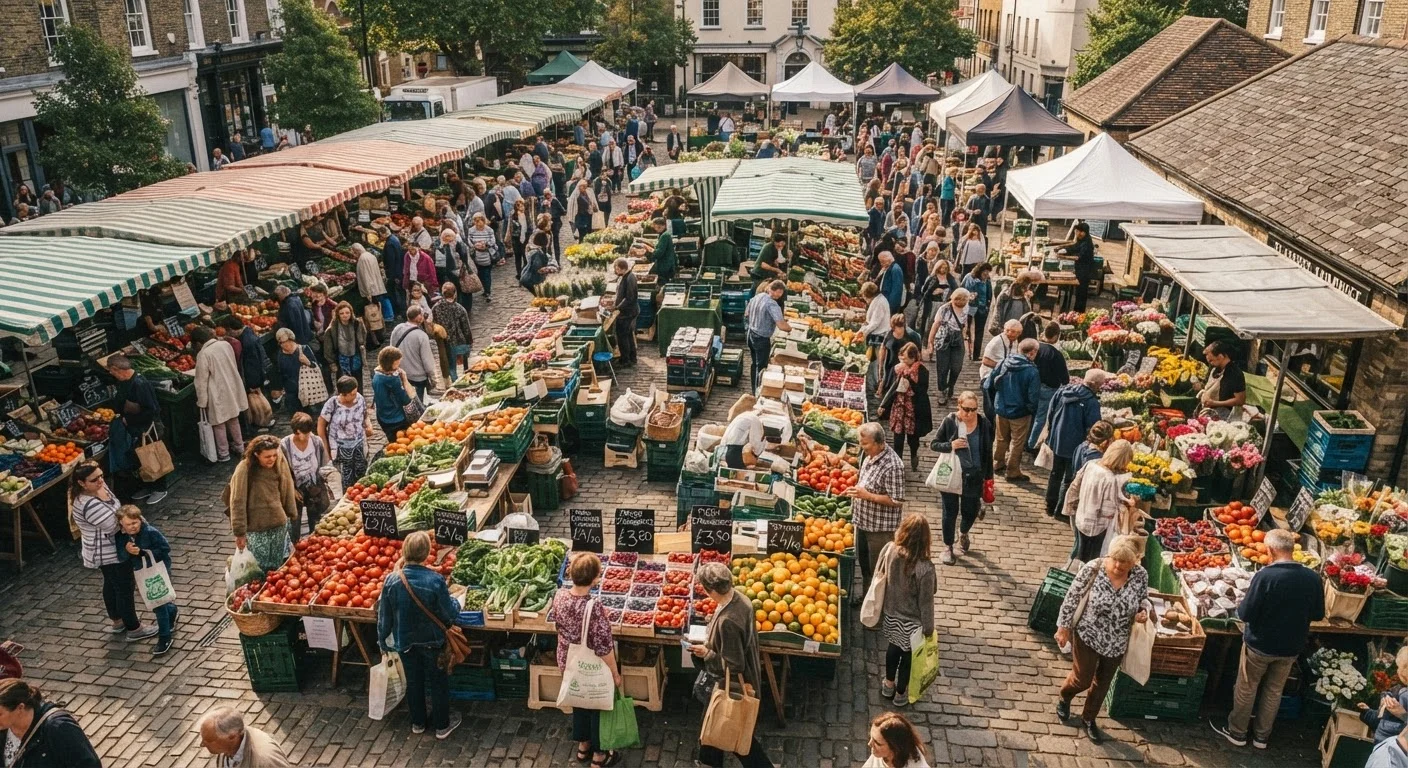
The Basic Mechanism: How Prices Are Set
Every time you notice that eggs cost more than they did six months ago, or that airfare dropped after the holiday rush, you are witnessing supply and demand at work. These two forces — how much of something exists and how much people want it — interact continuously to produce the prices consumers pay.
On the supply side, producers decide how much of a good or service to offer based on what it costs them to make it and what they can sell it for. On the demand side, consumers decide how much to buy based on price, income, and available alternatives. Where those two decisions meet is where the price lands.
When supply and demand are roughly balanced, prices tend to be stable. Disruptions to either side — a crop failure, a surge in consumer interest, a factory closure — tip that balance and move prices up or down. Understanding this mechanism makes everyday price changes far less mysterious.
~30%
Share of global coffee supply from Brazil
Brazil's dominance in coffee production means regional crop disruptions there can move global retail prices noticeably, illustrating supply concentration risk.
9.1%
US annual inflation peak (June 2022)
According to the U.S. Bureau of Labor Statistics, the Consumer Price Index reached a four-decade high in mid-2022, reflecting simultaneous supply constraints and demand pressures post-pandemic.
~80%
Share of US household spending on inelastic goods
Research from the Bureau of Economic Analysis suggests the majority of typical household budgets goes toward necessities — categories where demand does not fall easily even as prices rise.
What Drives Supply — and Why It Can Break Down
Supply is not just about how much of a product exists in the world — it is about how much can be delivered to consumers at a given cost and time. Production costs, labor availability, raw material access, logistics infrastructure, and even weather all shape what suppliers can realistically offer.
Supply shocks — sudden, unexpected reductions in the availability of a good — are among the most disruptive economic events consumers experience. A drought can decimate a wheat harvest, raising bread and pasta prices across the country. A conflict in a major oil-producing region can ripple into fuel costs within days. Port congestion or a shortage of shipping containers can delay consumer goods for months.
Because modern supply chains are deeply interconnected, a disruption in one part of the world can translate quickly into higher prices on store shelves thousands of miles away. This interconnectedness explains why prices for seemingly unrelated goods can spike in response to a single event.
Supply Chains Are More Fragile Than They Appear
The efficiency of modern global supply chains comes with a trade-off: they are optimized for cost, not resilience. Just-in-time manufacturing — where components arrive only when needed — reduces storage costs but leaves little buffer when disruptions occur. This is one reason seemingly minor global events can produce outsized price effects for everyday consumers.
What Shapes Demand — and How Consumers Respond
Demand is driven by more than just desire — it reflects consumers' income, preferences, expectations about future prices, and the availability of substitutes. When incomes rise broadly, demand across many categories tends to increase, which can push prices higher if supply does not keep pace.
One key concept is price elasticity — how sensitive demand is to price changes. For necessities like insulin or basic food staples, demand is relatively inelastic: people buy roughly the same amount even when prices rise significantly because they have no practical alternative. For discretionary goods like luxury items or travel, demand is more elastic: consumers cut back noticeably when prices climb.
Substitution also plays a major role. When beef prices rise sharply, many consumers shift toward chicken or plant-based proteins. This shift increases demand — and therefore prices — in those substitute categories. These ripple effects mean that a price change in one market rarely stays contained to just one product.
For households already stretched thin financially, price increases in inelastic categories are especially damaging. The compounding pressures of tight cash flow can make even modest price increases feel severe when there is little financial buffer.
Policy, Markets, and the Prices You Actually Pay
Government policy is a significant but often underappreciated factor in everyday prices. Tariffs on imported goods raise costs for domestic consumers and businesses that rely on those imports. Subsidies to domestic producers can keep prices artificially low in certain sectors. Minimum wage laws affect the labor costs embedded in services and manufactured goods.
Central bank policy also matters. When the Federal Reserve raises interest rates to cool inflation, it makes borrowing more expensive — slowing spending and investment, which can dampen demand and eventually moderate prices. When rates fall, borrowing becomes cheaper, demand can accelerate, and upward price pressure may return.
“Inflation is always and everywhere a monetary phenomenon in the sense that it is and can be produced only by a more rapid increase in the quantity of money than in output.”
— Milton Friedman, Nobel Prize-winning economist, University of Chicago
It is worth noting that broad price indexes like the Consumer Price Index are national averages — they may not reflect what individual households actually experience. The gap between official inflation measures and personal cost of living can be significant depending on where you live, what you buy, and how your spending compares to the national average basket of goods.
This article is for general informational and educational purposes only and does not constitute financial or investment advice. Readers should consult a qualified financial professional regarding their individual circumstances.
Frequently Asked Questions
This pattern, sometimes called 'rockets and feathers,' reflects how quickly retailers pass on cost increases versus decreases. When crude oil prices spike, fuel costs rise almost immediately at the pump. When crude prices drop, retailers often reduce prices more gradually, partly due to existing inventory purchased at higher prices and partly due to market competition dynamics.
Supply shocks are a common culprit — events like droughts, factory shutdowns, transportation bottlenecks, or geopolitical conflicts that restrict the flow of goods. When supply drops sharply but demand stays the same, prices jump quickly. The COVID-19 pandemic illustrated this vividly through shortages in everything from semiconductors to household goods.
Not necessarily. If supply can expand quickly enough to meet new demand, prices may remain stable or even fall over time. Technological improvements in manufacturing often allow producers to meet higher demand at lower cost per unit, which is why electronics tend to get cheaper over time even as more people buy them.
Inflation — a broad rise in the price level — often reflects widespread imbalances between supply and demand across many goods and services simultaneously. It can be driven by excess money in the economy boosting demand, supply constraints reducing available goods, or both at once. The Consumer Price Index (CPI) is one standard way economists track these changes.
Yes, in practical terms. Understanding that prices are cyclical and tied to external factors — rather than random — can help you time large purchases, identify substitutes when prices spike, and anticipate when costs might ease. It doesn't replace professional financial advice, but it does provide useful context for everyday spending decisions.
The content on this site is for informational purposes only and is not a substitute for professional advice. Always consult a qualified professional for guidance specific to your situation.