

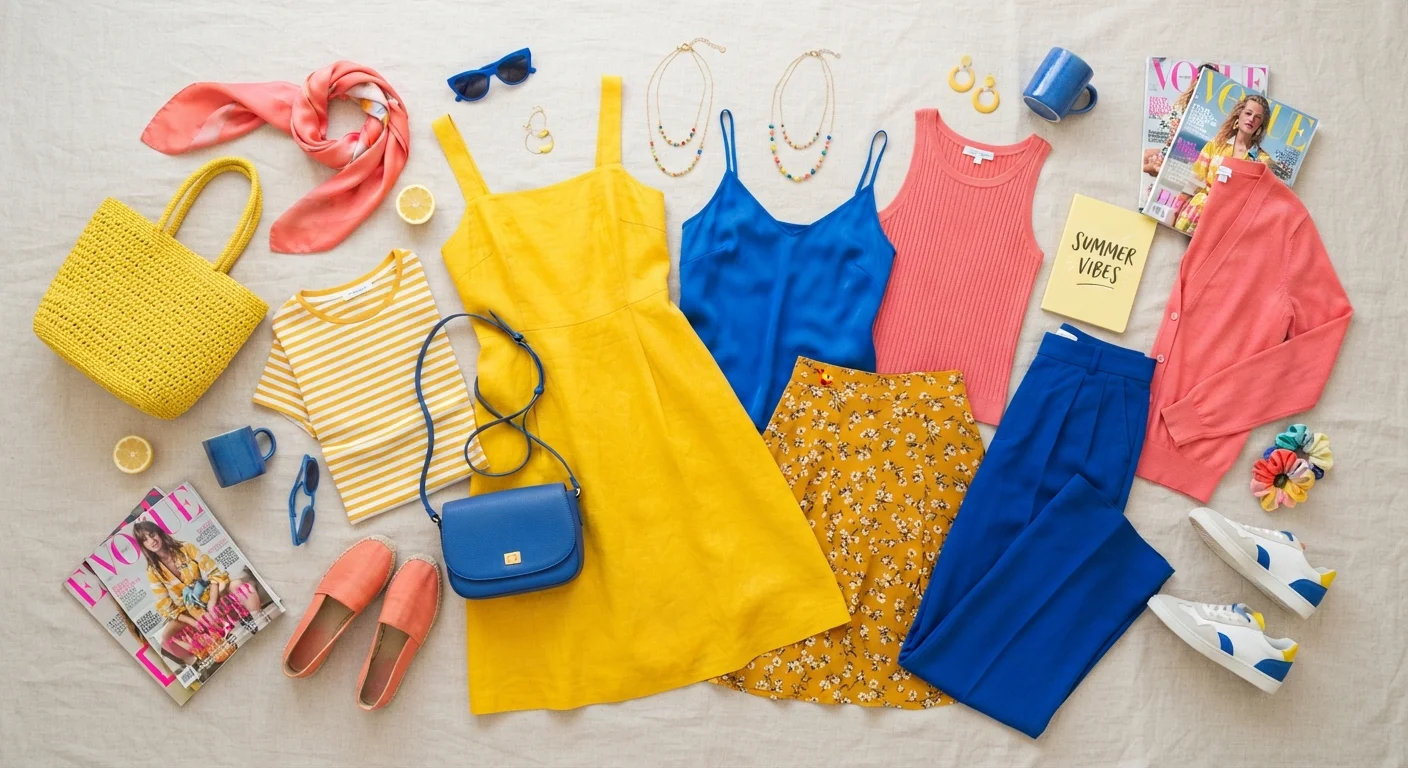
Where the Phrase Comes From
The phrase "dopamine dressing" became a fixture in fashion media around 2020 and 2021, emerging alongside a broader cultural hunger for lightness during a period of collective stress. Stylists and editors began using it to describe a noticeable consumer shift: people were reaching for color, print, and whimsy after months of pandemic-era monotony.
The neuroscience borrowing is partly metaphorical. Dopamine — a brain chemical tied to motivation, reward, and pleasure — sounds like a satisfying explanation for why slipping on a lemon-yellow blazer might make your day feel more manageable. Scientists are quick to point out that mood is far more complex, but the label stuck because it captures something real: many people do report feeling genuinely better when they dress with intention and joy.
A Note on the Neuroscience
Despite the name, dopamine dressing isn't a clinical term and hasn't been formally studied under that label. The dopamine reference is a popular shorthand, not a direct neuroscientific claim. Researchers who study clothing and mood typically work within frameworks like enclothed cognition and color psychology — both legitimate fields, both with important nuances about individual variation.
The Psychology Behind Clothing and Mood
Psychologists have studied the connection between clothing and mental state for decades. One influential framework is enclothed cognition, a concept introduced in a 2012 paper by researchers Hajo Adam and Adam Galinsky. Their work demonstrated that wearing a garment associated with specific qualities — like a doctor's coat — could influence the wearer's own focus and behavior, not just their social image.
Color psychology adds another layer. Research has long suggested that colors carry psychological associations: blues can feel calming, reds tend to feel energizing, and yellows are often linked to optimism. These associations are not universal — they're shaped by culture, personal history, and context — but they're consistent enough that designers and brands have built entire systems around them.
“What we wear is a form of nonverbal communication — not just to others, but to ourselves. The symbolic meaning we attach to clothes can activate certain mindsets and emotional states in ways that are psychologically significant.”
— Carolyn Mair, Behavioral psychologist and author specializing in fashion psychology
Together, enclothed cognition and color psychology offer a plausible — if still evolving — scientific scaffolding for why dopamine dressing resonates beyond mere aesthetics.
Why This Trend Is Having a Cultural Moment
The timing of dopamine dressing's rise is not coincidental. After an extended period of social isolation, activewear defaults, and muted Zoom-call palettes, the urge to dress expressively and publicly felt almost cathartic for many Americans. Fashion historians have observed similar surges of color and exuberance following periods of collective hardship — the post-WWII New Look, the vivid fashions of the late 1960s.
Today, the trend is also fueled by social media's appetite for visual delight. Bright, playful outfits photograph well, perform strongly on image-driven platforms, and feel participatory rather than exclusionary. Anyone can engage, regardless of budget or body type.
Understanding how these color choices are shaped at the industry level adds useful context — trend forecasters play a significant role in which hues flood retail shelves each season. Explore how seasonal color palettes in fashion are actually decided to see how industry decisions ripple down to everyday American wardrobes.
62%
People who say clothing affects daily confidence
A 2021 survey by the American Psychological Association's Monitor on Psychology found a majority of respondents reported that what they wore affected their sense of self on a given day.
2012
Year enclothed cognition was introduced
Researchers Hajo Adam and Adam Galinsky published their foundational enclothed cognition study in the Journal of Experimental Social Psychology, establishing a formal framework for clothing's effect on thought and behavior.
How to Apply It Without Starting Over
Dopamine dressing doesn't demand a wholesale style reinvention. Its core principle is intentionality — making a conscious choice to wear something because it genuinely makes you feel good, rather than defaulting to habit or blending in.
Practical starting points include adding one vivid accent per outfit — a cobalt bag with a neutral ensemble, or a printed scarf tied to a tote. Layering unexpected color combinations, mixing textures that feel pleasant to touch, or revisiting pieces in your closet that you've been saving for a special occasion are all ways to experiment without spending anything.
Start Small for Immediate Impact
If a full colorful outfit feels like too big a leap, begin with accessories. A single vivid item — a bold hat, a bright tote, printed sneakers — introduces the energy of dopamine dressing without requiring new clothing. Pay attention to which colors genuinely lift your mood versus which are simply trending; your personal response is the point.
The underlying message that psychologists find worth paying attention to is this: clothing is a form of self-communication, directed both outward and inward. When that communication is joyful and deliberate, it can serve as a modest but meaningful tool for daily emotional wellbeing — no wardrobe overhaul required.
This article is for general informational and educational purposes only and does not constitute medical or psychological advice. For personal mental health concerns, please consult a qualified healthcare professional.
Frequently Asked Questions
Research on enclothed cognition suggests clothing can meaningfully influence how we think and feel about ourselves. Color psychology also indicates certain shades affect emotional states, though responses are highly individual. Wearing clothes you genuinely enjoy is consistently linked to improved confidence and wellbeing.
Typically, saturated, vivid hues — sunny yellows, electric blues, bold greens, and warm corals — are associated with the trend. But dopamine dressing is ultimately personal: the 'right' color is whichever one lifts your specific mood. Even a pop of red or a printed accessory can count.
The term is relatively recent, popularized around 2020–2022, but the underlying idea — that clothing affects mood — has roots in color psychology research going back decades. What's new is its widespread cultural framing as an intentional wellness-adjacent practice.
Not at all. Even a single brightly colored scarf, bag, or pair of socks layered into an otherwise neutral outfit counts. The concept is about intentionality, not a complete style reinvention.
Enclothed cognition is a term from psychology describing how the symbolic meaning and physical experience of wearing certain clothes can influence a person's psychological state and behavior. It was introduced in a widely cited 2012 study by researchers Hajo Adam and Adam Galinsky.
The content on this site is for informational purposes only and is not a substitute for professional advice. Always consult a qualified professional for guidance specific to your situation.