

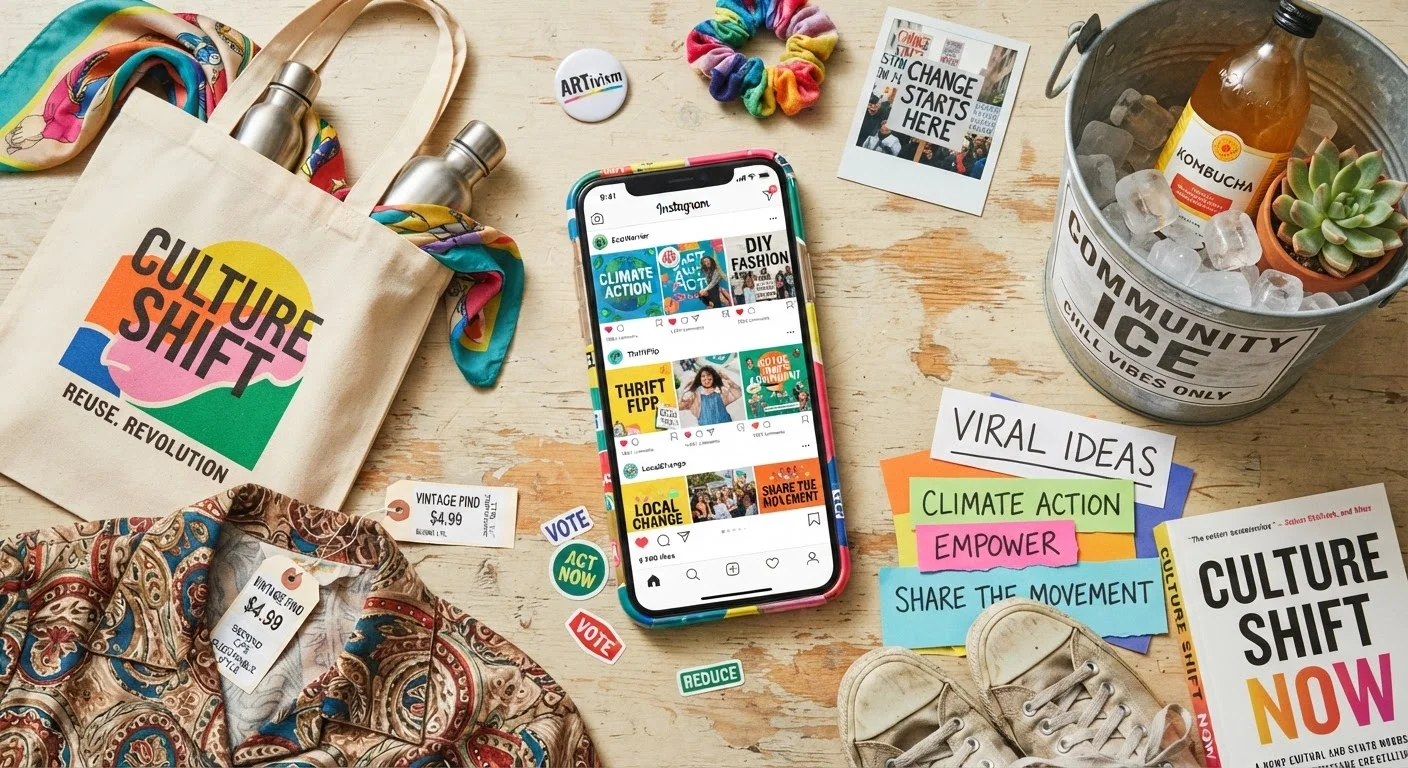
When the Feed Actually Changes Real Life
Most viral content evaporates within a news cycle. A meme gets shared, a dance gets copied, an outrage flares — and then everyone moves on. But every so often, something lands differently. It doesn't just capture attention; it rewires behavior. Americans buy differently, talk differently, organize differently, even eat differently — because of something that started on a screen.
What separates a passing trend from a genuine cultural shift? Usually, it's a combination of emotional resonance, low barrier to participation, and a message that aligns with something people already care about. The internet is extraordinarily good at accelerating ideas that were already simmering. When conditions are right, it can compress years of cultural evolution into weeks.
Below are seven viral moments that crossed the line from entertainment into actual impact — changing habits, policies, conversations, and commerce in ways that are still visible today. For a grounded look at why some of these moments get misread, see our piece on how cultural commentators frequently misread trends.
The Ice Bucket Challenge Redefined Charity Participation
In the summer of 2014, millions of Americans recorded themselves dumping buckets of ice water over their heads and challenging friends to do the same in support of ALS research. What made it remarkable wasn't just its reach — it was the outcome. The ALS Association reported raising over $115 million in a matter of weeks, according to their published figures, compared to $2.8 million in the same period the prior year. That funding contributed directly to research breakthroughs. The challenge demonstrated that social media participation could translate into concrete philanthropic results, reshaping how nonprofits approach digital fundraising campaigns to this day.
The Ice Bucket Challenge raised over $115 million and permanently changed how nonprofits think about digital fundraising.
The #MeToo Hashtag Shifted Workplace Norms
When the #MeToo hashtag spread widely in late 2017 — building on activist Tarana Burke's foundational work — it didn't just spark conversation. It triggered policy changes at companies, universities, and government offices across the country. Human resources practices were revisited, nondisclosure agreements faced new scrutiny, and public accountability for workplace misconduct became a mainstream expectation rather than a fringe demand. The movement illustrated how a single shared phrase could aggregate millions of individual experiences into a collective voice powerful enough to move institutions.
A single hashtag aggregated millions of experiences into a collective voice that moved institutions and reshaped workplace policy.
Thrifting's Viral Glow-Up Reshaped Fashion Consumption
When thrift hauls and secondhand styling began flooding platforms like TikTok and YouTube, something shifted in how Americans related to buying clothes. Secondhand shopping — once associated primarily with necessity — became aspirational, creative, and environmentally conscious all at once. Resale platforms reported dramatic growth in users and transaction volume in the years following this cultural moment. The ripple effects extended beyond individual habits: major retailers began launching resale or trade-in programs in response to shifting consumer expectations. For a deeper look at this transformation, our piece on the thrift and resale shift in American fashion traces exactly how it happened.
Viral thrift content reframed secondhand shopping as aspirational, pushing major retailers to launch their own resale programs.
The Feta Pasta Trend Moved Supermarket Inventory
In early 2021, a baked feta pasta recipe spread so rapidly across TikTok that feta cheese sold out in stores across the United States. It wasn't a fluke — it was a preview of how food content could now drive measurable supply chain effects. Grocery retailers and food brands began tracking social media food trends as a genuine demand-forecasting signal. The moment revealed that what goes viral in the kitchen online doesn't stay there; it shows up in purchasing data, inventory decisions, and eventually, on restaurant menus.
A single recipe video caused feta cheese to sell out nationwide, proving social media can move supply chains.
Stanley Cup Mania Reinvented the Reusable Drinkware Market
The Stanley Quencher tumbler's meteoric rise — fueled by viral videos of women showcasing their color collections — offers a striking case study in how aesthetic identity can drive consumer behavior at scale. Demand surged to the point of store stampedes and multi-hour lines. Beyond one product's success, the broader impact was cultural: reusable drinkware became a lifestyle signifier, pushing the entire category into mainstream fashion territory. It also highlighted how communities built around shared aesthetics on social platforms can manufacture demand faster than traditional marketing ever could.
Viral tumbler culture turned reusable drinkware into a lifestyle identity marker, reshaping an entire product category.
'Doomscrolling' Awareness Sparked Digital Habit Reckoning
When the term "doomscrolling" — compulsively consuming negative news on a device — entered the mainstream lexicon around 2020, it gave Americans language for an experience they already recognized. Naming it made it actionable. Screen time features gained new relevance, digital wellness apps saw rising downloads, and conversations about healthy social media use became routine rather than niche. The viral spread of the word itself triggered behavioral reflection at scale. For practical guidance on building healthier digital habits, see our piece on digital safety habits that hold up over time.
Naming 'doomscrolling' gave millions of Americans the vocabulary to recognize and push back against unhealthy media habits.
The 'Quiet Quitting' Debate Reframed Work Culture Expectations
When "quiet quitting" — the idea of doing exactly what your job requires and no more — went viral in 2022, it sparked a genuine national reckoning about labor expectations, burnout, and the boundaries between professional identity and personal life. Managers and employees alike were forced into candid conversations about what reasonable work engagement actually looks like. The term accelerated trends around work-life boundaries that were already emerging post-pandemic, pushing companies to revisit communication norms, performance reviews, and employee wellbeing strategies in ways that continue to shape workplace culture.
Quiet quitting sparked a national conversation that forced employers and workers to renegotiate what reasonable engagement looks like.
What These Moments Have in Common
Look across these examples and a pattern emerges: the viral moments that actually changed American behavior weren't just entertaining — they gave people a role to play. Whether it was pouring a bucket of ice water, thrifting an outfit, or rethinking a purchase, participation felt meaningful rather than passive.
How to Spot a Trend With Staying Power
Ask whether a viral moment requires participation or just observation — participatory trends almost always have more lasting impact. Also check whether it connects to a pre-existing value or frustration rather than pure novelty. If it does both, there's a good chance it's reshaping something real.
That sense of agency matters. Trends rooted in identity and values tend to outlast trends rooted in humor alone. As platforms evolve, so does the speed at which ideas travel — but the underlying human needs driving adoption remain surprisingly consistent. Worth remembering the next time something floods your feed.
The content on this site is for informational purposes only and is not a substitute for professional advice. Always consult a qualified professional for guidance specific to your situation.