

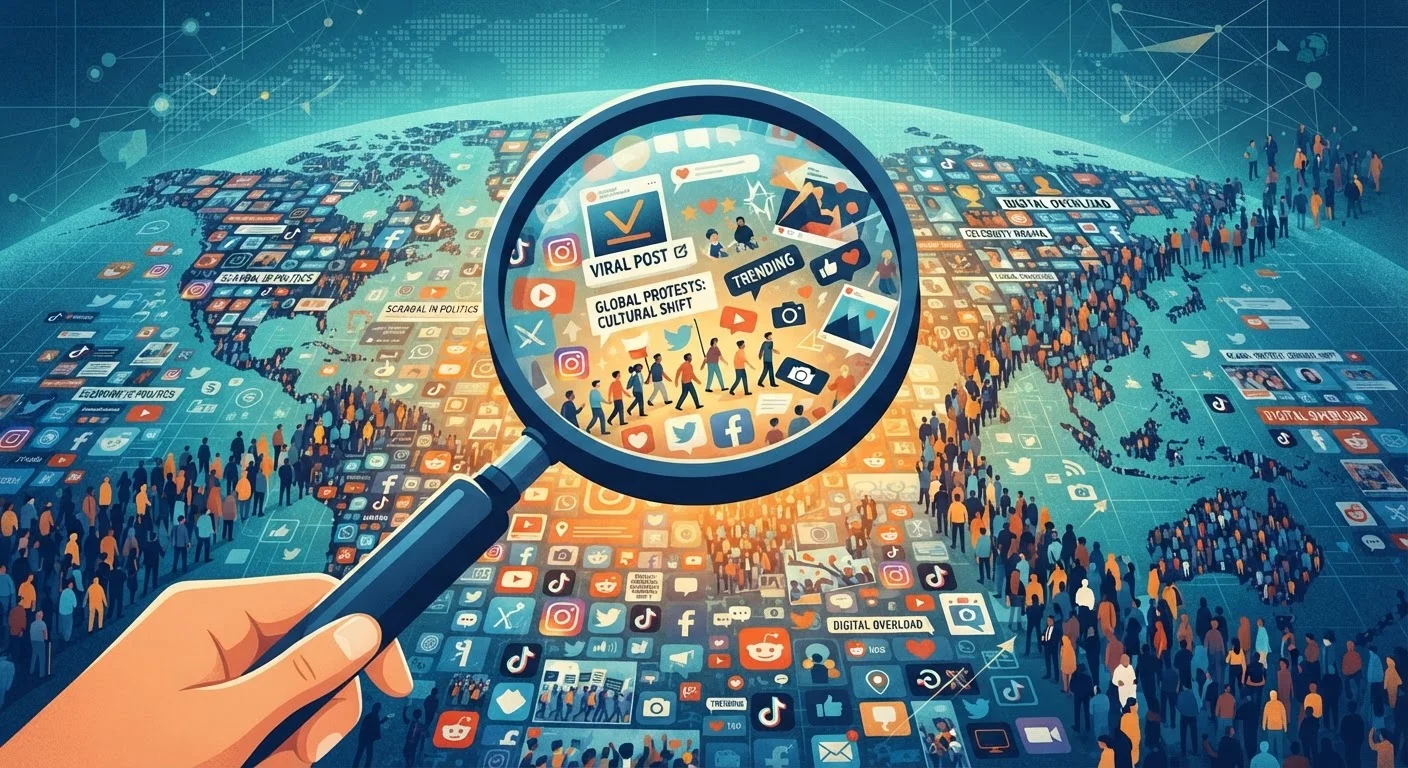
Why Trend Analysis Goes Wrong So Often
Cultural commentary has never moved faster — or stumbled more frequently. Every week, writers and analysts declare that Americans are embracing some new lifestyle shift, abandoning an old aesthetic, or collectively evolving their values. A significant share of those declarations turn out to be overblown, premature, or flat-out wrong.
The errors aren't random. They follow recognizable patterns: mistaking online noise for real-world signal, projecting one community's habits onto the entire country, or simply recycling older trends under new labels. Understanding where analysis goes wrong is the first step toward reading cultural commentary more critically — whether you're producing it or consuming it.
This is part of a broader challenge in modern media. Just as readers benefit from scrutinizing financial headlines that oversimplify economic data or medical research coverage that misreads studies, cultural trend reporting deserves the same skeptical eye.
Viral Is Not the Same as Widespread
A moment can rack up millions of impressions while touching only a narrow slice of the population. Commentators who equate engagement metrics with mass cultural adoption routinely overstate a trend's reach. Real cultural shifts show up in behavior — in what people buy, wear, say, and value over time — not just in what they click on for a week.
The Most Common Mistakes — and How to Spot Them
Below are five errors that appear with remarkable consistency in cultural trend coverage. Each one is correctable, but only if writers and readers alike know what to look for.
Treating social media engagement as a proxy for real-world cultural adoption.
Why it happens: Platforms optimize for attention, so content that gets clicks feels authoritative. Commentators working on deadline rarely have time to verify whether viral moments translate into actual behavior change.
Projecting the tastes of one demographic as a universal generational shift.
Why it happens: Much cultural commentary is produced by writers in a handful of coastal cities, whose immediate social circles can feel like a broader signal than they actually are.
Framing recycled trends as brand-new cultural phenomena.
Why it happens: Short publishing cycles reward novelty framing. Editors want fresh angles, and writers may lack historical context to recognize that a 'new' aesthetic or behavior has clear predecessors.
Declaring a trend dominant or dead without tracking its actual lifecycle.
Why it happens: Commentary incentivizes bold takes. Saying something is 'everywhere' or 'over' generates more engagement than nuanced assessments of gradual adoption curves.
Ignoring the gap between what people say they value and what they actually do.
Why it happens: Surveys and social posts capture stated preferences, which are easier to collect than behavioral data. Commentary leans heavily on what people say rather than what choices they make.
72%
Share of trend predictions that miss mainstream timing
Research from cultural analytics firms has consistently found that most trend forecasts misjudge how quickly or slowly a behavior diffuses from early adopters into broader populations.
6–18 months
Typical lag between online emergence and mainstream adoption
Industry analysts studying fashion and lifestyle cycles estimate that trends visible in niche online communities often take six months to a year and a half to register meaningfully in mainstream retail and behavior.
These patterns aren't limited to lifestyle and culture writing. The same misjudgments — projection, premature declaration, mistaking surface signals for deep shifts — appear in coverage of travel trends and even in how first-time visitors misread an unfamiliar destination by relying on assumptions rather than evidence. Faulty framing tends to travel across verticals.
Beware of the 'Trend Is Dead' Declaration
Commentators frequently call the end of a trend the moment it reaches mainstream retail or gets parodied online — but that's often when a trend is peaking, not declining. Declaring cultural phenomena dead prematurely is a pattern worth recognizing, especially when the declaration itself becomes the new content cycle. Culture rarely dies on cue.
What More Grounded Trend Analysis Actually Looks Like
Better cultural analysis doesn't require abandoning the instinct to identify patterns — it requires triangulating those instincts against harder evidence. That means layering social listening data with behavioral research, regional sales figures, and voices from communities beyond the usual commentary hubs.
It also means building in explicit humility. Culture is not a single story moving in one direction. The same fashion cycle that feels ubiquitous in one ZIP code may be years away from resonating in another. Similarly, travelers who rely on social media snapshots rather than grounded research often underestimate a destination in ways that affect the quality of their experience.
The commentators who get trends right most often are the ones who treat their initial read as a hypothesis — not a headline — and keep asking what they might be missing. That disposition, more than any particular methodology, is what separates useful cultural analysis from the noise.
The content on this site is for informational purposes only and is not a substitute for professional advice. Always consult a qualified professional for guidance specific to your situation.