

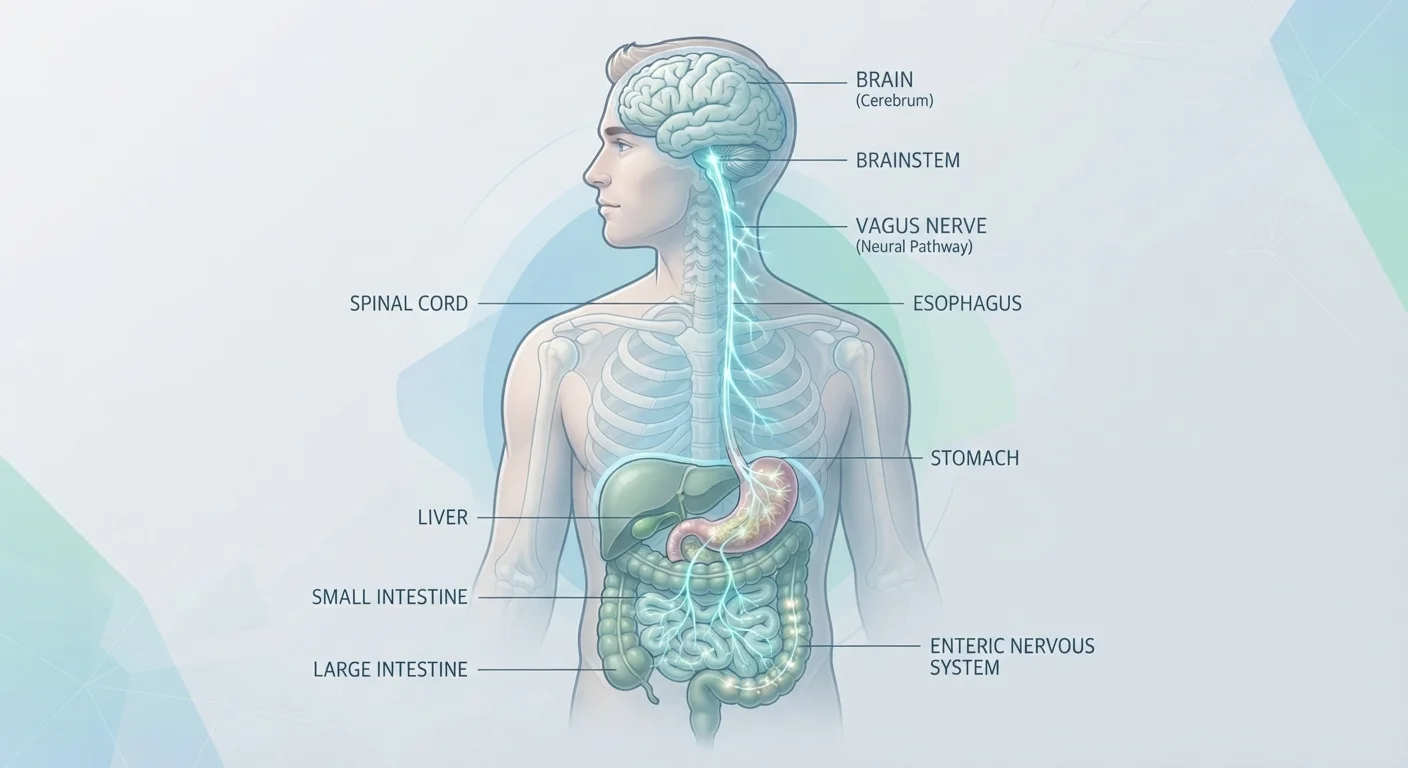
How the Gut and Brain Stay in Contact
The idea that digestion and emotion are connected is not new — most people have experienced "butterflies" before a stressful event or stomach upset during anxiety. What researchers have clarified over recent decades is the biological machinery behind these experiences.
The gut and brain maintain constant communication through several overlapping systems. The vagus nerve — the longest cranial nerve in the body — acts as a major information highway, transmitting signals between the brainstem and the digestive organs. Alongside it, the enteric nervous system, sometimes called the "second brain," is an extensive network of neurons embedded in the gastrointestinal wall that can operate semi-independently of the central brain.
Hormones and immune molecules also carry messages in both directions. When the gut detects pathogens or undergoes inflammation, it can send signals that affect mood and cognition. Equally, psychological stress activates pathways that change gut motility, permeability, and microbial balance.
The Axis Works in Both Directions
It is easy to focus on how the gut affects the brain, but the reverse is equally true. Anxiety, depression, and chronic stress are well documented to alter gut motility, increase intestinal permeability, and shift microbial composition. This bidirectionality makes it difficult to identify a single starting point when studying gut-brain disorders — and is one reason the field is so complex.
Where the Microbiome Fits In
The trillions of microorganisms inhabiting the digestive tract — bacteria, viruses, fungi, and other microbes — are now understood to be active participants in gut-brain communication, not passive bystanders. Collectively, these organisms comprise the gut microbiome, and research is revealing how they influence brain chemistry in meaningful ways.
Gut microbes produce or stimulate the production of several neuroactive compounds. Notably, an estimated 90 percent of the body's serotonin — a neurotransmitter associated with mood regulation — is synthesized in the gastrointestinal tract, with gut microbes playing a role in that process. Microbes also produce short-chain fatty acids and influence the activity of the immune system, both of which can reach the brain.
Studies have found associations between reduced microbiome diversity and conditions like depression and anxiety, though it is important to note that association does not establish cause. It remains unclear whether an altered microbiome contributes to mental health symptoms, whether mental health conditions alter the microbiome, or whether both are influenced by a common underlying factor.
For a broader look at what gut research has and hasn't confirmed, see our overview of microbiome science.
~90%
Of body's serotonin produced in the gut
According to research published in neuroscience and gastroenterology literature, the vast majority of serotonin synthesis occurs in gastrointestinal enterochromaffin cells, influenced partly by gut microbes.
500 million
Neurons in the enteric nervous system
The enteric nervous system, embedded in the gut lining, contains roughly 500 million neurons — more than the spinal cord — supporting its designation as a semi-autonomous "second brain."
38+ trillion
Microbial cells estimated in the human body
A widely cited estimate suggests the human body contains roughly as many microbial cells as human cells, with the gut hosting the greatest concentration and diversity.
What the Evidence Currently Supports
Research on the gut-brain axis has grown substantially in recent years, with some areas of evidence more robust than others. Here is a fair summary of where the science currently stands:
- Animal studies have demonstrated that germ-free mice (raised without gut microbes) show abnormal stress responses and behavioral changes — changes that can be partially reversed by introducing specific bacteria. These findings are compelling, but animal models do not always translate directly to human health.
- Human observational studies have linked dietary patterns associated with microbiome diversity — such as high-fiber, plant-rich diets — with lower rates of depression and anxiety. However, these studies cannot rule out confounding variables like socioeconomic status, overall lifestyle, or pre-existing health conditions.
- Intervention trials on "psychobiotics" — probiotic or prebiotic supplements studied for mental health effects — have produced some modest, short-term findings in healthy adults, but results are inconsistent and study sizes are often small. No probiotic is currently approved to treat any mental health condition.
Understanding the gut-brain axis fits within a larger picture of what mental health actually involves. For foundational context, see our explainer on mental health.
Practical Takeaways — Without Overpromising
While the science continues to develop, there are general health behaviors that research consistently links to both digestive and mental wellbeing — without making dramatic claims about either.
Dietary variety and fiber support microbial diversity. Fermented foods such as yogurt, kefir, and kimchi introduce live microorganisms into the gut, though their long-term effects on the microbiome are still being studied. Sleep affects both mood regulation and gut microbiome composition. Chronic stress has measurable negative effects on both gut function and mental health, making stress management relevant to both systems.
It is worth approaching wellness products marketed around "gut health for mental clarity" with measured skepticism. The gut-brain axis is a legitimate and important area of biology — but it has also attracted considerable commercial hype that outpaces the current evidence. The same caution applies when evaluating emerging pharmaceutical research: for example, GLP-1 medications are being studied for a range of conditions, including some that involve gut-brain pathways, but much remains unproven.
If you are experiencing significant mood disturbances or digestive symptoms that affect your quality of life, consulting a qualified healthcare professional is the appropriate first step — not a supplement regimen.
This article is for general informational purposes only and does not constitute medical advice. Always consult a qualified healthcare provider regarding health concerns or before making changes to your diet, lifestyle, or any treatment plan.
Frequently Asked Questions
Some research suggests that a diverse, balanced gut microbiome is associated with better mental wellbeing, but the relationship is complex and not fully understood. No specific gut intervention has been proven to reliably treat mood disorders. If you're experiencing persistent mood changes, speak with a healthcare professional.
The gut microbiome refers to the vast community of bacteria, fungi, viruses, and other microorganisms living in your digestive tract. These organisms play roles in digestion, immune function, and — increasingly — researchers believe they influence brain chemistry as well.
Yes. The gut-brain connection is bidirectional, so psychological stress can trigger gastrointestinal symptoms like nausea, cramping, or altered bowel habits. This is why conditions like irritable bowel syndrome are often associated with heightened stress responses.
Early clinical trials on "psychobiotics" — probiotics studied for mental health effects — show some modest, preliminary findings, but the evidence is not yet strong enough to support recommending probiotics as a treatment for anxiety or depression. More rigorous research is needed.
Research generally points to fiber-rich foods, fermented foods, and dietary variety as supportive of microbiome diversity. However, there is no single "gut health diet" with proven mental health outcomes. A qualified dietitian can offer personalized guidance.
The basic biology of the gut-brain axis is well established. However, translating that into specific, actionable health recommendations for mental wellbeing is still an active area of investigation, with many claims in the wellness space outpacing the current evidence.
The content on this site is for informational purposes only and is not a substitute for professional advice. Always consult a qualified professional for guidance specific to your situation.