

Our Verdict
All three methods can improve financial outcomes when applied consistently. The envelope method excels for tactile spenders who need hard category limits; zero-based budgeting suits detail-oriented people who want full control of every dollar; and pay-yourself-first works well for anyone whose primary goal is building savings without micromanaging spending. The right choice depends on your income pattern, lifestyle, and the financial behaviors you most want to change.
| Best for | Recommended |
|---|---|
| People who overspend in specific categories like dining or entertainment | Envelope Method |
| Detail-oriented budgeters who want complete monthly control | Zero-Based Budgeting |
| Those whose primary goal is growing savings consistently | Pay-Yourself-First |
| First-time budgeters building a savings habit with minimal friction | Pay-Yourself-First |
Why Budgeting Method Matters
Knowing you should budget is different from knowing how to budget. Dozens of frameworks exist, but three have earned widespread use among everyday Americans: the envelope method, zero-based budgeting, and the pay-yourself-first approach. Each operates on a distinct philosophy about where financial discipline should be applied — and each fits a different type of spender.
This comparison focuses on practical trade-offs rather than rankings. If you're looking for a broader rule-based framework to pair with one of these, the 50/30/20 rule is a complementary starting point. For anyone brand new to tracking money, building your first budget from scratch covers the foundational steps before any method can take hold.
This article is for general informational and educational purposes only and does not constitute personalized financial advice. Consult a qualified financial professional regarding decisions specific to your situation.
How Each Method Works
Envelope Method
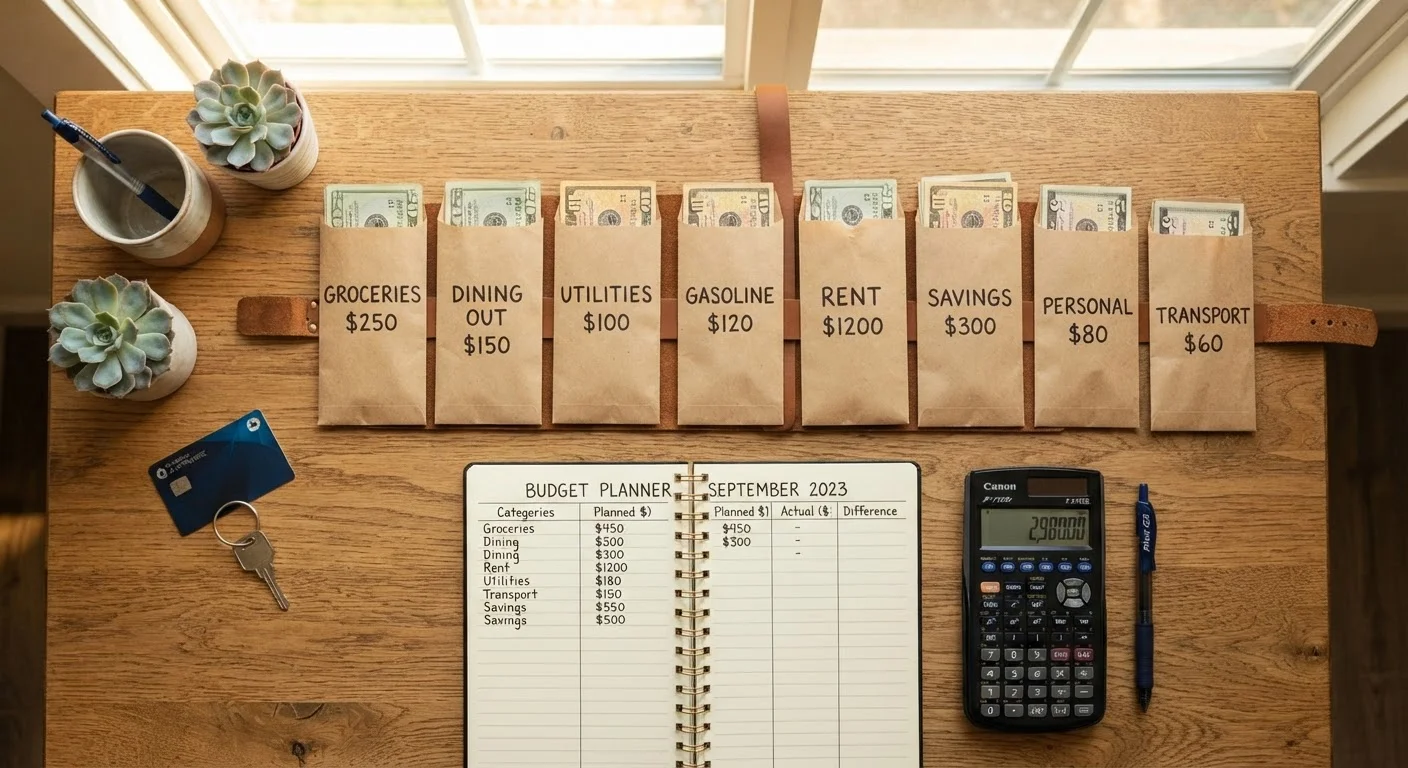
You divide your take-home pay into physical or digital envelopes, each labeled for a spending category — groceries, gas, dining out, and so on. Once an envelope is empty, spending in that category stops for the month. The hard limit is the mechanism; there's no negotiation. Originally a cash-based system, digital adaptations now let users replicate the same structure in apps or spreadsheet tabs.
Zero-Based Budgeting
Every dollar of income is assigned a specific purpose until income minus outflows equals zero. That doesn't mean spending everything — savings and debt payments count as assignments too. The goal is intentionality: no dollar goes unaccounted for. This method requires rebuilding the budget each month from scratch, which is time-intensive but also surfaces spending patterns that rolling budgets tend to obscure.
Pay-Yourself-First
Before any bill is paid or discretionary dollar spent, a predetermined amount moves automatically into savings or an investment account. What remains is available for living expenses. The logic inverts the typical order of operations — saving becomes non-negotiable rather than whatever is left over. Pairing this with financial automation reduces the friction of maintaining the habit.
| Envelope Method | Zero-Based Budgeting | Pay-Yourself-First | |
|---|---|---|---|
| Core principle | Hard category spending limits | Every dollar assigned a purpose | Save before spending anything |
| Time commitment | Low to moderate | High (monthly rebuild required) | Low once automated |
| Best for | Category overspenders | Detail-oriented planners | Savings-focused individuals |
| Handles irregular income | Poorly without buffers | Well with monthly recalibration | Moderately, needs adjustment |
| Savings emphasis | Indirect | Explicit assignment | Central and automatic |
| Complexity | Low | High | Low |
Strengths, Limitations, and Who Each Fits
The envelope method's chief strength is behavioral: physical or digital limits eliminate the ambiguity that allows overspending. Its weakness is rigidity — irregular expenses and income fluctuations can break the system unless you build in a buffer category. It tends to work well for people with consistent paychecks and identifiable problem spending areas.
Zero-based budgeting provides the clearest financial picture of the three. Users often discover spending categories they didn't consciously track. The cost is time — researchers and financial educators note that this method demands a meaningful monthly commitment to categorize and reconcile transactions. It suits people who are analytical, or who have variable income and need to recalibrate spending allocations each month.
Pay-yourself-first is arguably the lowest-friction approach for building savings. Because the savings transfer happens automatically, the method doesn't require ongoing discipline around every spending decision. The trade-off is that it doesn't inherently address overspending in specific areas. Someone carrying high-interest debt should consider how a savings-first approach interacts with repayment priorities — the debt avalanche and snowball methods are worth understanding in that context.
Combining Methods Can Work
These approaches aren't mutually exclusive. Some people use pay-yourself-first to automate savings, then apply envelope logic to their remaining discretionary budget. Hybrid approaches are common and can address limitations of any single method. Start simple and layer in additional structure as you identify where your spending habits need the most support.
Students managing limited and irregular income may find elements of all three methods useful. The college budgeting guide covers how to apply these principles to a student financial picture.
Choosing the Right Fit
A few practical questions can point you toward the right approach:
- Do you have a specific spending category you consistently overspend? The envelope method addresses this directly.
- Do you want a complete picture of where every dollar goes? Zero-based budgeting provides that at the cost of regular maintenance.
- Is your primary financial goal saving more, and do you want it to happen with minimal daily decisions? Pay-yourself-first is designed for exactly this.
Income variability matters too. Freelancers and gig workers may find zero-based budgeting more adaptable to month-to-month income swings, while salaried employees can more easily automate pay-yourself-first transfers. Households with recognized emergency fund gaps should also consider the difference between an emergency fund and a regular savings account before deciding where automatic transfers should land.
There is no universally superior method. Consistency and honesty about your own spending patterns matter more than which framework you choose. Starting with any structured approach is better than deferring the decision.
The content on this site is for informational purposes only and is not a substitute for professional advice. Always consult a qualified professional for guidance specific to your situation.