

What an Economic Calendar Is — and Why It Matters
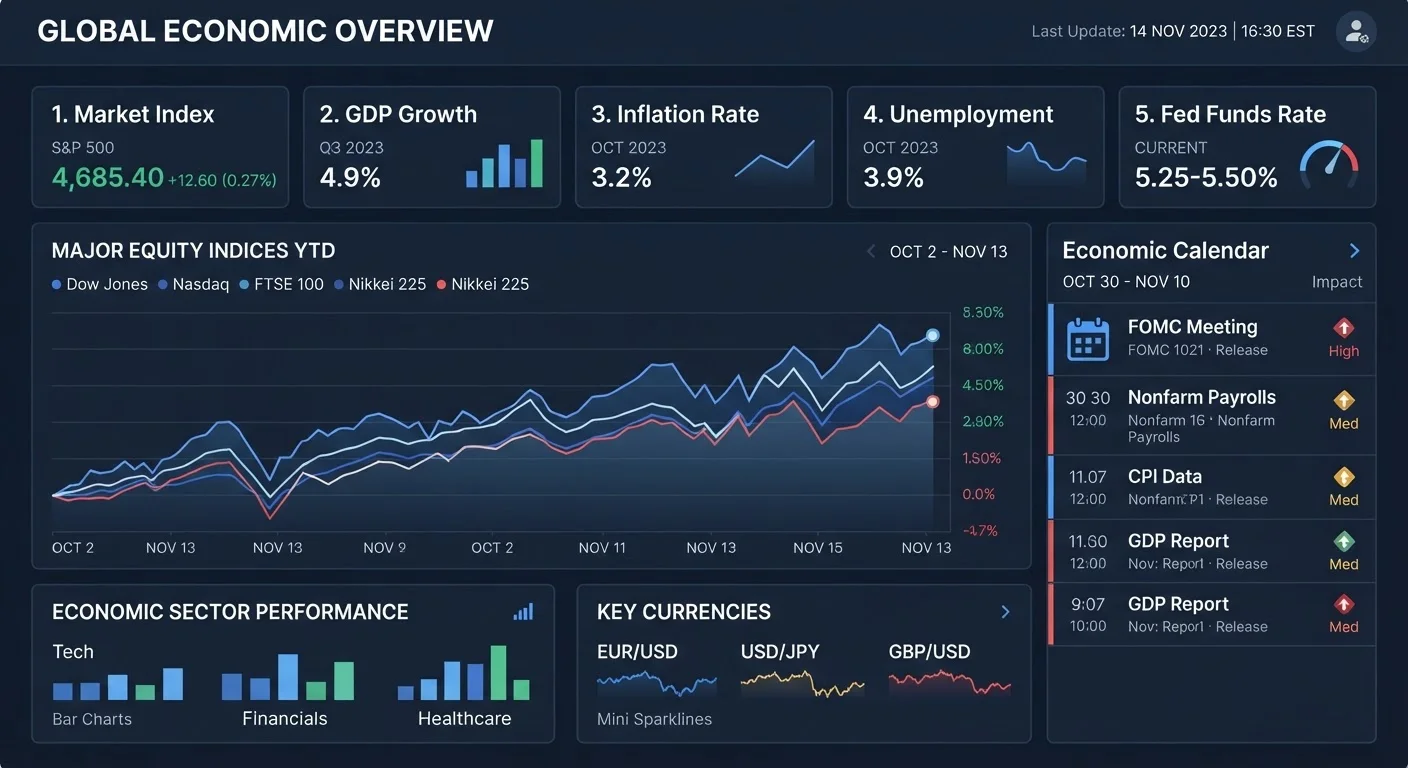
An economic calendar is a schedule of upcoming government and institutional data releases — jobs numbers, inflation readings, central bank decisions, and more. Investors, analysts, and policymakers track these releases because each one can shift market expectations about the direction of the economy.
If you've ever seen stocks move sharply on a Friday morning or heard a news anchor say "markets are waiting on today's jobs report," you're witnessing the economic calendar at work. Understanding what each indicator actually measures helps you interpret those reactions rather than just observe them.
Before diving into individual indicators, it helps to have a foundational sense of how financial markets operate. See our introduction to how financial markets work for essential context.
| Jobs Report Release Day | First Friday of each month (U.S. Bureau of Labor Statistics) |
| Annual FOMC Meetings | 8 scheduled meetings per year (Federal Reserve) |
| Share of GDP from Consumer Spending | Approximately two-thirds (Bureau of Economic Analysis, historical average) |
| CPI Published By | U.S. Bureau of Labor Statistics |
| GDP Advance Estimate Timing | Roughly 30 days after quarter ends (Bureau of Economic Analysis) |
The Major Indicators and What They Measure
Not all economic data releases carry the same weight. A handful consistently move markets and shape policy discussions.
Jobs Report (Employment Situation Summary)
Released by the U.S. Bureau of Labor Statistics on the first Friday of each month, this report covers nonfarm payroll additions, the unemployment rate, and average hourly earnings. Strong job growth generally signals a healthy economy; weak numbers may suggest a slowdown. The earnings component also feeds into inflation expectations — wage growth that outpaces productivity can push prices higher.
Consumer Price Index (CPI)
CPI measures the average change in prices paid by urban consumers for a basket of goods and services. It is a primary gauge of inflation. When CPI rises faster than expected, markets often anticipate that the Federal Reserve may raise interest rates to cool spending. Inflation, deflation, and stagflation each carry different implications for policy and everyday purchasing power.
Federal Open Market Committee (FOMC) Decisions
Eight times a year, the Fed's policy committee announces whether it is raising, lowering, or holding the federal funds rate — the benchmark interest rate that influences borrowing costs across the economy. The accompanying statement and press conference often matter as much as the rate decision itself, since forward guidance shapes expectations for months ahead.
Gross Domestic Product (GDP)
GDP measures the total value of goods and services produced in the U.S. over a given period. The Bureau of Economic Analysis releases an advance estimate, then revised figures. Two consecutive quarters of negative GDP growth is the informal rule of thumb for a recession, though the official designation involves broader criteria. For a deeper look at early warning signs, see indicators that often signal a recession before it's official.
Retail Sales
Published monthly by the Census Bureau, retail sales data tracks consumer spending at stores and online. Since consumer spending drives roughly two-thirds of U.S. economic activity, this report is a real-time pulse check on household confidence and willingness to spend.
Nonfarm Payrolls
The number of jobs added or lost in the U.S. economy during a given month, excluding farm workers and a few other categories. It is the headline figure in the monthly Employment Situation report.
Federal Funds Rate
The interest rate at which banks lend reserves to each other overnight. Set by the Federal Reserve, it serves as a benchmark that influences mortgage rates, credit card rates, and broader borrowing costs.
Consumer Price Index (CPI)
A measure of the average change over time in prices paid by urban consumers for a representative basket of goods and services. It is one of the most widely used gauges of inflation in the United States.
Gross Domestic Product (GDP)
The total monetary value of all finished goods and services produced within a country's borders in a specific time period. It is the broadest measure of economic output and size.
Forward Guidance
Communication from a central bank about its likely future policy direction. It shapes market expectations even before any rate change occurs, making it a powerful tool alongside actual rate decisions.
Consensus Forecast
The average or median estimate produced by a group of economists or analysts before a data release. Markets often react based on how the actual figure compares to this expected number.
How to Read the Data Without Overreacting
A single data point rarely tells the full story. Economists and seasoned market watchers focus on trends over several months rather than any one release. They also pay attention to revisions — prior months' numbers are frequently updated, and sometimes the revision is more meaningful than the headline figure.
Markets respond not just to the number itself but to how it compares to consensus forecasts. A jobs report showing 150,000 new positions might be welcomed if forecasts were for 100,000 — or disappointing if expectations were 200,000. This "beat vs. miss" dynamic explains why a seemingly positive headline can still cause a market dip.
It's also worth remembering that the stock market and the broader economy are not the same thing. What the stock market actually measures helps clarify this distinction. And because economic data is frequently framed in misleading ways, understanding where economic reporting often goes wrong can sharpen how you evaluate what you read.
This article is for general informational and educational purposes only. It does not constitute financial, investment, or tax advice. Readers should consult a qualified financial professional before making decisions based on economic data or market conditions.
The content on this site is for informational purposes only and is not a substitute for professional advice. Always consult a qualified professional for guidance specific to your situation.