

What Credit Bureaus Do — and Why Three Exist
Credit bureaus — also called consumer reporting agencies — are private companies that collect financial data on hundreds of millions of Americans and compile it into credit reports. Lenders, landlords, and employers (with consent) use those reports to assess creditworthiness. The three dominant bureaus in the US are Equifax, Experian, and TransUnion.
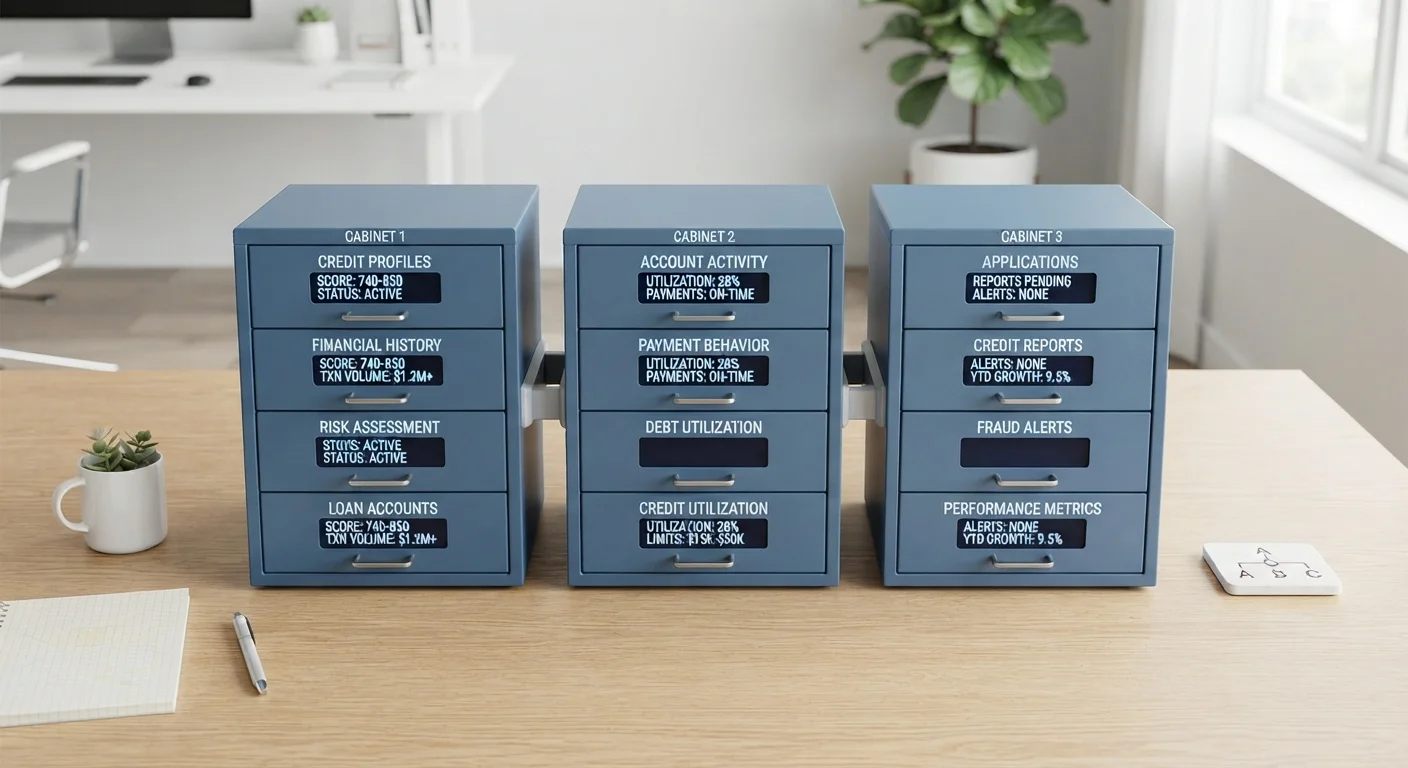
No government agency created or mandated the three-bureau structure. It evolved over decades as regional credit bureaus merged and consolidated. Today, the three operate independently — they do not share data with each other — which is the primary reason your credit profile can look different at each one.
For a broader introduction to how credit fits into personal finance, see Credit and Debt: A First-Timer's Map for the full lifecycle of borrowing explained from scratch.
How Bureaus Collect and Report Your Data
Bureaus do not actively pull your information — they receive it from data furnishers: banks, credit card issuers, auto lenders, mortgage servicers, and collection agencies. Furnishers report voluntarily, and not all of them report to all three bureaus, which is why an account might appear on one report but not another.
A typical credit report contains five categories of information:
- Personal identifying information — name, address history, Social Security number, date of birth
- Account history — credit cards, loans, and lines of credit with balances, payment history, and credit limits
- Public records — currently limited largely to bankruptcies (civil judgments and tax liens were removed from reports after 2017 accuracy reforms)
- Hard inquiries — applications for new credit that trigger a lender's review of your file
- Collections — debts that have been sold to or assigned to collection agencies
Negative information generally stays on a report for seven years; Chapter 7 bankruptcies remain for ten. Understanding how these elements translate into a score is covered in detail in Credit Scores Decoded.
Credit Bureau
A private company that collects consumer financial data from lenders and other sources and compiles it into credit reports used by creditors and others to evaluate creditworthiness.
Data Furnisher
Any business — such as a bank, credit card issuer, or collection agency — that reports account information to one or more credit bureaus. Furnishers report voluntarily and on their own schedules.
Hard Inquiry
A review of your credit file triggered by an application for new credit. Hard inquiries appear on your report and can have a small, temporary effect on credit scores.
Fair Credit Reporting Act (FCRA)
A federal law that governs how consumer credit information is collected, shared, and used. It gives consumers the right to free annual reports, dispute processes, and limits on who may access their data.
Consumer Reporting Agency
The formal legal term under the FCRA for entities like Equifax, Experian, and TransUnion that compile and sell consumer credit information.
Credit Report
A detailed record of a consumer's credit accounts, payment history, public records such as bankruptcies, and recent credit inquiries, maintained by a credit bureau.
Why Your Reports Differ Across the Three Bureaus
Because furnishers choose which bureaus to report to — and on their own schedules — the same account can show different balances, payment statuses, or even be absent entirely on one bureau's report. A creditor reporting to only two of the three bureaus is common, especially among smaller lenders and credit unions.
This inconsistency has real consequences: a score calculated from your Equifax file may differ meaningfully from one calculated from your TransUnion file, even on the same day. Many consumers are surprised to learn this is normal, not an error. Credit Score Myths addresses several common misconceptions that stem from this kind of confusion.
Reviewing all three reports — not just one — gives a complete picture of how creditors see you.
Accessing Your Reports and Disputing Errors
Under the Fair Credit Reporting Act (FCRA), every consumer is entitled to at least one free report per year from each bureau. The federally authorized channel for requesting them is AnnualCreditReport.com. Monitoring for errors is important: a 2021 study by the Federal Trade Commission found that a significant share of consumers identified at least one inaccuracy in their credit files that they believed was material.
If you find an error, each bureau maintains a dispute process — online, by mail, or by phone. The bureau is generally required to investigate within 30 days and must notify the furnisher of the disputed information. If the furnisher cannot verify the item, it must be corrected or deleted.
For a detailed breakdown of your legal rights in this process, see Your Rights Under the Fair Credit Reporting Act. It's also worth understanding the distinction between credit bureaus and data brokers — the latter operate under different rules and collect far broader categories of personal data. Data Brokers Explained covers what separates the two industries.
This article provides general financial information and education only. It is not personalized financial or legal advice. Consult a licensed financial adviser or attorney for guidance specific to your situation.
The content on this site is for informational purposes only and is not a substitute for professional advice. Always consult a qualified professional for guidance specific to your situation.