

Our Verdict
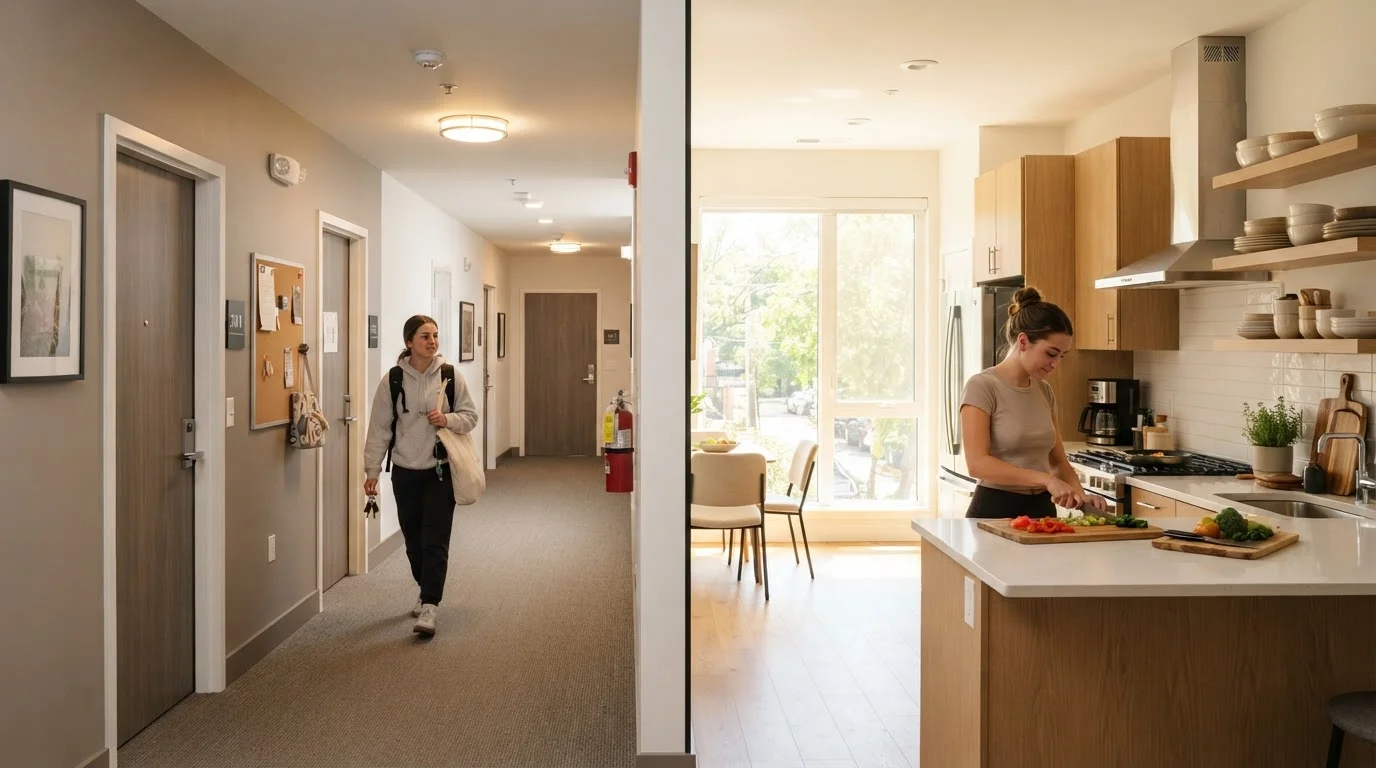
Neither on-campus nor off-campus housing is universally better — each suits a different student profile and life stage. First-year students and those who value built-in community and simplicity often benefit most from living on campus. Students who are financially prepared, prefer autonomy, and have reliable transportation may find off-campus living more cost-effective and personally fulfilling over time.
| Best for | Recommended |
|---|---|
| First-year students building social connections | On-Campus Living |
| Students seeking lower out-of-pocket costs with roommates | Off-Campus Apartments |
| Students who rely on campus dining and academic support services | On-Campus Living |
| Upperclassmen ready for independent living responsibilities | Off-Campus Apartments |
Breaking Down the Real Costs
Housing is typically a student's second-largest expense after tuition, so understanding what each option actually costs matters enormously. On-campus housing is often quoted as a single semester or annual fee that bundles a meal plan, utilities, and Wi-Fi. That bundling can make the sticker price look high, but it also removes uncertainty — students won't be blindsided by a winter heating bill.
Off-campus apartments may appear cheaper at first glance, but the true monthly cost includes rent, electricity, gas, internet, renters insurance, and groceries. When those are added together and divided among roommates, the math sometimes favors off-campus living — but not always. Location matters enormously: apartments close to campus in high-demand college towns can rival or exceed dormitory rates.
For a fuller picture of student spending categories, see our guide on building a realistic college budget.
| On-Campus Living | Off-Campus Apartments | |
|---|---|---|
| Cost structure | Bundled fee (room, meals, utilities) | Itemized: rent, utilities, groceries separate |
| Lease obligation | Academic year contract with school | Typically 12-month legal lease |
| Campus proximity | Walking distance to classes | Varies; may require daily commute |
| Social integration | Built-in community, RA support | Requires active social effort |
| Privacy and autonomy | Limited; shared spaces common | Greater; own unit with roommates |
| Life skills development | Minimal — logistics handled | High — budgeting, cooking, renting |
| Best suited for | First- and second-year students | Upperclassmen and self-directed students |
Convenience, Commute, and Campus Access
Living on campus means a student is rarely more than a ten-minute walk from class, the library, tutoring centers, or campus health services. That proximity has real academic value — it's easier to attend an early morning lecture or a late-evening study session when there's no commute involved.
Off-campus students must account for how they'll get to and from campus daily. Depending on the city, that might mean a bus route, a bike, or a car. Students weighing vehicle ownership as part of this decision may find our coverage of ride-sharing vs. car ownership a useful companion read.
Students living off campus also need to plan around campus office hours, dining hours, and building access — factors that on-campus residents rarely have to think about consciously.
Visit Before You Commit
If possible, tour any off-campus apartment in person before signing a lease — photos can be misleading and may not reflect the actual condition of the unit. Check the proximity to a bus stop or bike path, the reliability of cell service, and whether the building has secure entry. For on-campus housing, request a room sample or speak with current residents through the housing office to get an honest sense of the living environment.
Social Life and Community Building
Residence halls are deliberately designed to foster community. Shared bathrooms, communal lounges, and Resident Advisors (RAs) — trained upperclassmen or staff who support floor communities — create an environment where social interaction is almost automatic. For students arriving without established friend groups, this structure can significantly ease the transition.
Off-campus living offers more privacy and quiet, which some students genuinely need to focus. However, it requires more deliberate effort to stay socially connected — joining clubs, attending campus events, or building relationships with classmates outside of class time. Students who are naturally self-directed and already have social networks often thrive off campus without feeling isolated.
Campus proximity also affects access to mental health and wellness resources. Our overview of mental health support on campus outlines the kinds of services students can typically access and how to use them.
Lease Responsibilities and Life Skills
Signing a lease is a legal commitment — one that many students encounter for the first time when moving off campus. A standard apartment lease runs 12 months, meaning students may owe rent through the summer even if they return home. Some landlords offer academic-year leases, but they're less common and typically priced at a premium.
Living off campus also introduces responsibilities that on-campus housing handles automatically: paying utility bills on time, managing grocery budgets, maintaining the unit to avoid losing a security deposit, and understanding tenant rights. These are genuinely valuable life skills, but they take time and attention that some students may not anticipate.
First-time renters should understand what they're signing before committing. Our article on personal finance basics for first-time renters covers lease reading, cash flow management, and what to watch for.
Making the Decision for Your Situation
There's no formula that works for every student. A first-year student at a large residential university may benefit enormously from the structured social environment of a dorm. A third-year student who has built a campus network, has reliable roommates lined up, and lives in a city with good transit may save money and gain meaningful independence by moving off campus.
Financial aid packages can also complicate the picture. Some aid is structured around on-campus housing costs; moving off campus can affect how much aid is disbursed and how it may be used. Students should consult their financial aid office before making a change.
Students exploring other structural college decisions may find value in reading our comparison of community college vs. four-year university trade-offs, which addresses cost, flexibility, and long-term outcomes from a different angle.
The content on this site is for informational purposes only and is not a substitute for professional advice. Always consult a qualified professional for guidance specific to your situation.