

Why the SAE Scale Matters
When an automaker claims their vehicle is "self-driving," or a regulator sets rules for "automated" cars, both are drawing on a single reference framework: SAE International's J3016 standard, which defines six levels of driving automation from 0 to 5. Published originally in 2014 and updated since, this taxonomy shapes how engineers design systems, how regulators write law, and how consumers should interpret marketing language.
Understanding what each level actually requires — and where human responsibility still lies — is increasingly important as more Level 2 systems reach dealerships and early Level 4 robotaxi pilots expand in U.S. cities. For a broader look at the policy environment surrounding these technologies, see Regulatory Flashpoints Reshaping the Auto Sector Right Now and what regulators globally are saying about self-driving.
Levels 0 Through 2: The Driver Is Still Driving
Level 0 — No Automation: The human controls everything. Systems such as automatic emergency braking or lane-departure warnings may intervene momentarily, but they do not constitute sustained automation; the driver retains full responsibility at all times.
Level 1 — Driver Assistance: The vehicle controls either steering or acceleration/braking — never both simultaneously. Adaptive cruise control (speed only) and lane-centering assist (steering only) are classic examples. The driver must handle the other dimension of control and remain fully engaged.
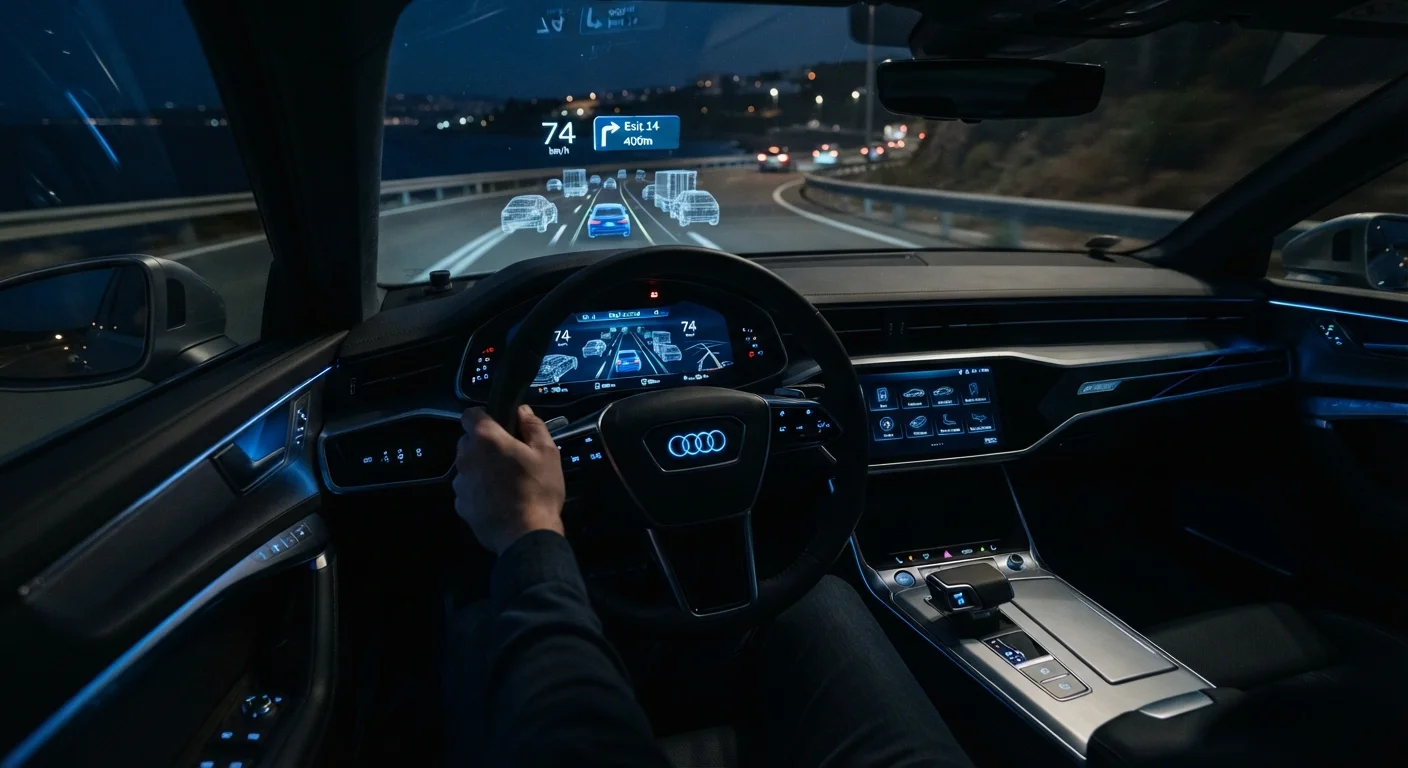
Level 2 — Partial Automation: The system manages both steering and speed at the same time under defined conditions — highway driving, for example. Crucially, the human must monitor the environment continuously and be ready to take over immediately. Most "driver assistance" packages sold today by mainstream manufacturers sit here. The SAE label for the human role at this level is "driver assistance system supervisor."
Operational Design Domain (ODD)
The specific conditions — road type, speed range, weather, geography — within which an automated driving system is designed to function. A system operating outside its ODD is not certified to drive autonomously.
Driver Monitoring
Technologies that track whether a driver is alert and paying attention, typically required at Levels 2 and 3. Systems may use eye-tracking cameras or steering-wheel sensors.
Takeover Request
An alert issued by a Level 3 system asking the human driver to resume manual control within a defined response window. The design of this handoff is a central safety engineering challenge.
Minimal Risk Condition
A safe state that an automated vehicle brings itself to when it can no longer handle the driving task — typically pulling over and stopping. Required at Level 4 in lieu of a human takeover.
Partial Automation
The SAE term for Level 2, where the system handles both lateral and longitudinal control simultaneously but the human must supervise continuously and remain ready to intervene.
A common misconception is that Level 2 means the driver can disengage. It does not. For a detailed look at how these systems perceive the road, see Autonomous Vehicles Explained.
Levels 3 Through 5: The System Takes the Wheel
Level 3 — Conditional Automation: Here a significant threshold is crossed. The automated driving system handles all aspects of driving within a defined Operational Design Domain (ODD) — a specific set of conditions such as highway speeds below a certain threshold. The human does not need to monitor the road continuously but must be ready to respond when the system issues a takeover request. This transition period remains a safety-critical design challenge engineers are still refining.
Level 4 — High Automation: The vehicle completes trips without human intervention within its ODD and does not require a human to take over even if something goes wrong — it will bring itself to a safe stop instead. Geofenced robotaxi services currently operating in select U.S. cities typically operate at this level. Outside the ODD, Level 4 vehicles cannot operate autonomously.
Level 5 — Full Automation: No ODD restrictions. The system can handle any road, any condition, any scenario a human driver could manage. No steering wheel or pedals are required. No commercially available production vehicle has reached this level, and most engineers consider it a long-horizon goal rather than an imminent reality.
Level 3 Liability Remains Unsettled
At Level 3, the automated system — not the human — is responsible for driving during automated operation. This creates complex questions about fault when a crash occurs. U.S. federal regulators and state legislatures are still developing frameworks to address liability at this level. Drivers operating Level 3 vehicles should consult current state law and their insurance provider for guidance on how coverage applies.
These distinctions have direct implications for liability, insurance, and regulation — areas that remain actively contested. Common misconceptions about self-driving cars often blur these lines, particularly around Levels 3 and 4. For the bigger transportation picture, see The Future of Mobility overview.
The content on this site is for informational purposes only and is not a substitute for professional advice. Always consult a qualified professional for guidance specific to your situation.