

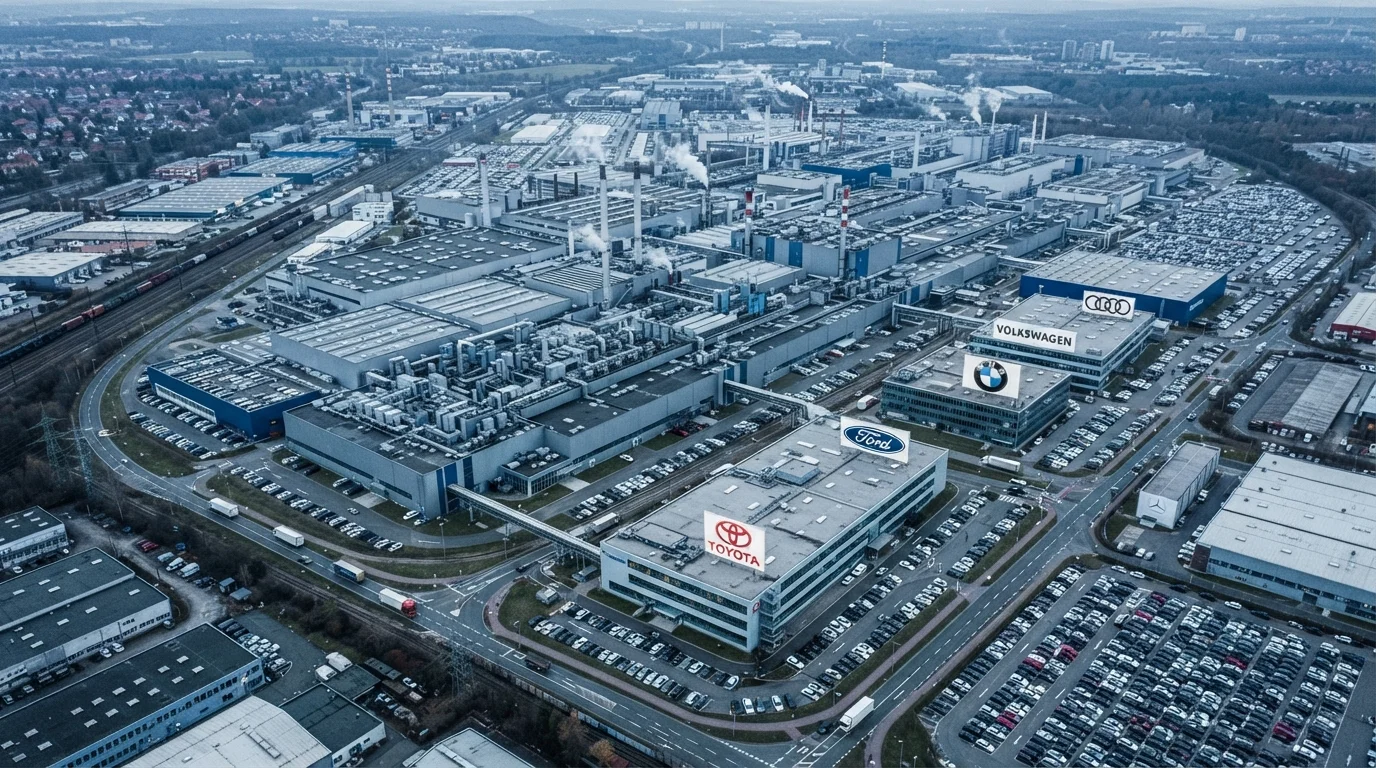
The Economics Behind Every Alliance
Building a modern car is extraordinarily capital-intensive. Developing a single new vehicle platform — the core engineering architecture beneath the body — can cost billions of dollars before a single vehicle reaches a showroom. Add the mounting pressure to electrify entire lineups, integrate advanced driver-assistance software, and comply with tightening emissions rules in the U.S., Europe, and China, and the financial burden becomes clear.
Automakers respond by pooling resources. When two manufacturers share a platform, they split that multi-billion-dollar development bill while each company retains the ability to differentiate its vehicles through styling, features, and branding. Purchasing power is another lever: a combined buying group negotiating with a battery supplier carries far more leverage than either partner acting alone.
To understand the full range of pressures driving these decisions, the regulatory landscape automakers are navigating — from emissions mandates to EV sales targets — is essential context.
$1B+
Typical cost to develop a single vehicle platform
Industry analysts and automaker disclosures consistently cite platform development costs in the multi-billion dollar range, making cost-sharing a powerful financial incentive for alliances.
3
Largest vehicle-producing alliance groups globally
Toyota Group, Volkswagen Group, and the Renault-Nissan-Mitsubishi Alliance have each produced over 8 million vehicles annually in recent years, illustrating the scale consolidation can achieve.
~40%
Estimated share of global auto output from merged or allied groups
According to publicly available production data, a significant majority of the world's new vehicles now roll off lines owned by companies operating under some form of formal alliance or merged corporate structure.
Types of Arrangements: From Joint Ventures to Full Mergers
Not every partnership is structured the same way. Understanding the key forms helps consumers interpret industry headlines more accurately.
- Full mergers: Two companies legally combine into one. Stellantis, formed in 2021 from the union of Fiat Chrysler Automobiles and PSA Group, is a recent example. The resulting entity manages brands including Jeep, Ram, Peugeot, and Citroën under a single corporate umbrella.
- Equity alliances: One automaker takes a ownership stake in another without full absorption. This aligns financial interests while keeping brands independent.
- Joint ventures: Two companies create a new, separate legal entity for a specific purpose — commonly used to establish manufacturing in foreign markets where regulations require local partnerships.
- Technology and platform sharing agreements: Companies co-develop a vehicle architecture or license technology from one another without a formal ownership relationship.
If some of the terminology in these structures is unfamiliar, the auto industry glossary covers the language commonly used in industry reporting.
The EV and Software Imperative
The electric vehicle transition has intensified the alliance trend. Battery cell chemistry, electric drive units, and the software platforms that manage vehicle systems are enormously expensive to develop and require specialized expertise that legacy automakers are still building in-house.
Rather than duplicate that investment across competing companies, many manufacturers have chosen to co-develop EV architectures. Some have formed agreements with technology companies and battery manufacturers outside the traditional auto industry entirely — a structural shift that blurs the old boundaries of who builds what.
Watch for Battery Supply Chain Announcements
When automakers announce new EV partnerships, pay close attention to whether the deal includes battery cell supply or just vehicle platform sharing. Battery supply agreements signal deeper strategic commitment and are often better predictors of long-term alliance stability than platform-sharing deals alone.
This transformation on the factory floor reflects a broader strategic pivot. For a closer look at what that shift looks like operationally, see how automakers are retooling factories for EVs. The EV sector continues to evolve rapidly as these partnerships mature.
What Alliances Mean for Consumers
For car buyers, these structural shifts carry both potential benefits and real trade-offs. Shared platforms can reduce per-vehicle development costs, which manufacturers may pass on as more competitive pricing or more features per dollar. A smaller automaker that partners with a larger one can also gain access to dealer networks, financing infrastructure, and service capabilities it could not build independently.
The downsides are real, however. When multiple brands draw from the same platform, cars can feel less distinct. A quality or safety issue discovered in one vehicle can affect all models sharing the same architecture simultaneously. And as mergers reduce the total number of independent competitors globally, consumers in some segments may find fewer genuinely differentiated choices over time.
For a broader picture of which companies dominate which regions and segments, the global auto industry overview provides useful grounding.
When Alliances Fail — and What That Tells Us
Partnerships between automakers carry significant risk. Engineering collaboration requires aligning processes, tooling standards, and corporate cultures that may have evolved independently for decades. When strategic priorities diverge — especially during economic downturns or technology pivots — alliances that looked sound on paper can unravel.
History offers lessons about the limits of consolidation as a cure-all. Mergers driven primarily by financial engineering rather than genuine operational synergy have repeatedly disappointed. The most durable alliances tend to be those with clear, narrowly defined objectives — a shared battery platform, for instance — rather than vague promises of comprehensive integration.
Industry observers generally agree that the next phase of consolidation will be shaped heavily by which companies succeed in software-defined vehicle development and battery supply chain control. Those two factors are expected to determine competitive staying power more than brand heritage or factory footprint alone.
Frequently Asked Questions
A merger legally combines two companies into a single entity, sharing ownership, management, and liabilities. An alliance is a cooperation agreement where each company remains legally independent but pools resources — such as engineering, platforms, or purchasing — for specific goals.
The simultaneous shift to electric vehicles, autonomous driving software, and stricter emissions regulations has massively increased R&D costs. No single automaker can easily afford all these investments alone, making collaboration a practical necessity rather than an optional strategy.
Yes. Shared platforms often mean structurally similar vehicles sold under different brand names. This can keep prices in check, but it may also reduce distinctiveness between brands. Shared quality issues can also spread across multiple nameplates at once.
Absolutely. History shows that cultural differences, conflicting strategic priorities, and leadership changes can derail even well-publicized partnerships. The dissolution of the Daimler-Chrysler merger in 2007 is a frequently cited example of a high-profile breakdown.
A shared platform is the underlying vehicle architecture — including the floor, suspension mounting points, and core engineering dimensions — that multiple different models are built upon. Different brands can style the exterior and interior differently while sharing the costly engineering underneath.
The content on this site is for informational purposes only and is not a substitute for professional advice. Always consult a qualified professional for guidance specific to your situation.