

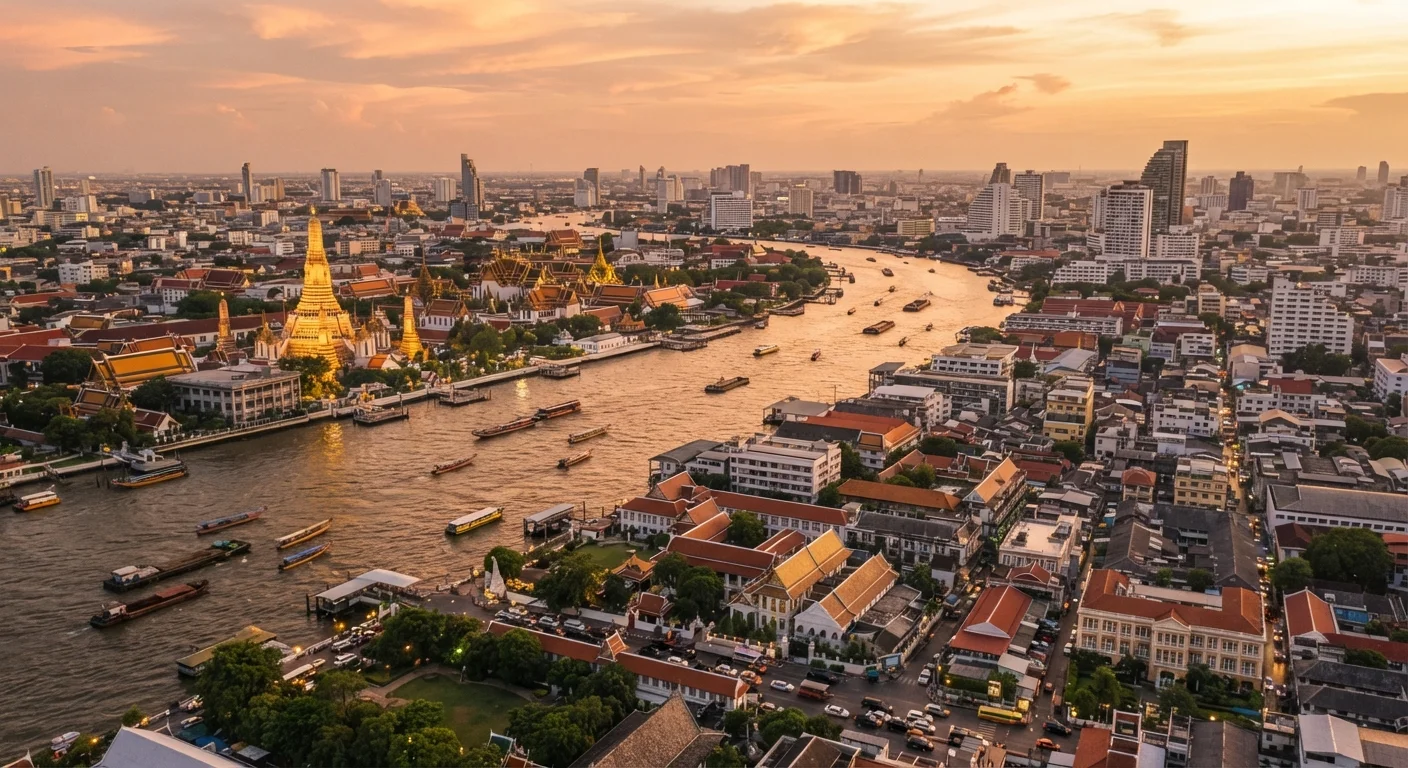
The Capitals Travelers Often Skip
Southeast Asia draws tens of millions of visitors annually, yet the bulk of that foot traffic concentrates in a handful of well-known destinations. Cities like Bangkok, Singapore, and Kuala Lumpur dominate travel itineraries, while several national capitals in the region remain largely overlooked by international visitors.
That imbalance has less to do with what these cities offer and more to do with how they're marketed — or aren't. Each of the following capitals functions as the political, cultural, and often spiritual center of its country, carrying histories that stretch back centuries. For travelers willing to move beyond the familiar, they represent some of the most substantive destinations in the region.
Check Official Travel Advisories First
Entry requirements, visa policies, health recommendations, and local safety conditions vary significantly across Southeast Asian countries. Travelers should consult their government's official travel advisory and the embassy or consulate of each destination country well in advance of any trip. Conditions can change, and the information in this article reflects general context rather than current, guaranteed accuracy.
Entry requirements, visa policies, health recommendations, and local safety conditions vary significantly across Southeast Asian countries. Travelers should consult their government's official travel advisory and the embassy or consulate of each destination country well in advance of any trip.
Naypyidaw, Myanmar — A Capital Built From Scratch
Naypyidaw stands apart from virtually every other capital in Southeast Asia for a singular reason: it was purpose-built by the military government and inaugurated in 2006, replacing Yangon as the official seat of power. The city's layout is strikingly unusual — wide, largely empty boulevards, a replica of Yangon's Shwedagon Pagoda, and government ministries spread across enormous plots of land give it an otherworldly quality that few capitals anywhere can match.
Visitor access to Myanmar has been severely restricted following the 2021 military coup, and multiple governments maintain strong travel advisories against visiting the country. Travelers interested in Myanmar should monitor official government guidance closely and understand that conditions on the ground remain highly uncertain.
Naypyidaw's wide, near-empty boulevards and purpose-built layout make it unlike any other capital in the region.
Vientiane, Laos — A Capital That Moves at Its Own Pace
Vientiane is routinely described as one of the quietest and most low-key capitals in Asia, and that reputation is earned. Situated along the Mekong River on Laos's border with Thailand, the city blends French colonial architecture with Buddhist temples in a setting that feels more like a small provincial town than a national capital.
The Patuxai monument — a victory arch modeled loosely on Paris's Arc de Triomphe but finished with traditional Lao ornamentation — captures the city's layered identity well. The morning almsgiving ritual, known as tak bat, continues in parts of the city, though travelers are generally encouraged to observe respectfully rather than participate intrusively. Vientiane's food scene, particularly its riverside restaurants and morning markets, offers an approachable introduction to Lao cuisine.
Vientiane blends French colonial architecture with Buddhist temple culture along a quiet Mekong riverfront.
Bandar Seri Begawan, Brunei — Wealth, Faith, and Quiet Streets
The capital of the small sultanate of Brunei sits on Brunei Bay and is home to one of the largest mosques in Southeast Asia — the Omar Ali Saifuddien Mosque, completed in 1958 and still considered a defining landmark of the region. The city's wealth, derived from oil and gas revenues, is visible in its infrastructure, but Bandar Seri Begawan moves at a measured pace that surprises many visitors expecting a busier urban environment.
Kampong Ayer, a centuries-old water village built on stilts above the bay, is home to tens of thousands of residents and has functioned as a floating community for hundreds of years. Alcohol is heavily restricted under Brunei's laws, and travelers should familiarize themselves with local regulations before visiting. The country is generally considered safe and is accessible via regional air connections.
Kampong Ayer, a stilt village above the bay, has functioned as a living water community for centuries.
Dili, Timor-Leste — A Young Nation's Emerging Capital
Dili became the capital of the world's youngest nation when Timor-Leste gained independence in 2002. The city bears visible marks of its turbulent recent history — Portuguese colonial influence, decades of Indonesian occupation, and the destruction of 1999 — while also reflecting a society actively rebuilding its institutions and infrastructure.
The Cristo Rei statue overlooking the coast and the Resistance Museum, which documents the country's independence movement, offer significant historical context. Tourism infrastructure remains limited compared to neighboring countries, making Dili a destination better suited to experienced travelers comfortable with fewer amenities. Travelers should check current health and safety advisories before planning any visit.
Dili's resistance museum and colonial waterfront tell the story of one of Asia's most recent independence movements.
Phnom Penh, Cambodia — History, Resilience, and a Reviving City
Phnom Penh occupies a more prominent place on travel itineraries than the other cities on this list, but it still receives a fraction of the attention directed at Siem Reap, home to Angkor Wat. The Cambodian capital sits at the confluence of the Mekong and Tonlé Sap rivers and carries an enormous weight of history — including the Khmer Rouge period of the 1970s, documented with unflinching honesty at the Tuol Sleng Genocide Museum and the Choeung Ek memorial site.
Beyond those sites of remembrance, the city has seen significant development in its arts, food, and hospitality sectors over the past decade. The riverside promenade, the National Museum of Cambodia, and the Central Market all reflect different dimensions of a capital working through a complex legacy while building toward a different future.
Phnom Penh's confluence of rivers and layered history make it one of Southeast Asia's most substantive capitals to explore.
Planning a Visit to These Destinations
Traveling to less-visited capitals often requires more advance preparation than heading to an established tourist circuit. Flight connections may involve layovers in regional hubs, and accommodation options — while available — tend to be less standardized than in high-traffic cities.
Prepare for Language and Logistics Gaps
Traveling to less-visited capitals often means fewer English-language signs, guides, and services than travelers encounter in major tourist hubs. Downloading offline maps and a translation app before departure, and carrying local currency in small denominations, can reduce friction significantly. Connecting with a locally based guide or cultural organization can also provide valuable context that signage alone won't offer.
Language barriers can be more pronounced in these capitals than in heavily touristed cities. Learning a few phrases in the local language and downloading an offline translation app before arrival can go a long way toward smoother interactions with residents and vendors.
On balance, the trade-off is frequently worthwhile. Fewer crowds mean more direct access to sites, more authentic market experiences, and the chance to engage with a city on its own terms rather than through a well-worn tourist framework. These capitals reward patient, curious travelers who prioritize context and depth over convenience and volume.
The content on this site is for informational purposes only and is not a substitute for professional advice. Always consult a qualified professional for guidance specific to your situation.