

Our Verdict
The Serengeti, Masai Mara, and Amboseli each serve a different type of safari traveler. Choosing between them depends less on which is 'better' and more on what natural spectacle, landscape, and pace of travel you're seeking. Understanding the ecological distinctions between these destinations leads to more realistic expectations and a more meaningful experience on the ground.
| Best for | Recommended |
|---|---|
| Witnessing the Great Migration at its most dramatic | Serengeti (Tanzania) or Masai Mara (Kenya), depending on season |
| Elephant encounters with iconic mountain backdrop | Amboseli National Park (Kenya) |
| Travelers combining Tanzania's breadth with Kenya's border drama | Serengeti–Masai Mara circuit |
| First-time safari visitors seeking accessible infrastructure | Masai Mara (Kenya) |
One Ecosystem, Three Distinct Destinations
East Africa's most visited safari destinations — Tanzania's Serengeti National Park, Kenya's Masai Mara National Reserve, and Kenya's Amboseli National Park — are frequently grouped together in travel conversation as if they were interchangeable. In practice, they are ecologically, geographically, and experientially distinct. Treating them as equivalent can lead to misaligned expectations and missed opportunities.
The Serengeti and Masai Mara share a continuous ecosystem. The Mara forms the northern extension of the Serengeti plains across the Kenya-Tanzania border, which is why the annual wildebeest migration passes between both. Amboseli, roughly 240 miles east of the Mara, sits at the base of Mount Kilimanjaro in a different ecological zone altogether — defined more by wetlands and volcanic soils than by open grassland. Each destination rewards visitors who arrive understanding what makes it singular, rather than what they share. For a broader look at how safari travel fits into emerging travel patterns, context matters.
| Serengeti (Tanzania) | Masai Mara (Kenya) | Amboseli (Kenya) | |
|---|---|---|---|
| Size | ~5,700 sq miles | ~580 sq miles | ~150 sq miles |
| Signature experience | Great Migration, calving season | Mara River crossings | Elephants with Kilimanjaro backdrop |
| Best season to visit | Jan–Mar (south); Jul–Oct (north) | Jul–Oct | Jun–Oct; Jan–Feb |
| Predator sightings | Very high | High | Moderate |
| Migration activity | Year-round circuit | Jul–Oct only | None |
| Accessibility from major hub | Flight from Arusha or Nairobi | Drive or charter from Nairobi | Drive from Nairobi (~4 hrs) |
| Visitor crowd levels (peak) | Moderate | High | Moderate |
Serengeti: Scale, Migration, and Biodiversity
Covering approximately 5,700 square miles in northern Tanzania, the Serengeti is one of the largest continuous wildlife ecosystems on the planet. Its sheer scale means visitor density — while increasing — is still lower per square mile than some smaller parks. The landscape shifts from short-grass plains in the southeast to acacia woodland in the center and north, supporting extraordinary biodiversity across all zones.
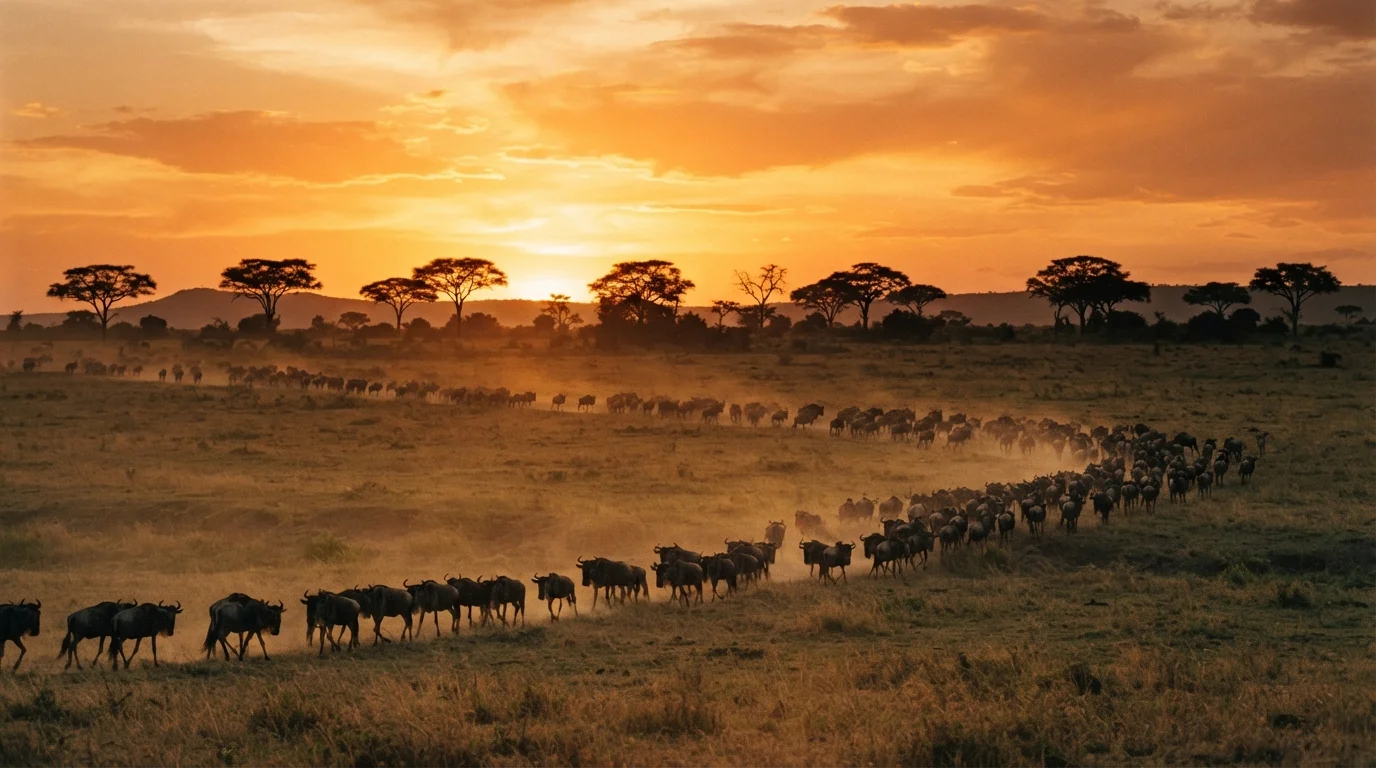
The park's defining event is the Great Migration, when roughly 1.5 million wildebeest, accompanied by zebra and gazelle, move in a roughly clockwise circuit following rainfall and fresh grass. The southern Serengeti's calving season (typically January through March) is one of the most dramatic wildlife spectacles anywhere, while the Grumeti and Mara river crossings (mid-year) carry equal intensity. The Serengeti also sustains one of Africa's healthiest predator populations, including lion, leopard, cheetah, and wild dog.
Follow Rainfall, Not Just the Calendar
Migration timing in both the Serengeti and Masai Mara is driven by rainfall patterns, which vary year to year. Published 'migration calendars' are useful as general guides, but conditions on the ground can run weeks earlier or later than typical. Consulting a reputable wildlife tracking resource or local operator closer to your travel date gives a more accurate picture of where herds are concentrated.
Masai Mara: Kenya's Northern Migration Stage
The Masai Mara National Reserve, at around 580 square miles, is considerably smaller than the Serengeti but internationally renowned for the Mara River crossings that typically occur from July through October. During those months, wildebeest gather in enormous numbers on riverbanks before launching into water patrolled by Nile crocodiles — a scene that draws photographers and naturalists from around the world.
The Mara's open savanna also supports year-round big cat sightings, and its proximity to Nairobi (roughly a five-hour drive or a short charter flight) makes it one of the most logistically accessible safari destinations in the region. Tourism infrastructure is well-developed, which suits first-time safari travelers, though visitor volumes at peak season can be significant. The Mara also borders multiple Maasai community conservancies, which offer private land access, lower crowd density, and income that supports local communities.
Amboseli: Elephants, Kilimanjaro, and a Different Landscape
Amboseli National Park covers roughly 150 square miles in southern Kenya and operates in a distinct ecological register from either the Serengeti or the Mara. Its identity is shaped by underground water systems fed by Kilimanjaro's snowmelt, producing swamps and marshes that attract wildlife throughout the year — even during dry periods when surrounding areas are parched.
The park is home to some of East Africa's largest and most studied elephant populations. Researchers have tracked individual elephant families here for decades, and the park's open terrain allows for close, unobstructed observation. Clear-day views of Kilimanjaro rising above the plains provide an iconic visual context found nowhere else in the safari circuit. However, Amboseli does not offer migration activity, and its predator sightings — while present — are generally less frequent than in the Mara or Serengeti.
Planning Considerations: Season, Access, and Regulations
Timing shapes the safari experience more than almost any other variable. The Serengeti's calving season peaks in the southern sector from roughly January through March; the river crossings in both the Serengeti's north and the Mara occur approximately July through October, though these are driven by rainfall patterns that shift year to year. Amboseli is typically visited year-round, with the dry seasons (June–October and January–February) offering the clearest views and best wildlife concentration around water sources.
Entry and conservation fees, visa requirements, and park regulations differ between Tanzania and Kenya. Tanzania requires visitors to pay fees in foreign currency at most parks; Kenya has its own separate fee structure for national parks and reserves. Community conservancies adjacent to both Mara and Serengeti operate under private arrangements with distinct access rules. Travelers should verify current requirements directly with Tanzania National Parks (TANAPA), Kenya Wildlife Service (KWS), and their own country's official travel advisory services before finalizing plans. For practical planning guidance, the travel tips hub covers considerations for navigating logistics across international destinations.
This article is for general informational purposes. Visa rules, park fees, health entry requirements, and travel advisories change frequently. Always consult official government and park authority sources before traveling.
The content on this site is for informational purposes only and is not a substitute for professional advice. Always consult a qualified professional for guidance specific to your situation.