

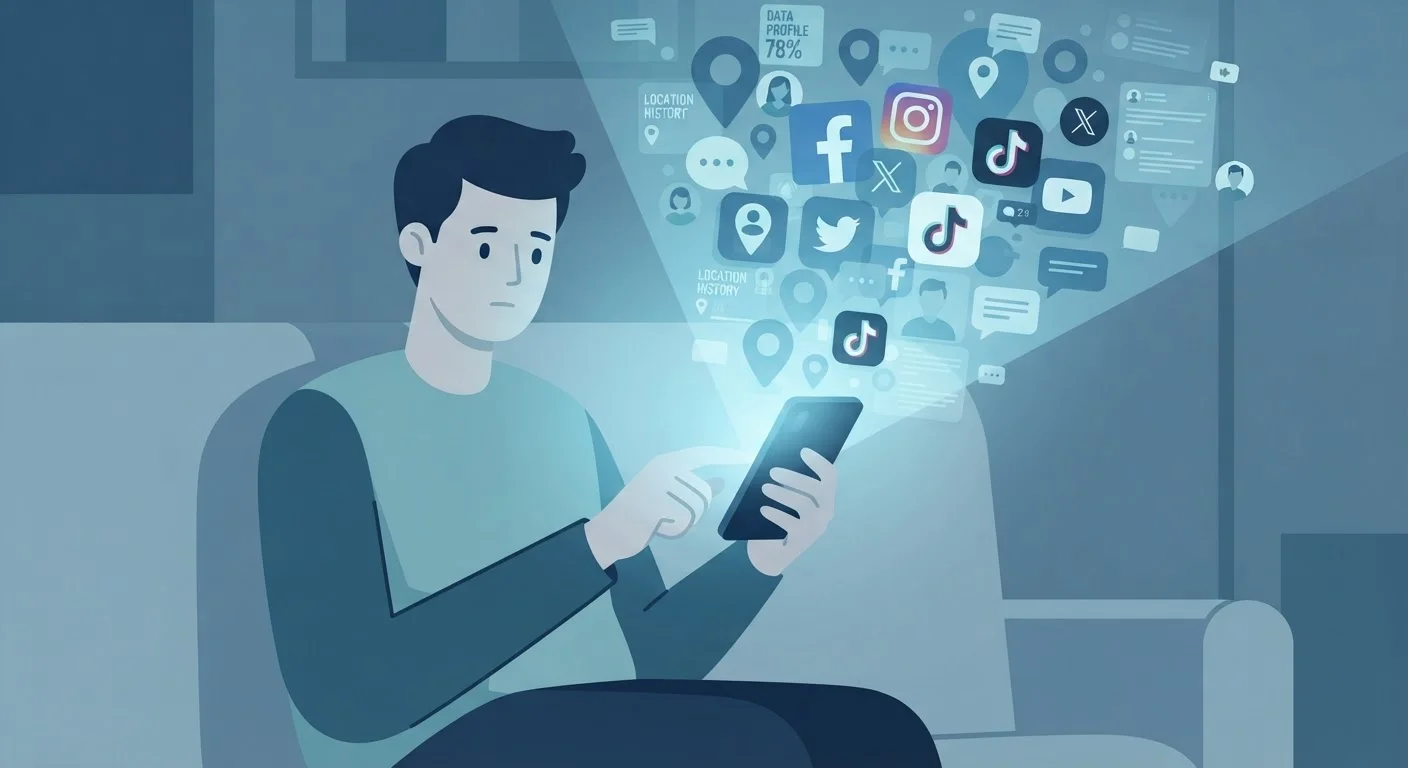
The Invisible Risk in Routine Sharing
Most online oversharing doesn't look like a mistake in the moment. It looks like a birthday post, a check-in at a new restaurant, or a throwback photo with a funny caption. The problem is that individually harmless details accumulate into something more revealing — a pattern that can be read by advertisers, data brokers, scammers, and criminals alike.
Understanding what your digital footprint actually contains is the first step toward recognizing which habits quietly put you at risk. The mistakes below represent the most common ways people expose information without intending to — and what to do differently.
Tagging precise locations in photos and posts, including at home or near your residence.
Why it happens: Location tagging is a default feature on most platforms, and sharing where you are feels social and normal. Many users don't realize that geo-tagged images embed coordinates directly in the file metadata.
Announcing vacations or time away from home in real time on public or semi-public profiles.
Why it happens: Travel posts generate engagement and excitement, and it feels natural to share experiences as they happen. The risk — that you're advertising an empty home — rarely registers as immediate.
Filling out profile fields completely — including birth year, hometown, employer, and relationship status — across multiple platforms.
Why it happens: Platforms encourage full profiles for better recommendations and discoverability, and completing them feels like part of the sign-up process. Users rarely consider that this data aggregates into an identity profile.
Posting content that inadvertently answers common security questions — pet names, mother's maiden name, childhood street, first car.
Why it happens: These details feel personal and nostalgic, not sensitive. Trend-driven prompts like "your first pet + the street you grew up on" circulate widely without users recognizing them as social engineering tools.
Sharing photos of official documents, tickets, or mail — even partially obscured.
Why it happens: People post boarding passes, event tickets, and even tax refund notices out of excitement or to show proof of something. Partial blurring often doesn't cover enough identifying information.
Why Good Privacy Settings Aren't Enough
A locked-down privacy setting on a social profile creates a reasonable sense of security. But settings don't filter the meaning of content — they only control who sees it. If your followers include acquaintances, old coworkers, or people you accepted years ago without much thought, "friends only" is a much broader audience than it sounds.
"Friends Only" Doesn't Mean Private
Most social platforms allow followers you've never met in person, old acquaintances, and professional contacts to see "friends only" content. Before posting sensitive details, consider the full range of people in your network — not just close friends and family. Periodic friend list or follower audits can meaningfully reduce your real exposure. You may also want to review common privacy myths that create a false sense of security.
Scammers and social engineers don't always need to bypass security. They often just need access to your public or semi-public content. A combination of your employer (from LinkedIn), your high school (from Facebook), and your pet's name (from Instagram) can answer three security questions on a banking portal without a single hack occurring.
For a broader look at habits that genuinely reduce risk over time, foundational digital safety practices cover the essentials that security professionals consistently recommend. And if you're newer to thinking about this topic, a ground-up introduction to online privacy explains how personal data moves and why the details matter.
Social Engineering Doesn't Require Hacking
The most effective attacks on personal accounts often require no technical skill at all. Criminals piece together publicly available information — from multiple platforms, over time — to impersonate you, reset your passwords, or answer your security questions. Protecting yourself means thinking about what your posts reveal in combination, not just in isolation.
The content on this site is for informational purposes only and is not a substitute for professional advice. Always consult a qualified professional for guidance specific to your situation.