

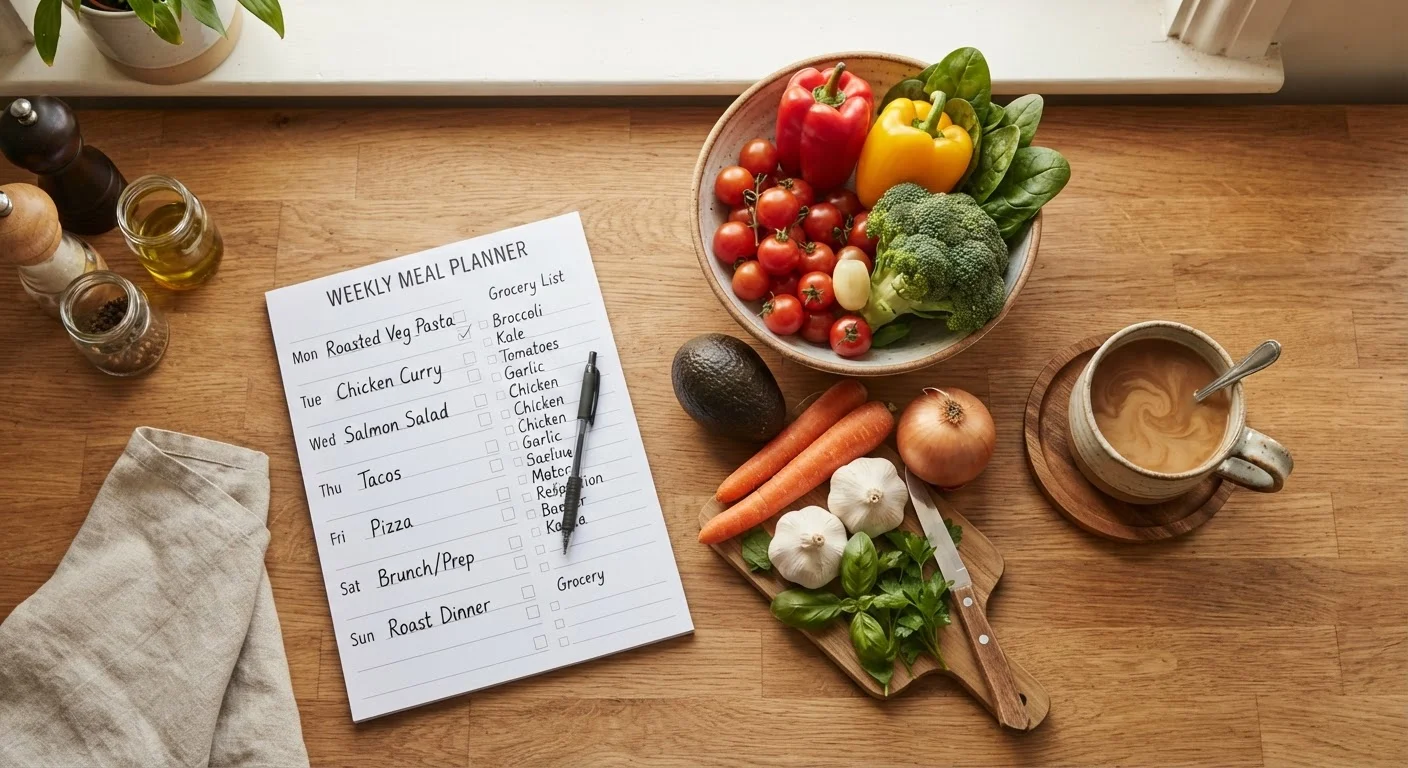
The Promise vs. The Reality of Meal Planning
Meal planning sounds straightforward: decide what you'll eat, buy the ingredients, cook the food. Yet surveys consistently show that most people who start a meal planning habit give it up within a month. The gap between intention and follow-through isn't a willpower problem — it's a design problem. The systems people build tend to work against their actual lives rather than with them.
Understanding why meal planning collapses is the fastest path to rebuilding it in a way that holds. The mistakes below aren't obscure edge cases. They're the patterns that show up again and again, and each one has a practical fix.
Planning every single meal for the week before you've assessed your schedule.
Why it happens: New planners tend to approach the week like a blank slate, mapping out breakfast, lunch, and dinner for all seven days. It feels thorough, but it ignores the reality of work dinners, social plans, and low-energy evenings.
Choosing recipes that require a full hour of active cooking on busy weeknights.
Why it happens: Recipe discovery often happens in a relaxed weekend mindset — scrolling through aspirational content when time feels abundant. The meals look achievable, but weeknight reality is a different environment entirely.
Shopping without a structured list organized by store section.
Why it happens: People write lists as they think of items — random, recipe-by-recipe — which leads to backtracking through the store, forgotten ingredients, and impulse purchases that don't connect to any meal.
Skipping batch preparation, then facing 45-minute cook times every single night.
Why it happens: Many people confuse meal planning with simply deciding what to eat. The planning part feels done once the menu is set, so no time is allocated to prep work that would make execution easier.
Abandoning the entire week's plan after one missed day.
Why it happens: All-or-nothing thinking is a common cognitive pattern. When Wednesday's planned dinner doesn't happen, the plan feels broken — and it's tempting to coast through the rest of the week without structure.
Building a System That Actually Survives the Week
The meal planners that last aren't the most elaborate ones — they're the most forgiving. A sustainable approach treats the plan as a guide, not a contract. When one evening goes sideways, the whole week doesn't have to unravel with it.
One of the most reliable techniques is component cooking: rather than planning five distinct dinners, you prepare two or three versatile ingredients — roasted vegetables, a grain, a protein — and mix them into different meals across the week. This dramatically reduces the feeling of being locked in, while still cutting down on nightly decision-making.
Don't Let 'Perfect' Derail 'Good Enough'
A common trap is redesigning the entire meal planning system every time it slips — switching apps, buying new containers, starting a new template. Frequent resets consume the energy that consistency actually requires. When the plan breaks down, the fix is almost always simpler: reduce scope, add one flex night, and keep going. Small adjustments beat elaborate overhauls.
It also helps to think of meal planning as a habit that connects to other routines. Just as small daily habits support mental wellbeing, small consistent food habits compound over time. Similarly, adapting routines to an irregular schedule is as relevant to meal planning as it is to exercise. The goal is resilience, not perfection.
This article is for general informational purposes only and is not a substitute for advice from a qualified nutrition or healthcare professional. Individual dietary needs vary — consult a professional for personalized guidance.
The content on this site is for informational purposes only and is not a substitute for professional advice. Always consult a qualified professional for guidance specific to your situation.