

Why Decluttering Feels Hard (And Why That's Normal)
Most people don't struggle with decluttering because they're disorganized — they struggle because letting go of objects is genuinely tied to identity, memory, and perceived future need. Research in consumer psychology consistently points to the "endowment effect": we tend to overvalue things simply because we own them. Add in sunk-cost thinking ("but I paid good money for that") and the result is homes filled with items that no longer serve their residents.
The good news is that effective decluttering doesn't require ruthlessness or a commitment to minimalism. It requires a repeatable system and honest questions. This guide focuses on practical decision-making over aesthetic ideology — because a functional, peaceful home looks different for every household.
What you will need
If your home also needs a broader structural refresh, our room-by-room seasonal maintenance guide pairs well with this process.
What You'll Need Before You Start
Labeled sorting bins or bags
Create physical boundaries for each decision category, keeping the process visible and organized.
Masking tape and marker
Label boxes, shelves, or zones on the fly without permanent markings.
Smartphone camera
Photograph items before donating or selling to keep a record, or to list them on resale platforms.
Stackable clear storage containers
Store seasonal or infrequently used items in a visible, accessible way rather than losing them in opaque boxes.
You don't need to buy specialized organizers before you begin — improvised containers work fine for sorting. Purchasing storage solutions before you've decided what to keep is one of the most common mistakes people make; it often results in neatly organized clutter rather than less of it.
Start With a Low-Stakes Zone
Bathrooms and junk drawers are ideal starting points — they hold fewer sentimental items and deliver quick, visible wins. That momentum can carry you into harder spaces like closets or storage rooms. Think of your first session as a warm-up, not the main event.
Step-by-Step: Working Through Your Home
Choose one category or zone to tackle first
Resist the urge to work room-by-room without a plan. Instead, pick a single category — clothing, kitchen gadgets, books, or paperwork — and pull every item in that category into one visible space. This approach, sometimes called category-based sorting, makes the true volume of what you own immediately apparent and prevents the same item type from being scattered across multiple rooms indefinitely.
Sort every item into four clear groups
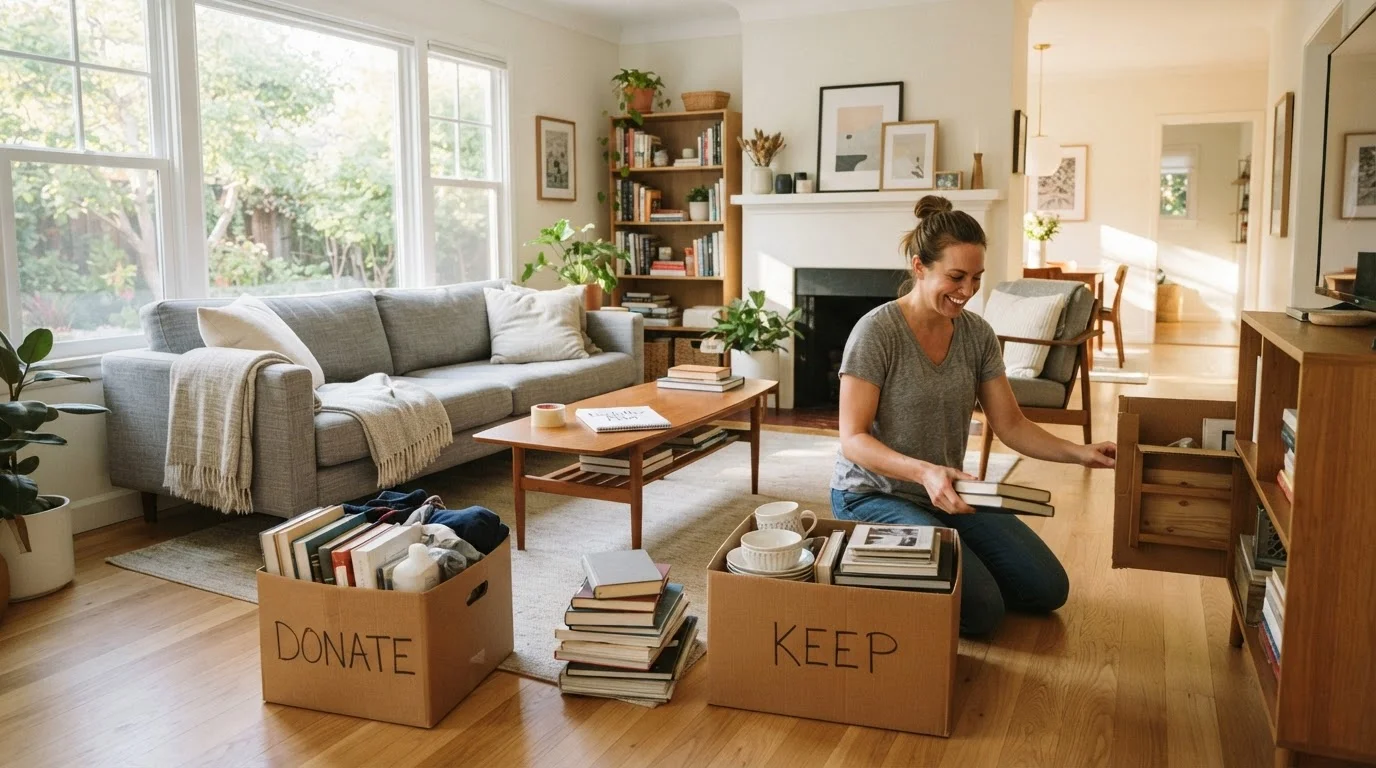
Hold or examine each item and assign it to one of four labeled containers: Keep (used regularly or genuinely valued), Donate (usable but no longer needed), Store (seasonal or infrequently used), or Discard (broken, expired, or unsalvageable). Avoid creating an ambiguous "maybe" pile — it typically ends up back where it started. If you're truly unsure, default to Store with a review date six months out.
Evaluate sentimental items separately and honestly
Sentimental objects deserve their own pass — not because they should all be kept, but because they require a different kind of decision. Ask whether the item is being kept out of guilt, habit, or genuine affection. Consider photographing objects before letting them go; a digital record can preserve the memory without requiring physical storage. Limiting sentimental keepsakes to one meaningful container per person is a practical benchmark many organizers suggest.
Identify items to donate, sell, or repurpose
Before anything goes into a trash bag, ask whether it has a second life elsewhere. Functional clothing, books, housewares, and furniture can be donated to local organizations, listed on community exchange platforms, or offered to neighbors and friends. Electronics and appliances often have specialized recycling or refurbishment channels. This step slows the process slightly but meaningfully reduces waste and may offset some of the cost of items you decide to replace. For a broader look at how Americans are rethinking ownership, see our piece on secondhand and capsule wardrobe trends.
Return keep items with intention — not just habit
Before putting "Keep" items back, wipe down the surface or shelf they came from. Then return only items that have a defined, logical home in that space. If something doesn't have a clear home, decide now where it belongs — vague placement is how clutter re-accumulates. Group similar items together, keep frequently used things accessible, and push less-used items toward back shelves or dedicated storage zones.
Build a simple habit to prevent re-accumulation
A decluttered home stays that way through small, consistent actions rather than annual purges. The "one in, one out" principle — replacing rather than simply adding — is one of the most durable habits people report using. Spending five minutes at the end of each day returning items to their designated spots also prevents slow drift. For more on embedding small sustainable habits into daily life, our guide on building a daily wellness routine explores the same incremental approach applied to personal wellbeing.
Avoid the All-or-Nothing Trap
Decluttering is not a competition to own the fewest things. Pressuring yourself to discard items that carry genuine value — sentimental, practical, or financial — often leads to regret and re-purchasing later. The goal is a home that feels functional and calm, not an aesthetic for social media.
What to Do When Progress Stalls
It's common to hit a wall halfway through a decluttering session — especially when you reach categories with high emotional weight, like children's items, inherited objects, or creative projects you haven't touched in years. When that happens, pause rather than push through. Put undecided items in a labeled box with today's date and revisit them in 30 days. Time often clarifies what you actually want to keep.
If clutter feels connected to broader anxiety or overwhelm, that's worth paying attention to. Home environments and mental state are closely linked, and the habits that support a calmer home often overlap with those that support a calmer mind. Our article on building a daily mental wellness routine explores that connection in more depth.
Don't Declutter Someone Else's Belongings
If you share a home, avoid sorting or discarding items that belong to other household members without their input. Doing so can damage trust and create conflict. Focus your energy on your own spaces and possessions, then invite others to join the process on their own terms.
The content on this site is for informational purposes only and is not a substitute for professional advice. Always consult a qualified professional for guidance specific to your situation.