

Why Bank Statements Reward Careful Reading
Most people glance at a bank statement to confirm a balance and move on. That habit leaves a significant amount of information unexamined. A monthly statement is effectively a complete financial record — every dollar that entered or left the account, every fee the institution charged, and the net result of all that activity in a single document.
Errors do occur. Banks and payment processors occasionally post incorrect amounts, duplicate charges, or apply fees that should have been waived. Fraud is another reality: unauthorized transactions frequently appear as small, unfamiliar charges that are easy to dismiss. Reviewing each statement thoroughly is one of the most straightforward habits in personal financial management, and it costs little time once you know what to look for.
The steps below apply to checking and savings statements from US banks. Credit card statements follow a different structure and are not covered here.
What you will need
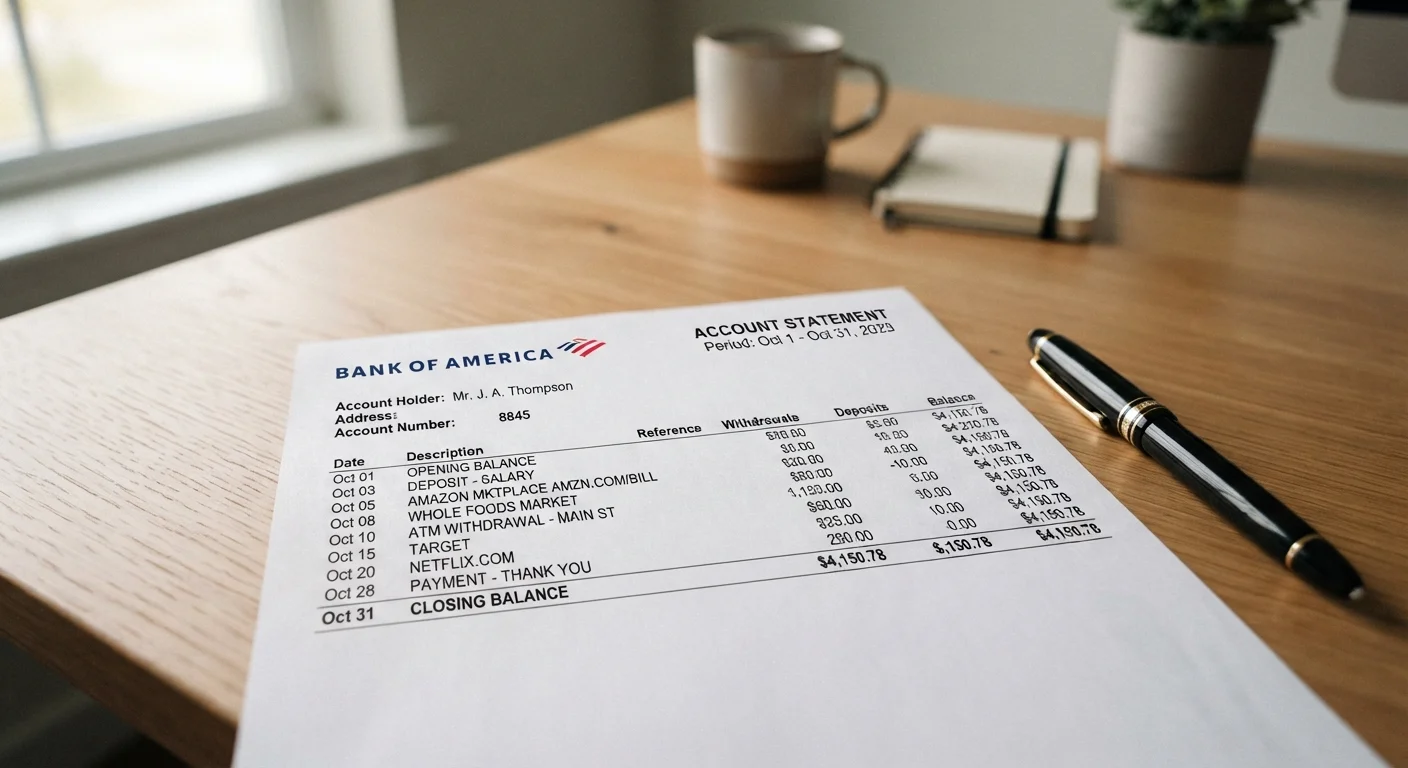
What Each Section of a Statement Contains
US bank statements typically follow a consistent layout, though presentation varies by institution.
- Account summary: Opens with account number, holder name, statement period, and the opening and closing balances.
- Transaction history: A chronological list of all credits and debits, with the date, description, and amount for each.
- Fee summary: Some banks consolidate all fees into a dedicated section; others list them inline within the transaction history.
- Interest summary: For interest-bearing accounts, shows the annual percentage yield (APY) — the effective yearly rate accounting for compounding — and the dollar amount earned or charged during the period.
Familiarity with this structure means you can move efficiently through the document rather than reading it as an undifferentiated list of numbers.
Bank Statement (Paper or PDF)
The primary document you will read and analyze during this process.
Spreadsheet or Notebook
Useful for tracking flagged transactions or comparing month-to-month figures.
Online Banking Portal
Allows you to cross-reference statement entries with real-time transaction details.
Building the Habit Into Your Financial Routine
A single thorough statement review is useful; a consistent monthly habit is substantially more valuable. Patterns only become visible across time — a recurring fee you forgot to cancel, a utility that increased its direct debit amount without notice, or a gradual decline in your month-end balance that signals spending is outpacing income.
Scheduling a fixed time each month — when the statement arrives — keeps the task from being deferred indefinitely. This review also feeds naturally into broader financial check-ins. The annual financial checkup provides a useful framework for the larger review that monthly statement habits support.
This article is for general informational purposes only and does not constitute financial, legal, or tax advice. Consult a qualified financial professional for guidance specific to your circumstances.
The content on this site is for informational purposes only and is not a substitute for professional advice. Always consult a qualified professional for guidance specific to your situation.